
Crystal Singer Trilogy Books in Order
Part ofAnne McCaffrey Books in OrderExplore the Crystal Singer Trilogy by Anne McCaffrey in order, with summaries, series background, and where-to-start guidance.
Last updated:
As an Amazon Associate, we earn from qualifying purchases (at no extra cost to you).
Crystal Singer Trilogy books in publication order
3 books
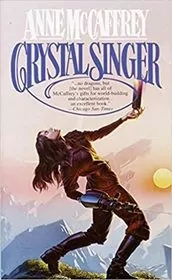
Crystal Singer
by Anne McCaffrey
1982
Singer Killashandra Ree heads to Ballybran, where valuable crystals can only be mined by “singing” them free. The work promises wealth but demands brutal training and risks, and one wrong note can turn opportunity into disaster.
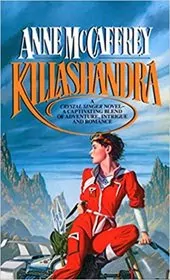
Killashandra
by Anne McCaffrey
1985
Now established as a crystal singer, Killashandra takes on bigger contracts and bigger enemies. Wealth attracts attention, and a dangerous mix of politics, sabotage, and physical strain forces her to fight for control of her own career.
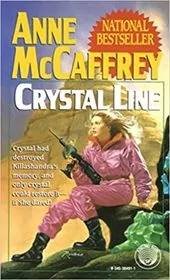
Crystal Line
by Anne McCaffrey
1992
Ballybran’s crystal trade sits at the center of off-world power games, and Killashandra is caught in the middle. As relationships and loyalties strain, she has to protect her health, her livelihood, and the people who depend on her.
Crystal Singer Trilogy books in chronological order
Series background & context
The Crystal Singer Trilogy is science fiction that reads like a career story. Instead of a chosen-one prophecy, you get a talented young woman trying to claw her way into a profession that is glamorous from the outside and brutal on the inside.
Everything on Ballybran comes with a price.
The series begins with Crystal Singer, where Killashandra Ree, trained as a musician, ends up on the planet Ballybran. Ballybran is famous for its valuable crystals, and the only way to harvest them safely is through “singing,” matching precise pitches that can cut and shape crystal in ways machines cannot. The work is lucrative, but it is also dangerous, physically taxing, and controlled by rules that newcomers learn the hard way.
McCaffrey is good at the nuts and bolts of the job. You see training, exams, rivalries, and the awkward truth that a high-status guild is still made of ordinary people protecting their piece of the system. The mining itself feels tense and sensory, with sound, timing, and exhaustion all driving the action.
The trilogy also takes the body seriously. Singing crystal is not like performing on a stage for applause, it is closer to working a dangerous industrial site where a mistake can ruin you. There are health risks, hard choices about recovery, and the constant pressure to keep earning even when your nerves say “stop.”
As the trilogy continues through Killashandra and Crystal Line, the world opens up. Killashandra’s success brings her into contact with off-world politics, corporate interests, and the wider economy that depends on Ballybran’s crystals. The books keep one foot in personal stakes, health, relationships, and the cost of ambition, while showing how a single industry can reshape whole planets.
These novels have romance and adventure, but the backbone is competence. The question is not “can she do it,” it is “what will it cost her to keep doing it, and who will try to take it away.”
Readers who like fast, character-driven science fiction tend to appreciate how grounded this trilogy feels. It is full of deals, deadlines, and work friendships, with flashes of wonder when the crystals sing back. The result is a story about building a life, not just winning a battle.
If you like stories about mastering a craft in a high-pressure setting, this trilogy is a great match. Read in order to follow Killashandra’s growth and to watch the rules of Ballybran become clearer, and stranger, with every book.



Edited by
Software engineer whose passion for tracking book recommendations from podcasts inspired the creation of MRB.
Lead investor at 3one4 Capital whose startup expertise and love for books helped shape MRB and its growth.
Comments
Did we miss something? Have feedback?
Help us improve this page by sharing your thoughts