
Covert One Books in Order
Part ofRobert Ludlum Books in OrderExplore the Covert-One series by Robert Ludlum, with books in order, quick summaries, background on the agency, and tips for following Jon Smith's missions.
Last updated:
As an Amazon Associate, we earn from qualifying purchases (at no extra cost to you).
Covert One books in publication order
12 books
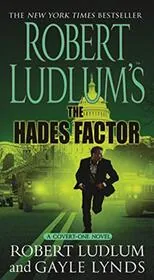
The Hades Factor
by Robert Ludlum & Gayle Lynds
2000
When a lethal new virus kills victims across the United States—including Dr. Jon Smith's fiancée—he refuses to accept it as a natural outbreak. As a covert operative with scientific training, Smith assembles a small team to trace the pathogen and uncover the human plot behind it.
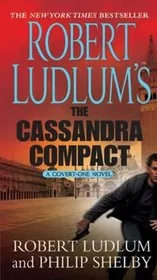
The Cassandra Compact
by Robert Ludlum & Philip Shelby
2001
When a Russian scientist is gunned down after warning Jon Smith that smallpox stocks are about to be stolen, the Covert-One operative is thrown into a race against time. A shadowy cabal plans to weaponize the virus and trigger global catastrophe.
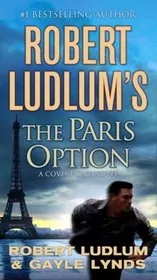
The Paris Option
by Robert Ludlum
2002
A midnight blast at Paris's Pasteur Institute apparently kills genius Emile Chambord and destroys his experimental DNA computer. As unexplained digital blackouts hit the West, Jon Smith follows a trail from Paris to Algiers to stop those wielding Chambord's creation as a weapon.
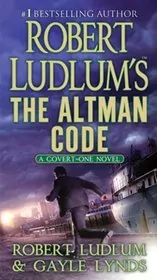
The Altman Code
by Gayle Lynds
2003
When intelligence points to a Chinese ship carrying chemicals for a rogue biological-weapons program, Covert-One agent Jon Smith goes to Taiwan for proof. An ambush destroys the evidence, leaving him to unravel a message about the president’s past and a conspiracy that could ignite war.
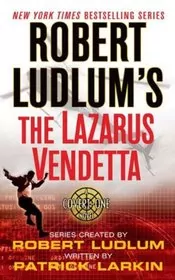
The Lazarus Vendetta
by Patrick Larkin
2004
After a lethal assault on a nanotechnology research facility kills scientists and protesters alike, Jon Smith is activated to investigate the anti-technology Lazarus Movement. His search reveals that its shadowy leader and public cause conceal a far wider scheme threatening lives around the world.
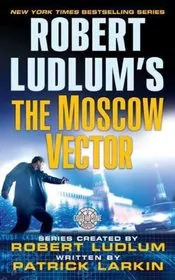
The Moscow Vector
by Robert Ludlum & Patrick Larkin
2005
At a Prague conference, infectious-disease specialist and Covert-One operative Jon Smith learns of unexplained deaths in Moscow from a Russian colleague. After that colleague is murdered, Smith must connect a fast-killing virus, worldwide assassinations, and the ambitions of Russia’s increasingly militant leadership.
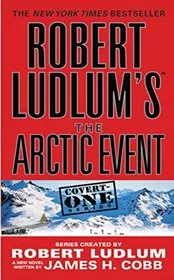
The Arctic Event
by James H Cobb
2007
The discovery of a long-lost Soviet bomber in the Canadian Arctic exposes a cargo of weaponized anthrax and forces a Russian admission. Jon Smith’s Covert-One team races arms dealers, mercenaries, and Russian forces to uncover an even deadlier secret buried in the wreckage.
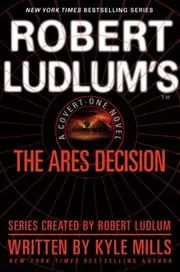
The Ares Decision
by Kyle Mills
2011
When an American special-operations unit in Uganda is overwhelmed by civilians displaying unnatural speed and strength, Covert-One suspects a weaponized infection. Jon Smith and Namibian biologist Sarie van Keure pursue the parasite behind the outbreak before it can be released in the United States.
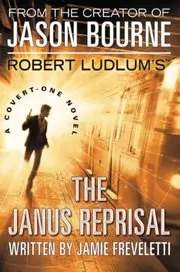
The Janus Reprisal
by Jamie Freveletti
2012
A terrorist assault on an infectious-disease conference in The Hague leaves Jon Smith alive but marked as a target. As coordinated attacks free a warlord from international custody, Smith and Covert-One must stop his revenge plot and the mysterious weapon that could devastate the West.
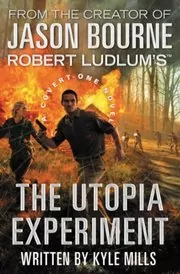
The Utopia Experiment
by Kyle Mills
2013
Jon Smith is assigned to evaluate Merge, a device that links directly with its wearer’s brain and promises powerful military applications. When Randi Russell finds murdered Afghans equipped with an unknown version of the technology, they uncover concealed development work and a dangerous insider.
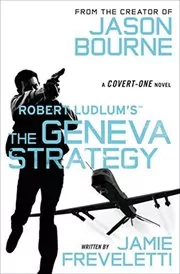
The Geneva Strategy
by Jamie Freveletti
2015
A mass kidnapping in Washington takes several senior officials, including the specialist responsible for drone programming and strategy. As rescued victims show signs of manipulation, Jon Smith traces the case to memory-altering research and must prevent the abductors from turning U.S. drones against new targets.
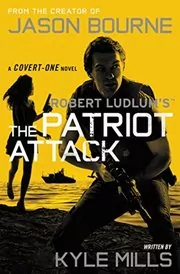
The Patriot Attack
by Kyle Mills
2016
After an attack on a Japanese warship pushes Japan and China toward war, Jon Smith enters the Fukushima reactor wreckage to retrieve mysterious material. When he disappears, CIA agent Randi Russell uncovers evidence of secret Japanese weapons development and a plan that could trigger global conflict.
Covert One books in chronological order
Series background & context
The Covert‑One novels take Ludlum’s love of conspiracy and move it into a world of cutting‑edge science and global health scares. At the center is Covert‑One itself, a small, deniable U.S. agency made up of specialists rather than traditional spies. Its people are doctors, analysts, and military officers who can move quietly through labs and ministries as easily as they do back alleys.
Most of the early books follow Lieutenant Colonel Jon Smith, an Army physician and infectious‑disease expert who has spent enough time in the field to know how quickly a virus can be turned into leverage. Smith lives with one foot in formal research programs and another in the shadow world, which makes him the person officials call when a problem is both scientific and political.
In The Hades Factor, that problem is a mysterious virus killing ordinary Americans in different cities. When Smith’s fiancée dies in the outbreak, the investigation stops being abstract. He pulls together a small team of trusted friends—people as comfortable in a high‑containment lab as they are on a surveillance run—to trace the pathogen’s source. The trail suggests deliberate release, a hidden stockpile, and someone ready to profit from fear.
The Cassandra Compact pushes the stakes even higher. Smith meets a Russian colleague who warns him that stored smallpox samples are at risk, and then watches that man cut down in a burst of gunfire. Covert‑One becomes a race against thieves who want not just a single weapon but a disease wiped out in the wild, the kind of threat that could slip across borders before anyone admits what’s happening.
In The Paris Option, the danger shifts from microbes to machines. An explosion at the Pasteur Institute appears to kill a brilliant researcher on the verge of perfecting a DNA‑based computer. When unexplained digital blackouts ripple through Western infrastructure soon after, Smith suspects someone has salvaged the work. The story moves through Paris, London, Brussels, and North Africa as he and his allies hunt both the technology and the people trying to use it as leverage over entire nations.
Across the series, readers can expect rapid travel, a rotating cast of experts, and villains who are just as likely to be executives or scientists as traditional spies. The tone is tense but more overtly contemporary than some of Ludlum’s Cold War work, with bio‑terror, cybersecurity, and privatized intelligence front and center. Starting with The Hades Factor and reading forward lets you watch the Covert‑One team form, fracture, and regroup as new threats emerge.




Edited by
Software engineer whose passion for tracking book recommendations from podcasts inspired the creation of MRB.
Lead investor at 3one4 Capital whose startup expertise and love for books helped shape MRB and its growth.
Comments
Did we miss something? Have feedback?
Help us improve this page by sharing your thoughts