
Jason Bourne Books in Order
Part ofRobert Ludlum Books in OrderThis page lists the Jason Bourne novels by Robert Ludlum in order, with book summaries, series background, and tips on how to read the original trilogy.
Last updated:
As an Amazon Associate, we earn from qualifying purchases (at no extra cost to you).
Jason Bourne books in publication order
17 books
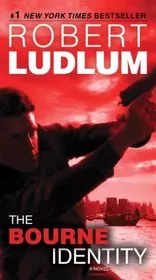
The Bourne Identity
by Robert Ludlum
1980
Pulled half-dead from the Mediterranean with no memory, a man known only as Jason Bourne follows a microfilm clue to a Swiss bank. As killers and intelligence agencies close in, he races across Europe to uncover his real identity and violent past.
Recommended by
1 person Shah Rukh Khan recommended this book
Shah Rukh Khan
One of Shah Rukh Khan's favorite novels.
Shah Rukh Khan's recommendation of this book
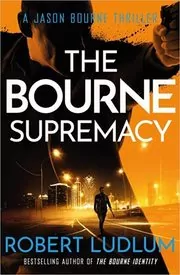
The Bourne Supremacy
by Robert Ludlum
1986
Years after reclaiming his life as professor David Webb, Jason Bourne is dragged back into the shadows when an assassin using his name destabilizes Asia. With Marie in jeopardy, he must confront a deadly Chinese conspiracy and the government handlers manipulating him.
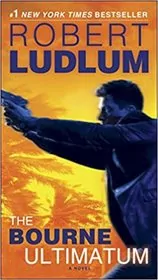
The Bourne Ultimatum
by Robert Ludlum
1990
An aging but lethal Carlos the Jackal resurfaces, sending a taunting message only Jason Bourne can read. To protect his wife and children, Bourne again becomes the hunter, drawing Carlos into a globe-spanning endgame that will settle their feud forever.
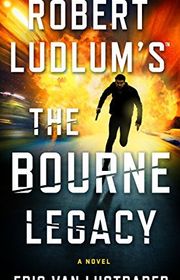
The Bourne Legacy
by Eric Van Lustbader
2003
Living quietly as David Webb, Bourne barely survives an assassination attempt and finds himself framed for murders close to him. Hunted by the CIA, he must uncover the terrorist plot that has turned his own past into a weapon.
The Bourne Betrayal
by Eric Van Lustbader
2007
When Bourne's last true friend disappears in Ethiopia while tracking nuclear material, he goes after him against every warning. The rescue mission pulls him into a terror network that expects Bourne to help destroy America.
The Bourne Sanction
by Eric Van Lustbader & Robert Ludlum
2008
Bored with academic life, Bourne agrees to look into a murdered student and discovers a secret extremist sect with plans for an attack. The trail leads through Europe and straight toward one of his deadliest missions.
The Bourne Deception
by Eric Van Lustbader
2009
After an ambush in Indonesia, Bourne fakes his own death to hunt the people trying to kill him. His search collides with an investigation into a downed airliner, and the clock starts ticking toward world war.
The Bourne Objective
by Robert Ludlum & Eric Van Lustbader
2010
A dying art dealer and a mysterious ring drag Bourne back toward a buried piece of his past. His search leads to Leonid Arkadin, another product of Treadstone, and a rival every bit as dangerous as Bourne himself.
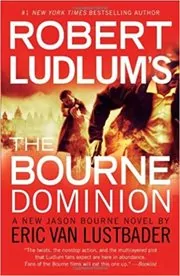
The Bourne Dominion
by Eric Van Lustbader
2011
Bourne hunts terrorists planning to cripple America's strategic resources, but the mission comes with a brutal catch. His old friend Boris Karpov has been ordered to find him and kill him.
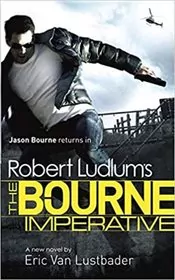
The Bourne Imperative
by Robert Ludlum & Eric Van Lustbader
2012
Bourne pulls an amnesiac stranger from the sea and stumbles into a conspiracy tied to Mossad, Treadstone, and a legendary assassin. To survive, he must learn who the injured man is before powerful enemies get there first.
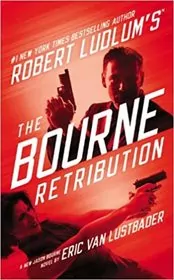
The Bourne Retribution
by Eric Van Lustbader
2013
Bourne agrees to investigate a deadly alliance involving a Chinese power broker and a Mexican drug lord, but he has private reasons for taking the job. This time the mission is driven as much by grief and revenge as duty.
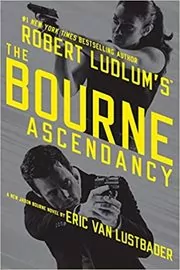
The Bourne Ascendancy
by Eric Van Lustbader
2014
Hired to impersonate a government minister at a summit in Qatar, Bourne walks into a massacre meant for him. Kidnapped by a notorious terrorist, he must survive captivity and save Soraya Moore before the larger plot closes in.
The Bourne Enigma
by Eric Van Lustbader
2016
On the eve of Boris Karpov's wedding, Bourne receives a cryptic warning that turns the celebration into bloodshed. With just four days, he must decode the message, hunt an arms dealer, and stop a catastrophe from becoming war.
The Bourne Initiative
by Eric Van Lustbader
2017
After Boris Karpov's death, a cyberweapon built to steal America's nuclear launch codes is set loose. Branded a traitor and badly wounded, Bourne must join forces with an enemy to stop a nightmare he may be blamed for.
The Bourne Evolution
by Brian Freeman
2020
After a mass shooting kills someone close to him, Jason Bourne suspects Treadstone is hiding the truth. Framed for a congresswoman's assassination, he teams with journalist Abbey Laurent to expose the dangerous Medusa network.
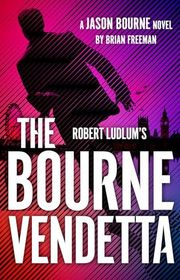
The Bourne Treachery
by Brian Freeman
2021
Jason Bourne hunts Lennon, a lethal assassin tied to a failed Treadstone mission and Bourne's missing past. From London to Russia, the chase forces him to confront a dangerous possibility about who he once was.
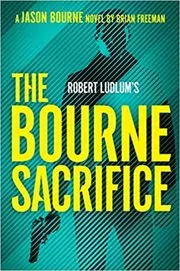
The Bourne Sacrifice
by Brian Freeman
2022
Jason Bourne tracks Lennon, a ruthless assassin who may hold answers to Bourne's lost past. The hunt intersects with journalist Abbey Laurent's investigation and a hidden organization willing to sacrifice anyone to protect itself.
Jason Bourne books in chronological order
Series background & context
The Jason Bourne novels follow a man who should be dead and, for a time, doesn’t even know who he is. Found floating in the Mediterranean with bullet wounds and no memory, he becomes “Jason Bourne” only because the clues in his body and a Swiss bank vault tell him so.
In The Bourne Identity, that mystery drives everything. Bourne’s only solid facts are a microfilm capsule in his hip, an account overflowing with money, and a deadly skill set that appears whenever he is cornered. As he drags economist Marie St. Jacques into his flight across Zurich and Paris, he discovers the Treadstone program and the legend of Cain, an assassin whose supposed deeds are bait in a secret American operation. Somewhere behind that fiction waits Carlos the Jackal, a real terrorist who takes Bourne’s existence as a personal insult.
The Bourne Supremacy catches up with David Webb after he has built a fragile new life as a university lecturer in Maine, living quietly with Marie. When a killer using the Bourne name starts destabilizing Asia and a Chinese power struggle threatens American interests, Webb is forced back into the field. Government strategists manipulate him by targeting Marie, hoping to reawaken the ruthless persona they once crafted. The book moves through Hong Kong and mainland China, mixing political maneuvering with Webb’s determination not to lose himself again.
In The Bourne Ultimatum, the conflict narrows to its most personal line: Bourne versus Carlos. The Jackal, older but no less vicious, decides he will not die until he has erased his rival. Webb must protect his family, work through old allies in intelligence, and use the Bourne identity one last time to draw Carlos into the open. The chase stretches from the Caribbean to Europe and Russia, with both men aware that only one of them will walk away.
Across the trilogy, Ludlum keeps returning to the split between David Webb, the scholar and husband, and Jason Bourne, the manufactured weapon. Amnesia is more than a plot device; it lets him ask how much of a person is memory, and how much is shaped by what others need them to be. Government programs, code names, and whispered directives are never far away, but the emotional core stays with Webb’s fear of becoming nothing but an instrument again.
Later authors expand the series and the films reshape many details, yet the original novels remain tighter, more paranoid journeys into identity and power. Read in order, they give you the full rise and unwinding of a man who can outfight almost anyone but is always in danger of losing himself.




Edited by
Software engineer whose passion for tracking book recommendations from podcasts inspired the creation of MRB.
Lead investor at 3one4 Capital whose startup expertise and love for books helped shape MRB and its growth.
Comments
Did we miss something? Have feedback?
Help us improve this page by sharing your thoughts