
Contact: The Battle For America (W Michael Gear) Books in Order
Part ofW Michael Gear Books in OrderSee Contact: The Battle For America by W. Michael Gear in order, with summaries, series background, and tips on the best starting point.
Last updated:
As an Amazon Associate, we earn from qualifying purchases (at no extra cost to you).
Contact: The Battle For America (W Michael Gear) books in publication order
3 books
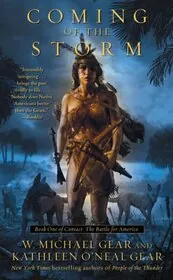
Coming of the Storm
by W Michael Gear
2010
As Hernando de Soto's expedition moves into the Southeast, Native communities face enslavement, terror, and impossible choices. The invasion is seen from the ground, where every decision carries a cost.
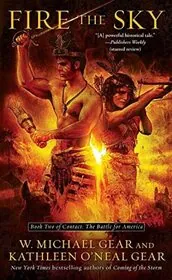
Fire the Sky
by W Michael Gear
2011
The de Soto invasion grows more brutal, and the people resisting it are pushed closer to ruin. Alliances shift, loyalties crack, and survival demands courage from those with the least room to fail.
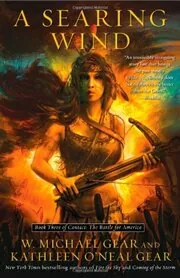
A Searing Wind
by W Michael Gear
2012
The final clash with de Soto's expedition leaves the Southeast reeling under violence, disease, and betrayal. It is a hard, sweeping end to a series about conquest seen through Native eyes.
Contact: The Battle For America (W Michael Gear) books in chronological order
Series background & context
Under W. Michael Gear's name, Contact: The Battle For America is still the same collaboration with Kathleen O'Neal Gear, and it is one of their hardest historical sequences. These books move into the sixteenth-century Southeast and follow the invasion led by Hernando de Soto, not from the invaders' heroic myths, but from the Native communities forced to absorb the violence in real time.
That change in viewpoint is everything.
The expedition does not arrive as romance or discovery. It arrives as steel, dogs, captivity, disease, extortion, and constant destabilization. Villages do not get the luxury of seeing the larger pattern all at once. Families, chiefs, captives, scouts, and rivals are each trying to understand what this strange force is and what it wants, usually while events are already outrunning them.
The books have the scale of an epic, but they stay grounded in ordinary life. Food stores, rumors, kinship ties, factional politics, grief, and local rivalries all shape the choices people make. Some leaders gamble on negotiation. Some turn to resistance. Some people are taken inside the invading machine and have to survive from there. The series is interested in how conquest fractures a region unevenly, with some communities hit first, some hit later, and none fully spared.
That makes the moral landscape messy in a useful way.
No one is standing outside history with a clean map. People are making choices with partial information, old grudges, and immediate fear bearing down on them. The invaders bring military force, but they also bring confusion. Communities that might otherwise unite are pulled apart by self-protection, ambition, or disbelief. The series gets a lot of its tension from that unstable middle ground.
The tone is dark, sometimes bleak, but not numb. These books are full of movement, battles, escapes, surveillance, negotiation, and retaliation. At the same time, they keep attention on the cost of each encounter, what gets burned, what gets taken, what stories are altered, and what happens when social order is pushed past endurance.
So if you want historical fiction that treats first sustained European invasion in the Southeast as lived catastrophe rather than distant summary, this is what the trilogy does. It is sweeping, but it does not become abstract. It keeps the story close to the people who have to survive its shocks one day at a time.







Edited by
Software engineer whose passion for tracking book recommendations from podcasts inspired the creation of MRB.
Lead investor at 3one4 Capital whose startup expertise and love for books helped shape MRB and its growth.
Comments
Did we miss something? Have feedback?
Help us improve this page by sharing your thoughts