
Colm Toibin Books in Order
Browse Colm Toibin's books in order, with short summaries, series background, and clear guidance on where to start with his novels, stories, essays and poetry.
Last updated: 1 new book added
As an Amazon Associate, we earn from qualifying purchases (at no extra cost to you).
Colm Toibin books in publication order
43 books
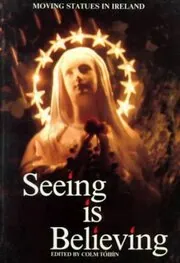
Seeing Is Believing
by Colm Toibin
1985
A reportage book on the 1980s phenomenon of Ireland’s “moving statues,” in which contributors investigate reported Marian apparitions and ask what this wave of devotion reveals about belief and skepticism in modern Irish Catholicism.
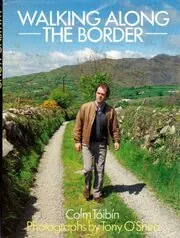
Walking Along the Border
by Colm Toibin
1987
An early account of Tóibín’s journey on foot from Derry to Newry, describing the landscapes and communities that straddle the Irish border and the mix of fear, resilience and dark humour he encounters along the way.
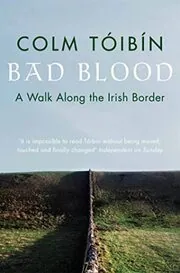
Bad Blood
by Colm Toibin
1988
A travelogue of Tóibín’s walk along the Irish border in the tense summer after the Anglo-Irish Agreement, recording border rituals, funerals and conversations as he explores how history and division shape everyday lives.
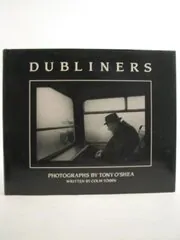
Dubliners
by Colm Toibin
1990
A collaboration with photographer Tony O’Shea in which images of 1980s Dublin street life are paired with Tóibín’s text, capturing a city of buses, markets and ordinary moments on the cusp of social change.
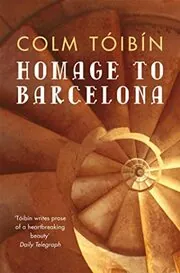
Homage to Barcelona
by Colm Toibin
1990
A vivid portrait of Barcelona that moves from Roman foundations to Gaudí and Miró, the Civil War and the late-Franco years, mixing history, reportage and memoir drawn from the years Tóibín lived in the city.
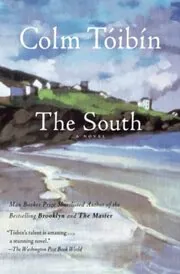
The South
by Colm Toibin
1990
Tóibín’s debut novel, following Katherine Proctor, who leaves her husband and child in 1950s Ireland for Barcelona, falls in love with a Spanish painter and discovers both passion and hardship in a remote Pyrenean village.

Trial of the Generals
by Colm Toibin
1990
A collection of journalism centred on Tóibín’s reporting from Argentina on the trials of the military leaders responsible for the Dirty War, alongside other political pieces from Latin America and Ireland.
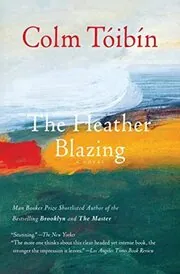
The Heather Blazing
by Colm Toibin
1992
A novel about Eamon Redmond, a reserved High Court judge who spends weekends on the Wexford coast, where memories of childhood, politics and family loss slowly erode the certainty that has guided his public life.
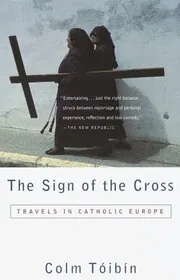
The Sign of the Cross
by Colm Toibin
1994
A travel book in which Tóibín follows Catholic rituals across Europe—from Poland and Spain to Croatia and back to Ireland—observing processions, shrines and pilgrimages while reflecting on his own complicated relationship with the faith.
The Guinness Book Of Ireland
by Colm Toibin
1995
An illustrated guide to Ireland created with Bernard Loughlin, combining photographs, maps and short entries on the country’s history, regions, landmarks, festivals and sporting life for readers planning visits or tracing roots.
The Kilfenora Teaboy
by Colm Toibin
1996
A critical study of Irish poet Paul Durcan, edited by Tóibín, that gathers essays and reflections on Durcan’s surreal humour, political bite and tender depictions of family life.
The Story of the Night
by Colm Toibin
1996
A sweeping novel set in Buenos Aires from the years of military dictatorship into the age of AIDS, following Richard Garay, a gay man of English descent, as he navigates secret desires, political violence and rising prosperity.

Conversations and Portraits
by Colm Toibin
1997
A slim volume collecting interviews and short profiles, bringing a range of cultural figures into focus through relaxed conversations that reveal their working lives, obsessions and off-guard moments.
The Blackwater Lightship
by Colm Toibin
1999
A novel set in 1990s Ireland in which three generations of women—grandmother, mother and daughter—gather at a seaside house to care for a son dying of AIDS, confronting old grievances while learning how to speak honestly.
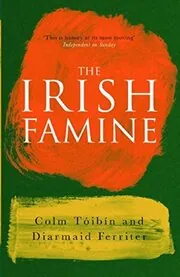
The Irish Famine
by Colm Toibin
1999
A concise history of the Great Famine paired with a selection of original documents, examining how the catastrophe has been remembered and misremembered and how it continues to shape Irish and Irish-American identity.
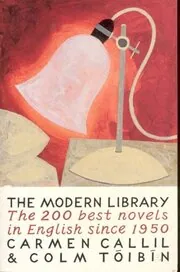
The Modern Library
by Colm Toibin
1999
A reader’s guide co-written with Carmen Callil that selects and discusses two hundred of the best novels in English since 1950, mixing classics and surprises while explaining what makes each book worth seeking out.
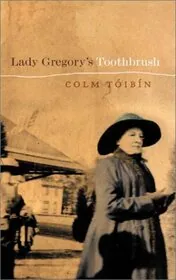
Lady Gregory's Toothbrush
by Colm Toibin
2002
A short, engaging study of playwright and cultural activist Lady Augusta Gregory, tracing her unconventional love life, role in founding the Abbey Theatre and influence on Yeats and the Irish literary revival.
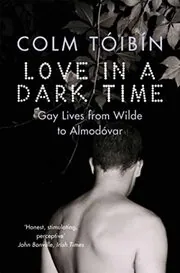
Love in a Dark Time
by Colm Toibin
2002
An essay collection on gay writers and artists, including Oscar Wilde, Roger Casement, Thomas Mann, Elizabeth Bishop and James Baldwin, exploring how secrecy, courage, desire and loss shaped both their lives and their work.

Beauty in a Broken Place
by Colm Toibin
2004
The published text of Tóibín’s stage play, in which a small group of Dublin characters gather after a tragedy and, over the course of one evening, uncover old wounds and fragile hopes in a city changed by recent history.
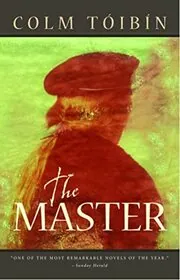
The Master
by Colm Toibin
2004
A nuanced portrait of Henry James during the late 1890s, following him through failed theatrical ambitions, friendships and family losses as he retreats into work and quietly turns private longing into some of his greatest novels.

Mothers and Sons
by Colm Toibin
2006
A story collection set mostly in contemporary Ireland, each piece tracing a charged moment when a mother and son must face secrets, betrayals or unexpected loyalties that have been quietly shaping their lives.

The Use of Reason
by Colm Toibin
2006
A taut novella about a Dublin criminal who has stolen a priceless painting and tries to keep one step ahead of the police and his associates, even as his own mother’s loose talk threatens to destroy his careful plans.
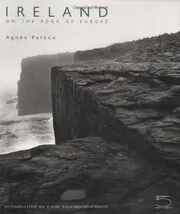
Ireland
by Colm Toibin
2008
A collaboration with photographer Agnès Pataux that combines stark landscape and portrait images from across Ireland with text reflecting on history, myth and the ways the land has shaped the character of its people.
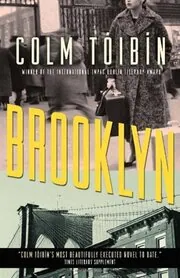
Brooklyn
by Colm Toibin
2009
A quietly powerful novel about Eilis Lacey, a young woman who leaves 1950s Enniscorthy for a job in Brooklyn, falls in love with an Italian-American plumber and is later pulled between life in America and family ties in Ireland.
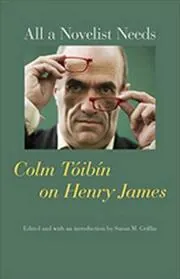
All a Novelist Needs
by Colm Toibin
2010
A gathering of Tóibín’s essays on Henry James, reading the master’s stories, letters and life through a fellow novelist’s eye and revealing how James fashioned character, point of view and silence on the page.

The Empty Family
by Colm Toibin
2010
Stories about characters estranged from home or kin—set in Ireland, Spain, Pakistan and beyond—in which desire, exile and memory tug people between the families they were born into and the fragile ones they make for themselves.
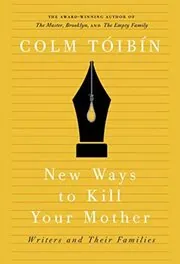
New Ways to Kill Your Mother
by Colm Toibin
2012
A collection of essays about writers and their families, ranging from Jane Austen and Henry James to Yeats, Thomas Mann and Tennessee Williams, examining how quarrels, loyalties and absences within households shaped great literature.
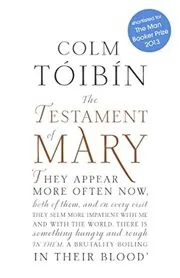
The Testament of Mary
by Colm Toibin
2012
A brief, intense novel narrated by Mary in old age, as she remembers her son’s execution and rejects the miracle-laden version his followers prefer, insisting instead on the messy, human truth of grief and fear.
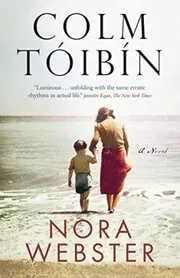
Nora Webster
by Colm Toibin
2014
A novel about a young widow in late-1960s Enniscorthy learning to rebuild her life after her husband’s death, as Nora Webster raises four children, navigates small-town expectations and slowly claims a new, independent self.
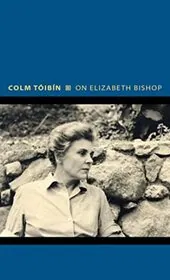
On Elizabeth Bishop
by Colm Toibin
2015
A compact, personal study of poet Elizabeth Bishop, in which Tóibín traces her journeys from Nova Scotia to Key West and Brazil and explains how loss, exile and close observation shaped her precise, emotionally charged poems.
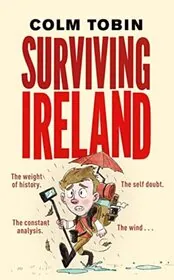
Surviving Ireland
by Colm Toibin
2015
A humorous, sharply observed tour of contemporary Irish life that riffs on politics, history, small-town habits and national quirks, offering a tongue-in-cheek survival guide to navigating the island’s contradictions.
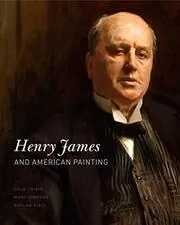
Henry James and American Painting
by Colm Toibin
2017
An illustrated exploration of Henry James’s friendships with artists such as John Singer Sargent and John La Farge, showing how portraiture, travel and the visual arts fed directly into the moods and characters of his fiction.
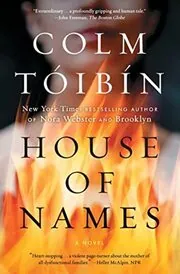
House of Names
by Colm Toibin
2017
A dark retelling of the Oresteia in which Clytemnestra, Electra and Orestes narrate the aftermath of Iphigenia’s sacrifice, turning a myth of gods and fate into a brutal, human story of revenge, betrayal and uneasy inheritance.
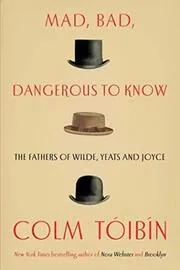
Mad, Bad, Dangerous to Know
by Colm Toibin
2018
A study of the fathers of Oscar Wilde, W. B. Yeats and James Joyce, blending biography, literary criticism and Dublin history to show how three unruly patriarchs shaped, inspired and haunted their famous sons.
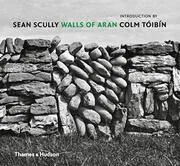
Sean Scully: Walls of Aran
by Colm Toibin
2020
An art book that pairs Sean Scully’s stark photographs of the stone walls on Ireland’s Aran Islands with an essay by Tóibín, exploring how landscape, memory and abstract art echo one another across time.

The Shortest Day
by Colm Toibin
2020
A brief, wintry tale set over a single day near the solstice, following a family in rural Ireland as ordinary errands, visits and small hesitations expose buried tensions and the quiet costs of staying or leaving.
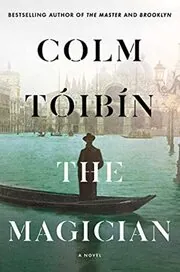
The Magician
by Colm Toibin
2021
A richly detailed novel about German writer Thomas Mann, following him from youth in Lübeck through marriage, exile from Nazi Germany and old age, as he balances artistic ambition, public life and secret desires over tumultuous decades.

Vinegar Hill: Poems
by Colm Toibin
2022
Tóibín’s first poetry collection, gathering decades of work about Enniscorthy, Dublin, Venice and other places, and exploring politics, queer love, family ghosts and mortality in spare, story-like poems.
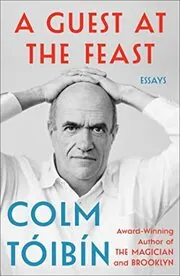
A Guest at the Feast
by Colm Toibin
2023
A collection of personal and critical essays in which Tóibín writes about his Catholic childhood in Wexford, illness, Irish politics, the Vatican and the writers and cities that shaped him, offering an intimate map of the life behind his fiction.

Long Island
by Colm Toibin
2024
A sequel to Brooklyn set about twenty years later, in which Eilis Lacey, now living among her Italian-American in-laws on Long Island, receives a shocking visit that sends her and her teenage children back to Enniscorthy to confront the past.

On James Baldwin
by Colm Toibin
2024
A series of lectures and essays in which Tóibín revisits the novels and essays of James Baldwin, blending close reading with memoir to show how Baldwin’s explorations of race, sexuality and faith shaped his own understanding of writing.

A Long Winter
by Colm Toibin
2025
A short novel set in a remote Catalan village where a young man, Miquel, searches for his missing alcoholic mother in deep snow and, with the help of an orphaned farmhand, begins to imagine a different future.
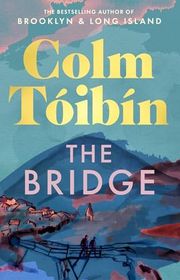
The Bridge
by Colm Toibin
2026
Miquel and his father live uneasily together in the Pyrenees after his mother's death. As a new bridge promises to end their valley's isolation, conflicting hopes about smuggling and change deepen the distance between them.
Where to start with Colm Toibin
If you want his most famous immigrant story: Brooklyn → Long Island
If you like deep historical portraits of writers: The Master → The Magician
If you’re drawn to quiet Irish family dramas: Nora Webster → The Heather Blazing → The Blackwater Lightship
If you prefer short fiction: Mothers and Sons → The Empty Family
If you’re curious about his essays and criticism: A Guest at the Feast → Love in a Dark Time → New Ways to Kill Your Mother
Colm Toibin sub-series and character series
Colm Toibin collections, short stories, and related book types
Short Stories/Novellas
Plays
Non-Fiction
Collections
Standalone Colm Toibin books
Author bio
Colm Tóibín was born in 1955 in Enniscorthy, a market town in County Wexford in the southeast of Ireland. He grew up in a house marked by politics, silence and grief: his father, a schoolteacher involved in local nationalist history, died when Tóibín was twelve, and the atmosphere of watchful quiet filtered into his sense of how families speak — and don’t speak — to one another.
As a boy he struggled to read and developed a stammer. He has often linked both to the shock of his father’s illness and absence, and to the experience of being sent away to relatives while his parents were in Dublin for treatment. Those early years — with their mix of devotion, distance and unspoken hurt — later fed directly into the guarded mothers, uneasy sons and wordless tensions that run through his fiction.
He boarded at St Peter’s College in Wexford and went on to study history and English at University College Dublin. After graduating in 1975 he left Ireland for Barcelona, arriving just weeks before Franco died. Living there through the fragile early years of Spain’s transition to democracy changed the way he thought about politics, language and belonging. Barcelona’s streets and bars, and the Catalan countryside, would later underpin both his first novel, The South, and his nonfiction portrait Homage to Barcelona.
When he returned to Ireland in 1978, Tóibín worked as a journalist. He wrote features for In Dublin magazine, became its features editor, and then, in the early 1980s, edited the current‑affairs magazine Magill. Reporting took him from the Irish border to Buenos Aires and beyond; out of that period came books such as Walking Along the Border (later expanded as Bad Blood), The Sign of the Cross and Trial of the Generals, which combined travel writing, politics and a cool eye for public ritual.
His move into fiction began with The South in 1990, followed by The Heather Blazing, The Story of the Night and The Blackwater Lightship. These early novels introduced many of his abiding concerns: people living abroad, the weight of childhood loyalties, mothers and sons who can’t quite say what they feel, and the way history presses in on private life. They are spare, quiet books in which the largest events often happen offstage, leaving characters to deal with the aftershocks.
Later novels brought him a wide international readership. The Master imagines the inward life of Henry James at the end of the nineteenth century, while Brooklyn follows young Eilis Lacey from 1950s Wexford to a boarding house and department store job in New York, and Nora Webster returns to Enniscorthy in the 1960s to follow a recently widowed mother of four. The Testament of Mary gives a stark, unsettling voice to the mother of Jesus, House of Names recasts the Oresteia as a brutal family drama, and The Magician offers a deeply researched portrait of Thomas Mann and his family across two world wars.
Alongside the novels, Tóibín has written short‑story collections — notably Mothers and Sons and The Empty Family — and a substantial body of essays and criticism. Books such as Love in a Dark Time, New Ways to Kill Your Mother, A Guest at the Feast, On Elizabeth Bishop and On James Baldwin show him reading other writers through the lenses of sexuality, family, exile and faith. His poetry collection Vinegar Hill gathers decades of work about Enniscorthy, Dublin, Venice and beyond.
Teaching has become another strand in his life. He has held visiting posts at universities including Stanford, Texas and Princeton, served as professor of creative writing at the University of Manchester, and is now the Irene and Sidney B. Silverman Professor of the Humanities at Columbia University in New York. He has also served as chancellor of the University of Liverpool and has been recognised with major literary prizes in Ireland and abroad.
Openly gay, Tóibín has written often — if obliquely — about queer lives, Catholicism and the costs of secrecy. He has spoken publicly about surviving cancer and about how illness sharpened his sense of time. He now divides his life between Ireland and the United States, still writing fiction, essays and poems in the unhurried, attentive style that has made his work feel both intimate and lasting.

Edited by
Software engineer whose passion for tracking book recommendations from podcasts inspired the creation of MRB.
Lead investor at 3one4 Capital whose startup expertise and love for books helped shape MRB and its growth.
Comments
Did we miss something? Have feedback?
Help us improve this page by sharing your thoughts