
Civil War/Gettysburg Books in Order
Part ofNewt Gingrich Books in OrderExplore Newt Gingrich's Civil War and Gettysburg novels in order, with summaries, background on the setting, and help choosing a starting point.
Last updated:
As an Amazon Associate, we earn from qualifying purchases (at no extra cost to you).
Civil War/Gettysburg books in publication order
4 books
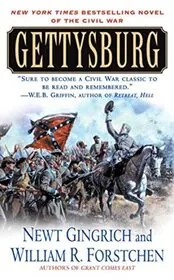
Gettysburg
by Newt Gingrich
2003
This alternate history reimagines the Civil War's turning point by asking what would happen if Lee won at Gettysburg. The book blends battlefield detail with big consequences for Lincoln, the Union, and the South.
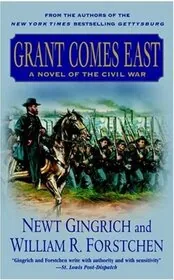
Grant Comes East
by Newt Gingrich
2004
With the Union reeling after Confederate success at Gettysburg, Abraham Lincoln brings Ulysses S. Grant east to face Robert E. Lee. The novel mixes campaign planning, political strain, and large-scale battle scenes.
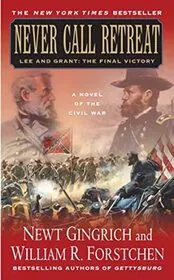
Never Call Retreat
by Newt Gingrich
2005
In this alternate Civil War sequel, Lee presses his advantage after Gettysburg while the Union turns to Grant as its best hope. Strategy, exhaustion, and massive casualties drive the story toward another decisive clash.
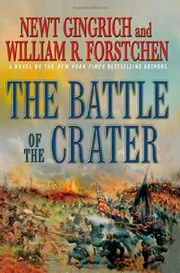
The Battle of the Crater / To Make Men Free
by Newt Gingrich
2011
Set around one of the Civil War's most disastrous assaults, this story follows soldiers and leaders facing the chaos of Petersburg. It gives special weight to Black troops determined to prove themselves in battle.
Civil War/Gettysburg books in chronological order
Series background & context
This part of Gingrich's fiction brings together his broader Civil War interests, from the sweeping alternate-history scale of the Gettysburg books to the tighter, battlefield-centered focus of The Battle of the Crater / To Make Men Free. If the Gettysburg trilogy asks how one victory might have changed the whole war, the later Civil War work asks what the war felt like inside the smoke, confusion, and terrible cost of one operation.
That mix gives this grouping its character. On one side, you have generals and presidents making decisions that might bend the future of the Union or the Confederacy. On the other, you have soldiers, engineers, and Black troops trying to survive a fight that has already become more brutal and more desperate than either side expected. Gingrich is comfortable at both scales, and that is the main reason these books fit together.
The Gettysburg novels are about movement and national consequence. The Battle of the Crater / To Make Men Free is much more intimate and much more claustrophobic. The Petersburg setting brings the war into trenches, earthworks, and a landscape shaped by siege. Plans that look neat on paper turn chaotic in minutes. Courage still matters, but so do miscommunication, exhaustion, and the simple fact that once men are trapped in broken ground, there is very little room for heroics to stay clean.
This is also where Gingrich's Civil War fiction pays closer attention to the human stakes of emancipation and service. The title To Make Men Free points to that directly. The books are not only about famous names moving armies across maps. They are also about what the war meant to the people asked to carry its heaviest moral and physical burden.
This is where the Civil War fiction gets dirtier and sadder.
If you like Civil War novels that combine strategy with immediate battlefield pressure, this is a strong lane in Gingrich's bibliography. It offers both the big-picture thrill of altered history and the harder, more grounded experience of watching a single battle go wrong in real time. Readers who want more than one flavor of Civil War storytelling will probably find this section especially useful.


Edited by
Software engineer whose passion for tracking book recommendations from podcasts inspired the creation of MRB.
Lead investor at 3one4 Capital whose startup expertise and love for books helped shape MRB and its growth.
Comments
Did we miss something? Have feedback?
Help us improve this page by sharing your thoughts