
Christos Tsiolkas Books in Order
Browse Christos Tsiolkas books in order, with quick summaries, standout starting points, and a clear guide to his novels, essays, and story collections.
Last updated: 1 new book added
As an Amazon Associate, we earn from qualifying purchases (at no extra cost to you).
Christos Tsiolkas books in publication order
15 books
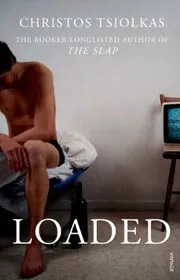
Loaded
by Christos Tsiolkas
1995
Over 24 hours in Melbourne, nineteen-year-old Ari prowls clubs, streets, and bedrooms looking for relief from boredom, anger, and expectation. The novel is fast, restless, and unsparing about sexuality, family, and being caught between worlds.
Jump Cuts
by Christos Tsiolkas
1996
Co-written with Sasha Soldatow, this experimental autobiography unfolds as a shared, shifting conversation rather than a tidy life story. It moves through politics, ethics, desire, work, and friendship in jagged, provocative fragments.
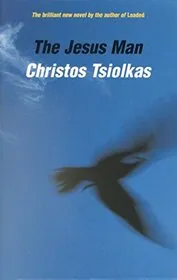
The Jesus Man
by Christos Tsiolkas
1999
After a brutal crime shatters a Greek-Italian family in Melbourne, the youngest brother tries to make sense of grief, media frenzy, and a brother's descent into madness. It is bleak, angry fiction with a strong pulse of compassion.
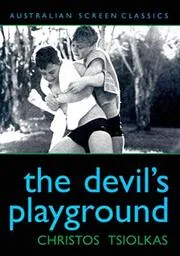
The Devil's Playground
by Christos Tsiolkas
2002
Tsiolkas revisits Fred Schepisi's film about boys and Brothers in a Catholic seminary, and explains why it stayed with him for decades. The result blends film criticism, memoir, and reflections on sex, faith, and cinema.
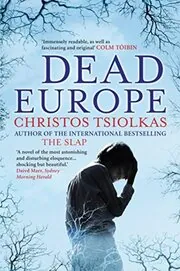
Dead Europe
by Christos Tsiolkas
2005
Photographer Isaac travels from Australia to Greece and across Europe, expecting art, family, and history, but finds something darker following him. It is part travel novel, part ghost story, and part reckoning with violence and old hatred.
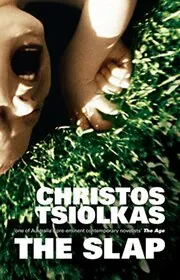
The Slap
by Christos Tsiolkas
2008
At a suburban barbecue, one man hits a child who is not his own, and the fallout spreads through a whole circle of family and friends. Told through multiple viewpoints, it turns a single act into a fierce portrait of modern life.
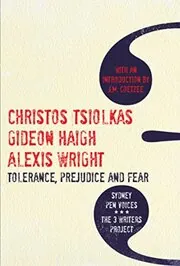
Tolerance, Prejudice And Fear
by Christos Tsiolkas
2008
This volume gathers essays first commissioned by Sydney PEN, with Tsiolkas, Gideon Haigh, and Alexis Wright writing about tolerance, nationalism, and public fear. It is a thoughtful, argumentative snapshot of Australian debate.

Sticks, Stones
by Christos Tsiolkas
2012
After seeing her teenage son mock a girl with Down syndrome, a mother is jolted into a hard reckoning with family life and her own feelings. This is short fiction, but it hits with the force of a much longer story.
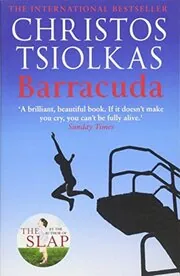
Barracuda
by Christos Tsiolkas
2013
Danny Kelly, a gifted working-class swimmer on scholarship at an elite Melbourne school, wants to win at any cost. What follows is a raw novel about class, shame, ambition, and the hard work of remaking yourself after failure.
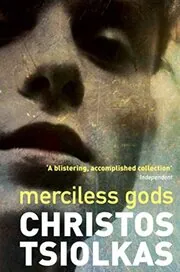
Merciless Gods
by Christos Tsiolkas
2014
This short story collection moves through families, lovers, tourists, exiles, and suburban households at moments when pressure turns into crisis. The stories are sharp, unsettling, and often unexpectedly tender.
On Patrick White
by Christos Tsiolkas
2018
Tsiolkas spends a year rereading Patrick White and asking what the Nobel laureate still means now. Part tribute, part criticism, it is a short, personal book about influence, language, and Australian literature.
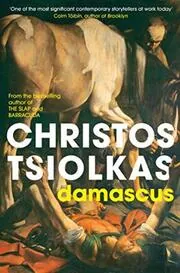
Damascus
by Christos Tsiolkas
2019
Set around the rise of the early Christian church, this historical novel follows Saul and other believers through persecution, doubt, and fierce conviction. Tsiolkas treats faith as lived experience, full of politics, bodies, love, and fear.
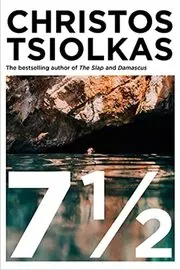
7 1/2
by Christos Tsiolkas
2021
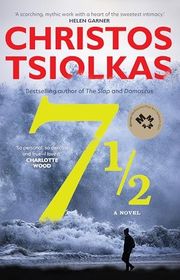
A writer retreats to a coastal house during a time of upheaval, hoping to write about beauty rather than outrage. Memory, solitude, and a second story about a retired porn star pull the novel toward desire, art, and survival.
Seven and a Half
by Christos Tsiolkas
2021
A writer retreats to a coastal house, seeking beauty and solitude while the outside world changes dramatically. As he revisits memories, he develops a story about a retired porn star tempted back into the world he left behind.

The In-Between
by Christos Tsiolkas
2023
Perry and Ivan, two middle-aged men in Melbourne, meet, fall in love, and try to live honestly with the damage they already carry. It is tender, sensual fiction about intimacy, class, memory, and the possibility of change.
Where to start with Christos Tsiolkas
If you want the breakthrough social novel: The Slap → Barracuda
If you want fierce queer Melbourne fiction: Loaded → The Jesus Man
If you want darker, more unsettling work: Dead Europe → Damascus
If you want a later, more intimate side of him: 7 1/2 → The In-Between
Christos Tsiolkas collections, short stories, and related book types
Collections
Non-Fiction
Australian Screen Classics
Writers on Writers
Standalone Christos Tsiolkas books
Author bio
Christos Tsiolkas was born in Melbourne in 1965 to Greek migrant parents and grew up in the city's working-class, multilingual suburbs. English was not the first language at home, and that feeling of living between languages, loyalties, and expectations has stayed close to his work ever since. His fiction keeps circling family, class, sex, faith, migration, and the question of who gets to belong.
He went to Blackburn High School and later studied arts at the University of Melbourne, graduating in 1987. At university he co-edited the student paper Farrago, and he has said that experience was exhilarating. Making a newspaper every two weeks taught him something about voice, argument, urgency, and the public life of writing.
He writes as if politeness is never enough.
His first novel, Loaded, arrived in 1995 and still feels like a jolt. It follows Ari, a young gay Greek Australian man tearing across Melbourne over the course of a day, looking for sex, music, escape, and some way to live inside his own skin. Readers tend to come to it for the speed and anger, but what lasts is the ache underneath. The book was later adapted into the film Head On.
The next books, The Jesus Man and Dead Europe, pushed even further into violence, shame, grief, and historical memory. Dead Europe, about a photographer travelling through Greece and across Europe, won The Age Book of the Year Fiction Prize and was later adapted for film. Tsiolkas does not write tidy moral fables. He likes damaged people, mixed motives, and the ugly pressures that polite society prefers to keep offstage.
Then The Slap changed the scale of his readership. A man hits a child at a suburban barbecue, and from that single act the novel opens into marriage, parenting, race, class, desire, and the stories people tell themselves about being good. It won the Commonwealth Writers' Prize in 2009, was longlisted for the 2010 Man Booker Prize, and became television in both Australia and the United States. What many readers respond to is how compulsively readable it is, even when it is making everyone uncomfortable.
Melbourne is never just a backdrop in these books.
In Barracuda, he turns to swimming and follows Danny Kelly, a gifted boy from a working-class background whose hunger to win leaves deep scars. It is a sports novel, but only on the surface. Underneath, it is about shame, masculinity, social class, and what it takes to build a life after collapse. Later books kept shifting shape: Merciless Gods gathered short fiction, On Patrick White became a personal and critical reflection on another Australian writer, and Damascus moved back to the first-century world of Saul and the early church. Damascus won the Victorian Premier's Literary Award for Fiction.
Across all of this work, certain things recur. Queer lives matter, migrant families matter, suburbs matter, and so do the little battlegrounds of kitchens, schools, trains, sports clubs, churches, and backyards. He is very good on young men in trouble, on people split between tenderness and fury, and on the way private desire gets tangled up with public ideas about nation, religion, and respectability.
His more recent novels, 7 1/2 and The In-Between, show another side of him. The anger is still there, but there is more room for age, beauty, gentleness, and the ordinary labor of love. The In-Between, about two middle-aged men falling in love in Melbourne, feels especially interested in what survives after youth, performance, and panic have burned off.
Tsiolkas is also a playwright, screenwriter, essayist, and critic. He lives in Melbourne with his long-term partner Wayne, and he has stayed closely involved in the city's literary and cultural life. That seems fitting. Few writers are so tied to one city, or so alert to the way a street, a family table, or a backyard argument can hold an entire social world.

Edited by
Software engineer whose passion for tracking book recommendations from podcasts inspired the creation of MRB.
Lead investor at 3one4 Capital whose startup expertise and love for books helped shape MRB and its growth.
Comments
Did we miss something? Have feedback?
Help us improve this page by sharing your thoughts