
Christopher Clark Books in Order
Explore Christopher Clark books in publication order, with short summaries and series lists to help you compare titles and choose your next book to read.
Last updated:
As an Amazon Associate, we earn from qualifying purchases (at no extra cost to you).
Christopher Clark books in publication order
8 books
The Politics of Conversion
by Christopher Clark
1995
Clark examines Protestant efforts to convert Prussian Jews across more than two centuries. Using missionary archives and publications, he traces how religion, social pressures, and racial ideas shaped relations between Christian institutions and Jewish communities before the Holocaust.
Culture Wars
by Christopher Clark
1999
Twelve essays examine struggles between secular and Catholic forces in nineteenth-century Europe. Edited by Clark and Wolfram Kaiser, the collection connects international influences with regional conflicts, showing how religious disputes affected national politics and the daily life of communities.
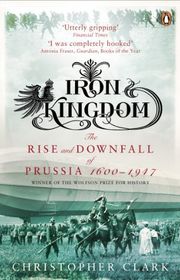
Iron Kingdom
by Christopher Clark
2006
Clark traces Prussia's transformation from an overlooked territory into a European power and the driving force behind German unification. Dynastic politics, military development, enlightened reform, and repeated reversals shape an account extending to the state's abolition after the Second World War.
The Spark in the Tinderbox
by Christopher Clark
2013
Clark reconstructs the assassination of Franz Ferdinand and Sophie in Sarajevo and its place in the origins of the First World War. He examines Serbian nationalism and the unstable Balkan setting behind an event whose consequences transformed Europe.
Time and Power
by Christopher Clark
2018
Clark explores how four German rulers understood time and used those ideas to exercise power. From Brandenburg-Prussia to Nazi Germany, he examines competing visions of tradition, permanence, and the future that shaped political choices and the regimes behind them.
Prisoners of Time
by Christopher Clark
2021
Clark's essays examine German history and the ways historians interpret political power. Portraits of leaders and lesser-known figures sit alongside reflections on battles, conversion, Brexit, and the possibilities and limitations of using the past to understand the present.
Revolutionary Spring
by Christopher Clark
2023
Clark reconstructs the revolutions that spread across Europe in 1848, following people and movements testing new political possibilities. Conflicts over liberty, social rights, nationalism, and inequality reveal how short-lived uprisings transformed public life long after their immediate defeats.
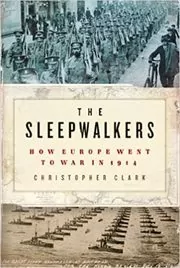
The Sleepwalkers
by Christopher Clark
Christopher Clark traces the decisions and misunderstandings that brought Europe into the First World War. Beginning with tensions in the Balkans and the assassination at Sarajevo, he examines how political leaders and competing powers moved toward catastrophe in 1914.
Where to start with Christopher Clark
For the origins of the First World War: The Sleepwalkers
For the history of Prussia: Iron Kingdom
For Europe in revolution: Revolutionary Spring
For power and historical thinking: Time and Power → Prisoners of Time
Standalone Christopher Clark books
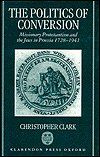
by Christopher Clark
1995Missionary Protestantism and the Jews in Prussia 1728-1941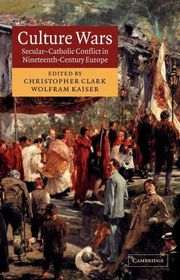

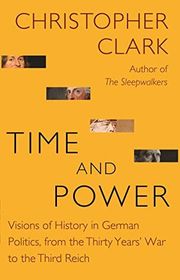
by Christopher Clark
2018Visions of History in German Politics, from the Thirty Years' War to the Third Reich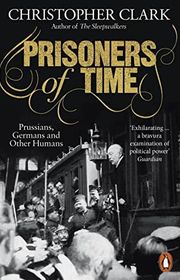

Author bio
Christopher Clark is an Australian-born historian whose books follow the making of modern Europe through religion, state power, revolution and war. He attended Sydney Grammar School and the University of Sydney, then studied at the Freie Universität Berlin before completing a doctorate at Cambridge. Germany became central to his historical work, but his books repeatedly look beyond national borders to the people, assumptions and rivalries that connect events across Europe.
His early book The Politics of Conversion examines Protestant efforts to convert Jews in Prussia. It studies the institutions and arguments behind those efforts, placing religion within political and social relationships. This is a more specialized starting point than his later broad histories, but it introduces a concern that runs through them: how people understand the world they inhabit, and how those beliefs affect what they do to others.
Iron Kingdom widens the frame to the rise and disappearance of Prussia. Battles and rulers are part of the account, alongside dynastic connections, political ideas and the institutions that held the state together. For readers who know Prussia mainly as a military power, the book supplies a much longer history of change and competing influences. It won a Wolfson History Prize in 2007.
The Sleepwalkers turns to the origins of the First World War in 1914. Beginning with the tensions surrounding Serbia and the Balkans, it traces the crisis toward the decisions of Europe's major powers. Its organizing question is how those decisions interacted. This makes it a useful choice for readers who want to follow the movement from local violence to an international emergency, with misunderstandings and partial knowledge playing their part alongside deliberate policy.
Clark was knighted in 2015.
In Time and Power, he asks how rulers' ideas about the past and future shape their actions. Four figures from German history, including Frederick the Great, Bismarck and Hitler, provide contrasting examples. The book invites readers to consider political authority through its relationship with time: what a regime believes it is preserving, restoring or bringing into existence. Prisoners of Time offers a different format, gathering essays that range across German history and the problems of interpreting the past. It suits readers who would prefer to explore one argument at a time.
Revolutionary Spring returns to a wide European stage, reconstructing the revolutions of 1848 and the disagreements within them. Calls for liberty did not always mean agreement about social rights, national identity or democracy. By following people and movements across several countries, the book shows why a single label can conceal very different political hopes. Readers can choose between these books by question rather than publication order: Prussia's development, the coming of world war, the ambitions of revolutionaries or the ways political actors imagine history.









Edited by
Software engineer whose passion for tracking book recommendations from podcasts inspired the creation of MRB.
Lead investor at 3one4 Capital whose startup expertise and love for books helped shape MRB and its growth.
Comments
Spotted a missing book, a wrong order or a mistake? Tell us and we'll fix this page.
We're a reading guide, not the author or publisher, so we can't send books or pass on messages.