
Christopher Anvil Books in Order
Browse Christopher Anvil books in order, with short summaries, series links, reading guidance, and tips on where to start with his science fiction.
Last updated:
As an Amazon Associate, we earn from qualifying purchases (at no extra cost to you).
Christopher Anvil books in publication order
13 books
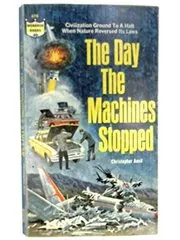
The Day The Machines Stopped
by Christopher Anvil
1964
When electrical power fails everywhere on Earth, modern civilization collapses almost overnight. Scientists, survivors, and would-be tyrants race to understand the disaster and seize control of what comes after.
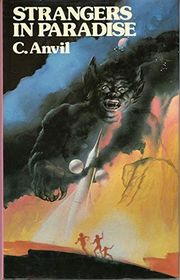
Strangers In Paradise
by Christopher Anvil
1969
The first settlers meant Paradise to be a model colony, but the grand experiment has decayed into corruption and violence. When outsiders arrive, they find a broken city and have to bluff, scheme, and improvise to survive.
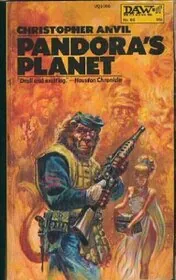
Pandora's Planet
by Christopher Anvil
1972
Earth's alien conquerors mean to absorb humanity into a comfortable empire, but occupation goes badly from the start. Told largely from the invaders' side, the novel turns resistance, sabotage, and culture clash into sly military satire.
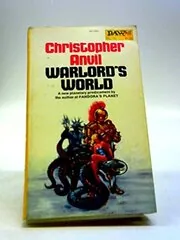
Warlord's World
by Christopher Anvil
1975
Interstellar Patrol agent Vaughan Roberts answers a princess's plea and lands on Festhold, a planet obsessed with war and heroics. What starts as a rescue becomes a dangerous tangle of treachery, politics, and survival.
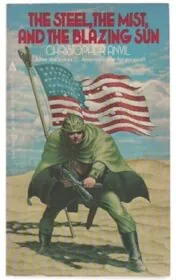
The Steel, the Mist, and the Blazing Sun
by Christopher Anvil
1980
Centuries after America and the Soviet Union bomb each other back to near-primitive conditions, the struggle starts again with older weapons and new stakes. Arakal leads a campaign for western Europe in a future war where strategy matters more than sheer firepower.
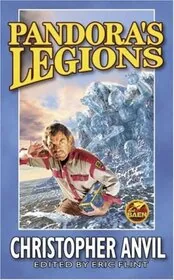
Pandora's Legions
by Christopher Anvil
2002
The Centran Empire expects Earth to be just another easy conquest. Instead, humans turn occupation, war, and imperial uplift into a slow-motion disaster for their conquerors, until the invaders begin to fear the people they thought they had beaten.
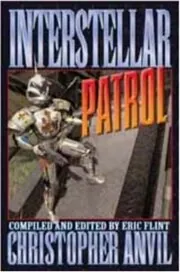
Interstellar Patrol
by Christopher Anvil
2003
A stranded starship crew bluffs its way through a failed utopian world of gangs and chaos, and that stunt earns them a place in the Interstellar Patrol. What follows is a run of clever, fast-moving missions built on nerve and improvisation.
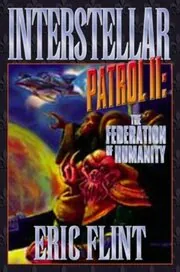
Interstellar Patrol II
by Christopher Anvil
2005
Vaughan Roberts and his team are now full Patrol operatives, sent to handle kidnappings, plagues, hostage crises, and palace intrigue across human space. The stories lean on improvisation, dirty tricks, and a dry sense of humor.
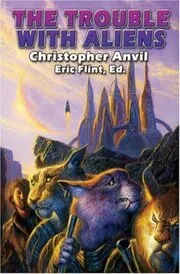
The Trouble with Aliens
by Christopher Anvil
2006
This collection pits humans against alien powers, especially the mind-bending Outs, whose illusions and persuasion should make them unbeatable. Instead, Anvil finds the cracks in every invasion plan and fills them with bluff, grit, and nasty surprises.
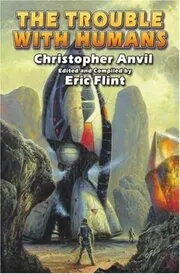
The Trouble with Humans
by Christopher Anvil
2007
In these stories, alien plans keep unraveling on contact with Earth. Shape-shifters, invaders, and armchair schemers all learn the same lesson: humans are messy, stubborn, and much harder to outthink than they look.
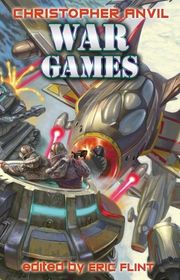
War Games
by Christopher Anvil
2008
This collection gathers Anvil's war stories, mixing future conflict, military problem-solving, and black humor. Even at their bleakest, the pieces are powered by fast thinking, sharp reversals, and the sense that plans never survive contact with people.
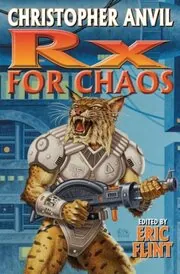
Prescription for Chaos/Rx for Chaos
by Christopher Anvil
2009
This collection follows Morton Hommel, former head of a drug laboratory, as scientific know-how and plain common sense collide with a world edging toward technological breakdown. Anvil turns gadgets, side effects, and bad ideas into sharp, darkly funny puzzles.
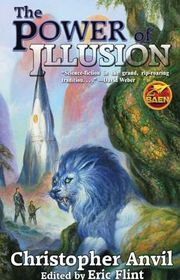
The Power of Illusion
by Christopher Anvil
2010
A broad late collection, this volume pairs the novel The Day the Machines Stopped with alien-contact tales and Richard Verner problem-solver stories. It's Christopher Anvil at his most playful, mixing catastrophe, puzzles, and bluffing under pressure.
Where to start with Christopher Anvil
If you want the core Interstellar Patrol story: Interstellar Patrol → Interstellar Patrol II → Warlord's World
If you want humans outsmarting aliens: Pandora's Planet → Pandora's Legions → The Trouble with Humans → The Trouble with Aliens
If you want collapse and recovery SF: The Day The Machines Stopped → The Power of Illusion → The Steel, the Mist, and the Blazing Sun
If you want tech puzzles and dark comedy: Prescription for Chaos/Rx for Chaos → The Power of Illusion → War Games
Christopher Anvil sub-series and character series
Interstellar Patrol/Federation Of Humanity books in order
Explore this seriesInterstellar Patrol/Federation Of Humanity books in chronological order
Christopher Anvil collections, short stories, and related book types
Short Story Collections
Standalone Christopher Anvil books
Author bio
Christopher Anvil was the pen name of Harry Christopher Crosby Jr., born in Norwich, Connecticut, on March 11, 1925. He grew up in a New York suburb, spent four years at military school, studied chemistry in college, and later served as a pilot in the U.S. military. That background matters when you read him. His fiction often feels built by someone who liked systems, procedures, and the moment when a practical plan meets a very impractical world.
He found his lane by asking what happens next.
In a 2006 interview, Anvil described the path in pretty direct terms. World War II, military service, science training, and a return to school on the GI Bill left him thinking hard about technology, conflict, and the odd decisions people make under pressure. Science fiction gave him room to test ideas without pretending the world was tidy. His first sale, "Cinderella, Inc.," appeared in Imagination in 1952. By 1956 he had adopted the name Christopher Anvil and was publishing in Astounding, later Analog.
For years he became a familiar name to magazine readers. He ranked well in reader polls, wrote steadily, and built a reputation for brisk, idea-driven stories that mixed hard problems with dry humor. Even when the setup was big, alien contact, social collapse, interstellar politics, he usually kept the storytelling tight and practical.
His heroes usually do not win by looking glamorous.
You can see his method clearly in Pandora's Planet and the later Pandora's Legions. An apparently benevolent alien empire expects Earth to fall into place. Instead, occupation turns into a study in resistance, sabotage, and human unpredictability. Readers who like Anvil tend to like that reversal. He keeps letting the side with better equipment discover that it does not really understand the people in front of it.
The same thing happens in space-adventure form in Interstellar Patrol and Interstellar Patrol II. Vaughan Roberts and his partners are not chosen because they look noble. They get noticed because they can improvise under pressure and solve frontier problems that official systems cannot quite handle. Then there is The Day the Machines Stopped, which strips away electricity itself and asks what kind of society survives when modern tools vanish overnight.
A lot of his fiction runs on recurring ingredients: gadgets with unintended consequences, bureaucracies that are just smart enough to be dangerous, military or quasi-military teams, and planets that double as social experiments. In The Trouble with Humans and The Trouble with Aliens, that turns comic. Aliens arrive with cleaner theories, stronger weapons, or psychic advantages, and then humans ruin the plan by being suspicious, stubborn, inventive, or too contrary to manage politely.
Later collections edited by Eric Flint helped bring a lot of that magazine fiction back into book form, which suits him well because Anvil was always great at the sharp setup and the fast reversal. He spent his later years in Cayuta, New York, and died there on November 30, 2009. What lasts is the feeling that in his stories, quick thinking is its own kind of heroism.





Edited by
Software engineer whose passion for tracking book recommendations from podcasts inspired the creation of MRB.
Lead investor at 3one4 Capital whose startup expertise and love for books helped shape MRB and its growth.
Comments
Did we miss something? Have feedback?
Help us improve this page by sharing your thoughts