
Change War Books in Order
Part ofFritz Leiber Books in OrderFollow the Change War books by Fritz Leiber in order, with quick summaries, time-war background, and help choosing the best place to begin.
Last updated:
As an Amazon Associate, we earn from qualifying purchases (at no extra cost to you).
Change War books in publication order
2 books

The Big Time
by Fritz Leiber
1958
Most of this time-war classic unfolds in a single offstage refuge where soldiers and staff from many eras wait, gossip, and panic. The result is tight, theatrical science fiction with huge implications.
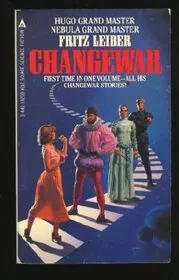
Changewar
by Fritz Leiber
1983
This linked collection gathers Leiber's Change War stories, where the Snakes and Spiders rewrite history itself. Time travel here feels unstable, personal, and more unsettling than triumphant.
Change War books in chronological order
Series background & context
Fritz Leiber's Change War stories take a huge science fiction idea and make it feel strangely intimate. The basic premise is simple to say and hard to shake off once it lands: two sides, the Snakes and the Spiders, are fighting a war across all of history. They do not just battle in one era. They keep changing the past so that entire futures appear, vanish, and re-form.
That means the battlefield is everything.
What makes this series different from many time-war stories is the angle. Leiber is less interested in marching readers through a neat timeline than in showing what it feels like to live inside unstable reality. A soldier can come back from a mission to find that memory itself has shifted. A whole stretch of history can be rewritten while the people caught in the war are still trying to drink, flirt, recover, or decide who is lying. The scale is cosmic, but the mood is often tense, claustrophobic, and personal.
The Big Time is the key book. Much of it takes place in a rest station outside ordinary time, often called the Place, where entertainers and support staff serve warriors pulled from many different centuries. That setting lets Leiber do something clever. Instead of showing endless battles, he shows the offstage pressure they create: suspicion, fatigue, sudden changes in memory, and the fear that your side may already have been erased somewhere else. The war is everywhere, but the drama stays close.
The later linked stories gathered in Changewar widen the picture without losing that nervous edge. You get more glimpses of altered histories, impossible ships, paradox, and missions where the objective is not territory but a crucial turn in events. The series never treats time travel like a clean machine problem. It is political, psychological, and sometimes almost theatrical. That last part fits Leiber well. He liked enclosed scenes, sharp voices, and the sense that people are performing even while they panic.
Another good thing about the Change War books is that there is no easy safety net. In an ordinary war, people can at least imagine a home front or a fixed past behind them. Here, both can be rewritten. Characters are not just fighting for victory. They are fighting to preserve versions of reality, personal history, and sometimes the simple fact that they themselves once existed in a particular way.
So what should you expect? Expect big ideas, but not cold ones. Expect time travel that feels messy and dangerous rather than tidy. Expect dialogue, pressure, and the eerie sense that history is not settled for a second. If you want the best entry point, start with The Big Time. Then move to Changewar or the later omnibus Snakes & Spiders for the broader shape of Leiber's most brain-bending series.













Edited by
Software engineer whose passion for tracking book recommendations from podcasts inspired the creation of MRB.
Lead investor at 3one4 Capital whose startup expertise and love for books helped shape MRB and its growth.
Comments
Did we miss something? Have feedback?
Help us improve this page by sharing your thoughts