
Carter Dickson Books in Order
Browse Carter Dickson books in order, with short summaries, alternate titles, series notes, and easy advice on where to start with John Dickson Carr's classic mysteries.
Last updated:
As an Amazon Associate, we earn from qualifying purchases (at no extra cost to you).
Carter Dickson books in publication order
28 books
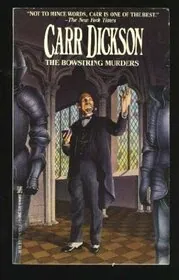
The Bowstrings Murders
by Carter Dickson
1933
At Bowstring Castle, eccentric Lord Rayle is strangled with one of his own bowstrings among his treasured medieval arms. Detective John Gaunt has to solve a moody castle murder without Merrivale's help.
The Plague Court Murders
by Carter Dickson
1934
A séance at the decaying Plague Court ends with a medium stabbed inside a locked room, and whispers of an old ghost suddenly seem plausible. Sir Henry Merrivale and Chief Inspector Masters have to separate stage terror from human murder.

The White Priory Murders
by Carter Dickson
1934
A Hollywood star is found beaten to death in a snowbound pavilion, with only one set of footprints leading to the scene. Merrivale faces a classic impossible crime wrapped in romance, jealousy, and theatrical egos.
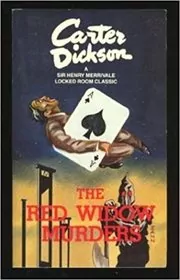
The Red Widow Murders
by Carter Dickson
1935
Guests draw cards to decide who will spend the night in a room said to be haunted by the Red Widow. By morning a man is dead inside the watched, locked room, and Merrivale must explain the impossible.
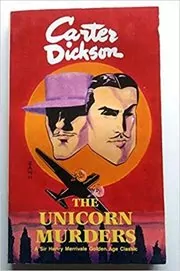
The Unicorn Murders
by Carter Dickson
1935
After an emergency landing near a French château, a mixed company of spies and strangers becomes trapped together. Then one man is killed in full view, as if by a unicorn, and Merrivale must untangle disguise, espionage, and murder.
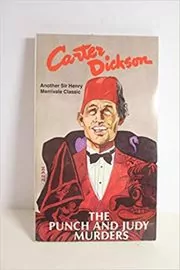
The Punch and Judy Murders
by Carter Dickson
1936
An undercover visit to Torquay pulls Ken Blake into a tangle of espionage, spiritualism, and sudden death. When one man dies of strychnine and another falls far away at the same time, the case turns beautifully strange.
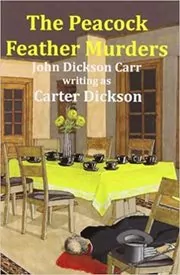
The Peacock Feather Murders
by Carter Dickson
1937
Two years after an unsolved murder in an empty house, the police are invited to another vacant address for an exact repeat. When a man is shot in a sealed room under watch, Merrivale tackles one of Carr's neatest puzzles.
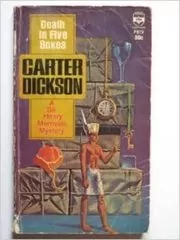
Death in Five Boxes
by Carter Dickson
1938
A young scientist walks into a flat and finds the host dead, the guests unconscious, and every pocket stuffed with bizarre objects. Merrivale must connect poison, empty boxes, and a very carefully staged murder.
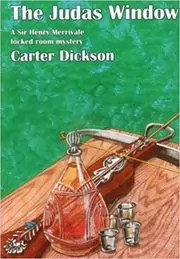
The Judas Window
by Carter Dickson
1938
A young man wakes drugged inside a locked room beside his future father-in-law, who has been killed with an arrow. Most of the novel becomes a courtroom duel as Merrivale tries to save an apparently doomed defendant.

Fatal Descent
by Carter Dickson
1939
A publishing magnate enters his private lift alive and reaches the lobby dead from a gunshot, though nobody could have joined him on the way down. This Carr collaboration turns an elevator into a perfect impossible-crime scene.
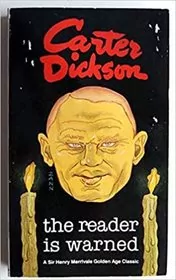
The Reader Is Warned
by Carter Dickson
1939
A man dies in his own home under conditions that make the murder seem impossible. With a missing notebook of murder tricks and talk of killing at a distance, Merrivale has to cut through one of Carr's eeriest setups.
And So to Murder
by Carter Dickson
1940
A shy bestselling novelist arrives at a British film studio and is met by sabotage, acid attacks, and rising tension. When someone tries murder in earnest, Merrivale steps into a sharp backstage mystery.
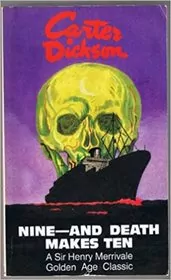
Nine and Death Makes Ten
by Carter Dickson
1940
Nine passengers cross the Atlantic in wartime blackout, under the threat of German submarines and private secrets. When one of them is murdered and the fingerprint fits nobody aboard, Merrivale must solve the crime before panic spreads.
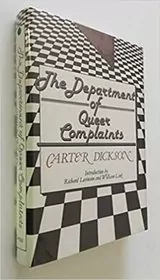
The Department of Queer Complaints
by Carter Dickson
1940
This collection gathers bizarre mystery stories, several featuring Colonel March of Scotland Yard's odd-cases department. The cases are short, clever, and full of impossible appearances, vanishings, and locked-room style tricks.
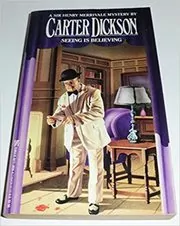
Seeing Is Believing
by Carter Dickson
1941
During a hypnotism stunt, a woman seems to stab her husband with a dagger that everyone thought was fake. Merrivale and Chief Inspector Masters have to explain how a public performance turned into murder.
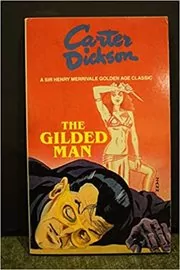
The Gilded Man
by Carter Dickson
1942
A nervous house party, priceless paintings, and a masked intruder set the stage for murder at Waldemere. When the dead burglar turns out to be the host himself, Merrivale faces a case full of nerves, illusion, and family strain.
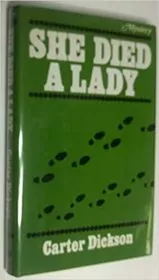
She Died A Lady
by Carter Dickson
1943
An adulterous couple appears to walk together to a cliff edge and vanish into a lovers' suicide. But when their bodies are found shot through the heart, Merrivale has to rebuild the truth from a beautiful lie.
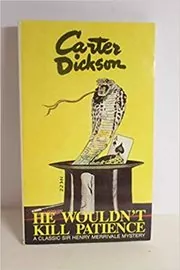
He Wouldn't Kill Patience
by Carter Dickson
1944
A zoo director seems to seal himself inside his study and die by gas, but his daughter knows one thing for certain: he would not have killed his pet snake. Merrivale follows a trail of magicians, reptiles, and wartime nerves.
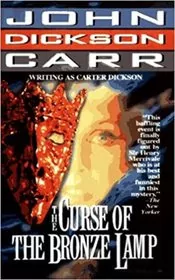
The Curse of the Bronze Lamp
by Carter Dickson
1945
A young woman brings home an ancient Egyptian lamp said to carry a curse, then vanishes within minutes of entering the hall. Merrivale has to explain the disappearance before a very human murder follows.
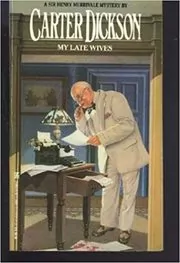
My Late Wives
by Carter Dickson
1946
Police have long believed Roger Bewlay murdered several wives on their honeymoons and then disappeared. Years later an anonymous play script reopens the case, and Merrivale follows the trail into theatre, disguise, and buried bodies.
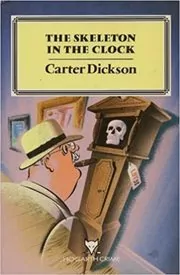
The Skeleton in the Clock
by Carter Dickson
1948
A chance meeting revives an old love story and an older death that may not have been accidental at all. As eerie events gather around Fleet House, Merrivale digs into family history and fresh murder.
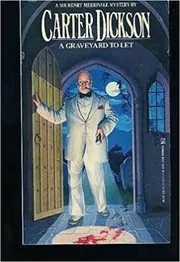
A Graveyard to Let
by Carter Dickson
1949
A millionaire invites Merrivale to witness a miracle, then dives fully clothed into a swimming pool and disappears. The case mixes vanishing-act showmanship with family secrets and the uncomfortable business of inheritance.
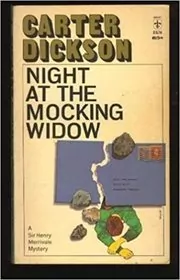
Night at the Mocking Widow
by Carter Dickson
1950
A Somerset village is being poisoned by anonymous letters from the so-called Mocking Widow. When the threats turn into an impossible bedroom visitation and then murder, Merrivale has to expose the spite behind the spectacle.
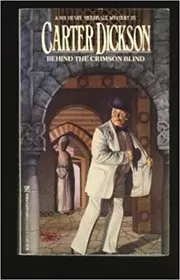
Behind the Crimson Blind
by Carter Dickson
1952
On holiday in Tangier, Merrivale is drawn into the hunt for Iron Chest, a master criminal who steals and vanishes without a trace. The result is a brisk later mystery with sunshine, charm, and a clever central chase.
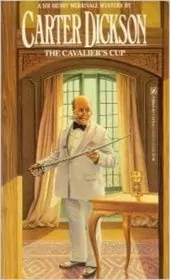
The Cavalier's Cup
by Carter Dickson
1953
At an old country hall, a ghostly Cavalier seems to move an heirloom cup and sword inside a locked room. With Chief Inspector Masters on the spot, Merrivale must turn a haunting back into a human trick.

Fear is the same
by Carter Dickson
1956
A modern man and the actress he loves flee a murder accusation, only to wake in 1795 England with the same danger closing in. Carr blends historical adventure, romance, and mystery in one of his strangest books.

Merrivale, March and Murder
by Carter Dickson
1991
This later collection brings together rare Sir Henry Merrivale and Colonel March stories, along with other shorter Carr pieces. It is the place to go if you want the odd corners of the Carter Dickson world.
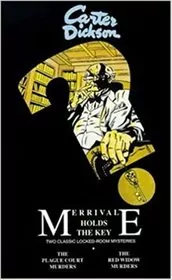
Merrivale Holds the Key
by Carter Dickson
1995
This omnibus pairs The Plague Court Murders with The Red Widow Murders, two early Merrivale locked-room classics. It is a handy way to read the detective at his creepiest and most impossible.
Where to start with Carter Dickson
If you want the classic Sir Henry Merrivale start: The Plague Court Murders → The White Priory Murders → The Red Widow Murders
If you want the strongest locked-room puzzles: The Ten Teacups → The Judas Window → The Reader Is Warned
If you like wartime and studio intrigue: And So to Murder → Nine and Death Makes Ten → Seeing Is Believing
If you want shorter, stranger cases: The Department of Queer Complaints → Merrivale, March and Murder
If you want Carter Dickson outside Merrivale: The Bowstrings Murders → Fatal Descent → Fear is the same
Carter Dickson sub-series and character series
Sir Henry Merrivale (Carter Dickson) books in order
Explore this seriesSir Henry Merrivale (Carter Dickson) books in chronological order
Standalone Carter Dickson books
Author bio
Carter Dickson was one of the main pen names used by John Dickson Carr, the American mystery writer who turned impossible crimes into his specialty. Carr was born in Uniontown, Pennsylvania, on November 30, 1906, and grew up in a household that mixed law, politics, and storytelling. His father, Wooda Nicholas Carr, was a lawyer and congressman, and the young Carr seems to have picked up an early taste for argument, history, and dramatic scenes.
He was American, but much of his fictional world feels stubbornly, lovingly English.
Carr studied at The Hill School and then at Haverford College, where he wrote for campus publications and introduced his first series detective, Henri Bencolin, in student work. After graduating in 1929, he married Clarice Cleaves, an Englishwoman, and moved to England in the early 1930s. That change of country mattered, because it gave him the settings, manners, and atmosphere that would shape so many of his books.
He wrote under several names, but readers usually sort his work into two big shelves. As John Dickson Carr, he wrote the Dr. Gideon Fell novels and a range of historical and standalone mysteries. As Carter Dickson, he created Sir Henry Merrivale and books like The Plague Court Murders, The White Priory Murders, The Judas Window, and The Department of Queer Complaints.
He loved a crime that looked impossible.
Locked rooms, sealed studies, footprints in fresh snow, vanished bodies, fake hauntings, poisoned drinks, and murder scenes crowded with baffled witnesses turn up again and again in his work. Readers come to Carr for the puzzle, but they tend to stay for the mood as well. Even when the answer is practical, the road to it often passes through old houses, stage tricks, family legends, and the uneasy feeling that something supernatural may be in the room.
Some of his best known books under his own name include The Hollow Man, often singled out as a landmark locked room novel, while the Carter Dickson side of his career shows a slightly louder, more comic energy. Sir Henry Merrivale can be irritable, absurd, and brilliant all at once, and that mix helped Carr keep even the most elaborate plots lively. He could also stretch beyond straight detection, as books like Fear Is the Same show, bringing history, fantasy, and time-slip ideas into the mystery form.
Carr's standing in the field was plain in his lifetime. He wrote a biography of Arthur Conan Doyle that won a Special Edgar Award, later received another Special Edgar for his long career, and was named a Grand Master by the Mystery Writers of America in 1963. He was also one of the very few Americans admitted to the British Detection Club.
The later years were harder. Carr returned to the United States in 1948, lived for a time in New York, and in 1963 suffered a stroke that left his left side paralyzed. Even so, he kept writing with one hand and continued reviewing detective fiction for several years. He died in Greenville, South Carolina, in 1977.
His books still feel like invitations to a very specific kind of game. The rules are strict, the mood is theatrical, and just when everything looks impossible, Carter Dickson finds a way to make it snap into place.



Edited by
Software engineer whose passion for tracking book recommendations from podcasts inspired the creation of MRB.
Lead investor at 3one4 Capital whose startup expertise and love for books helped shape MRB and its growth.
Comments
Did we miss something? Have feedback?
Help us improve this page by sharing your thoughts