
C Morgan Babst Books in Order
Explore C Morgan Babst's books in order, with a guide to The Floating World, a short author bio, plot summary, and where to start reading.
Last updated: July 10, 2026
As an Amazon Associate, we earn from qualifying purchases (at no extra cost to you).
C Morgan Babst books in publication order
1 book
The Floating World
by C Morgan Babst
2017
After Hurricane Katrina, Del Boisdoré returns to a shattered New Orleans to learn what happened to her sister Cora, who refused to evacuate. It is a family story about trauma, race, memory, and the hard work of rebuilding.
Where to start with C Morgan Babst
If you want her defining novel: The Floating World
If you're interested in post-Katrina New Orleans: The Floating World
If you like family dramas with mystery at the center: The Floating World
Standalone C Morgan Babst books
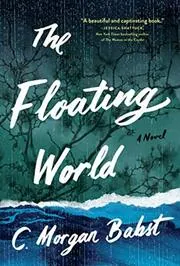
The Floating World
by C Morgan Babst
2017
Author bio
C Morgan Babst was born and raised in New Orleans, and that city sits at the center of almost everything she writes. She studied writing first at NOCCA, then at Yale, and later at NYU. Long before her first novel appeared, she was already moving between fiction and essays, training herself to notice how weather, history, class, and family press on ordinary life.
At NOCCA, that education seems to have stuck especially hard. Babst has written about the intensity of those early classes, where New Orleans teachers pushed young writers through long afternoons of reading and craft talk. The lesson was simple and useful: pay attention, read widely, and take place seriously.
Before fiction reached bookstores, she was publishing shorter work that already showed her main interests. Her pieces often circle New Orleans from different angles, sometimes through food and ritual, sometimes through floodwater, family memory, and the way a city can both shelter and fail the people who love it.
Hurricane Katrina changed the course of her work. Babst evacuated with her family just before the storm, and the damage to New Orleans stayed with her for years. She has said she knew almost right away that she would have to write a novel from that experience, even if it took a long time to become ready for it.
For a while, writing was a way to get home.
After Katrina, she spent more than a decade in New York, and she began The Floating World out of what she once described as intense homesickness. The novel follows the Boisdoré family in the aftermath of the storm, especially sisters Cora and Del, and uses one family’s fracture to look at trauma, race, memory, and the damage a city carries in its bones. It was her debut novel, and it landed on several best-of-2017 lists while also becoming a New York Times Editors’ Pick.
Readers who connect with The Floating World usually talk about its sense of place. New Orleans is not just a backdrop in the book. It presses on every choice the characters make, from evacuation and return to grief, loyalty, and the question of what can still be repaired after a public disaster becomes painfully private.
Her nonfiction shows the same pull toward home. In essays like Preservation, Forecast of an Aftermath, and Go Hubig’s or Go Home, Babst writes about storms, family memory, food, architecture, and the strange mix of dread and devotion that comes with loving New Orleans. Her short fiction and essays have appeared in The Washington Post, Saveur, The Oxford American, Guernica, Garden and Gun, Harvard Review, and The New Orleans Review, and one of her essays was named a Notable Essay in Best American Essays 2016.
She keeps coming back to water.
That makes sense, because water, risk, and belonging are recurring subjects in her work. So are mixed families, inherited histories, and the ways public systems fail ordinary people. Even when she is writing about oysters, Mardi Gras, or a single old house, there is often a bigger question underneath: who gets protected, who gets remembered, and what a place asks in return for love. After years away, Babst returned to New Orleans, where she lives and keeps writing from deep inside the city she never really left behind.


Edited by
Software engineer whose passion for tracking book recommendations from podcasts inspired the creation of MRB.
Lead investor at 3one4 Capital whose startup expertise and love for books helped shaped MRB and its growth.
Comments
Did we miss something? Have feedback?
Help us improve this page by sharing your thoughts