
Bram Stoker Books in Order
This page lists Bram Stoker's novels, stories, and collections in order, with brief summaries, an author biography, and guidance on the best books to read first.
Last updated:
As an Amazon Associate, we earn from qualifying purchases (at no extra cost to you).
Bram Stoker books in publication order
37 books

The Crystal Cup
by Bram Stoker
1872
In a fantastical kingdom, a captive artist is forced to carve a flawless crystal vase for his king, hoping the masterpiece will win his freedom and a reunion with his beloved. The finished cup brings both transcendent beauty and tragic consequences.

The Chain Of Destiny
by Bram Stoker
1875
Told through letters and journals, this early novella follows young Frank Stanford during a visit to a remote house where a mysterious chain, strange dreams, and a prophesied bride suggest that love and fate may be guided by supernatural forces.
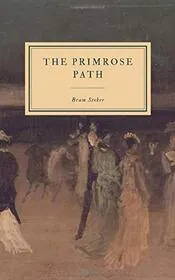
The Primrose Path
by Bram Stoker
1875
Stoker’s first novel follows honest Dublin theatre carpenter Jerry O'Sullivan, who moves his family to London in search of better work. Ground down by drink and disappointment, he slides into jealousy and violence in a bleak temperance tragedy.

The Castle of the King
by Bram Stoker
1876
First published in *Under the Sunset*, this fairy‑tale for older readers follows an aging poet who, unable to accept his wife's death, journeys through eerie landscapes to the Castle of the King of Death in a desperate, lyrical quest to be reunited.

The Duties of Clerks of Petty Sessions in Ireland
by Bram Stoker
1879
A practical handbook from Stoker’s civil service years, this book lays out the responsibilities of petty sessions clerks in nineteenth‑century Ireland, covering court procedures, forms, fines, and everyday regulations that shaped local justice.

Under the Sunset
by Bram Stoker
1881
Stoker’s first story collection visits a dream country “under the sunset,” where children encounter giants, shadowy spirits, and allegorical figures of Death. The eight tales blend dark fantasy and moral lesson, revealing an early, imaginative side of his writing.
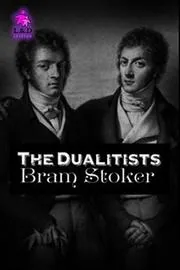
The Dualitists
by Bram Stoker
1887
This grimly comic story follows two boys whose delight in smashing objects grows into a morbid fascination with destruction. When their pranks turn toward their neighbors’ twin infants, Stoker pushes Victorian taste and explores how childish cruelty can curdle into horror.
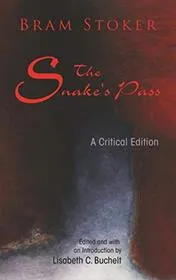
The Snake's Pass
by Bram Stoker
1890
English visitor Arthur Severn is drawn into Irish legends of a buried serpent crown, a treacherous shifting bog, and the schemes of moneylender Black Murdock. As he falls for Norah Joyce, superstition, weather, and greed threaten to swallow both land and lives.

The Judge's House
by Bram Stoker
1891
Math student Malcolm Malcolmson rents a long‑abandoned house once owned by a brutal hanging judge, dismissing local fears as superstition. Alone at night with scuttling rats and a huge, uncanny visitor, he learns how deadly the judge’s lingering presence can be.

Crooken Sands
by Bram Stoker
1894
On holiday in a Scottish village, London merchant Arthur Markam insists on strutting about in a gaudy Highland costume. Local warnings about vanity, a sinister double, and a treacherous quicksand turn his seaside break into a strange moral ghost story.

The Shoulder of Shasta
by Bram Stoker
1895
Convalescing near Mount Shasta, Californian heiress Esse Elstree meets rugged hunter Grizzly Dick and visiting English aristocrats. Her adventures in the mountains turn into a tangle of attraction, class expectations, and conflicting ideas about love and independence.
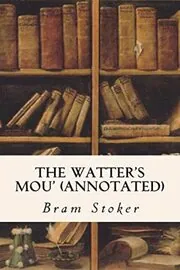
The Watter's Mou'
by Bram Stoker
1895
On the harsh Scottish coast, coastguard officer William Barrow must break a smuggling ring run by desperate local fishermen, including the father of the woman he loves. Duty, poverty, and family loyalty collide in this compact, atmospheric tale.

The Burial of the Rats
by Bram Stoker
1896
Exploring the rubbish heaps outside Paris, a curious visitor wanders into the territory of murderous rag‑pickers who feed their victims to hordes of rats. Trapped after dark, he must escape both human killers and the swarming vermin that surround them.
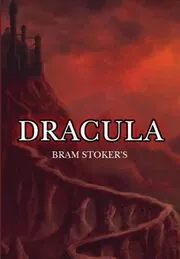
Dracula
by Bram Stoker
1897
Told through diaries, letters, and news clippings, *Dracula* follows Jonathan Harker, his fiancée Mina, and their friends as they confront a Transylvanian count who brings vampirism to Victorian England, pitting modern science and faith against a very old evil.
Recommended by
1 person Patrick Collison recommended this book
Patrick Collison
Patrick Collison labeled this book "substantially above average."
Patrick Collison's recommendation of this book
Miss Betty
by Bram Stoker
1898
Set in Georgian England, this historical romance follows heiress Betty Pole, whose sudden inheritance and uncanny gift for premonition upend her quiet life. As she falls in love, questions of money, class, and honor force her to decide whom she can truly trust.
The Mystery Of The Sea
by Bram Stoker
1902
Set on the wild coast of north-east Scotland, this story blends romance, politics, and the supernatural. Englishman Archibald Hunter discovers he has second sight, falls for an American heiress, and becomes embroiled in coded documents, Spanish treasure, and kidnapping plots.
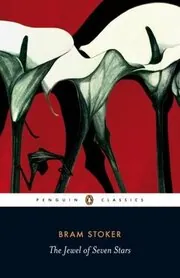
The Jewel of Seven Stars
by Bram Stoker
1903
A young barrister is summoned to help an Egyptologist who lies mysteriously wounded beside ancient relics. Drawn into a plan to revive Queen Tera, an uncanny mummy, he witnesses a dangerous experiment where modern electricity and ancient magic meet with shattering consequences.
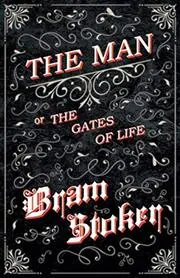
The Man/The Gates of Life
by Bram Stoker
1905
Also published as *The Gates of Life*, this Gothic romance centers on Stephen Norman, a strong-willed heiress raised almost like a son, and Harold, the foster brother who loves her. Their long, stormy path toward each other explores gender roles, pride, and forgiveness.
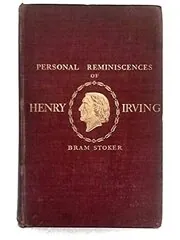
Personal Reminiscences of Henry Irving
by Bram Stoker
1906
In this two-volume memoir, Stoker looks back on his decades managing the Lyceum Theatre and working with star actor Henry Irving. The book mixes travel stories, backstage mishaps, and affectionate portraits of Irving, offering a vivid picture of Victorian theatrical life.
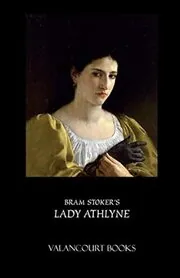
Lady Athlyne
by Bram Stoker
1908
This romantic novel follows spirited American Joy Ogilvie and Irish nobleman Lord Athlyne, whose names become linked through a joking title. A daring rescue, secret courtship, and clashes with Joy’s strict father test questions of identity, class, and modern womanhood.

Snowbound
by Bram Stoker
1908
Subtitled *The Record of a Theatrical Touring Party*, this linked collection traps a group of actors and stagehands on a snowbound train in Scotland. To pass the night they swap stories, from backstage comedy to eerie, near‑supernatural tales drawn from theatre life.
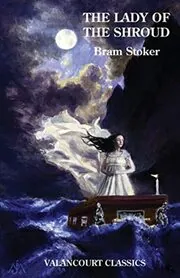
The Lady of the Shroud
by Bram Stoker
1909
Rupert Saint Leger inherits a fortune and a castle in the Blue Mountains on the Balkan coast. There he meets a veiled woman who visits him at night in her shroud, drawing him into a tangle of supposed vampirism, politics, and unexpected romance.
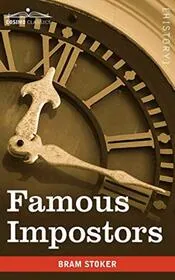
Famous Impostors
by Bram Stoker
1910
Stoker’s final nonfiction book tours cases of notorious pretenders, hoaxers, magicians, and swindlers. From false heirs to elaborate urban hoaxes, he retells real scandals to explore how easily people can be fooled by performance and desire.

The Garden of Evil
by Bram Stoker
1911
Issued under an alternate title for *The Lair of the White Worm*, this edition follows Adam Salton’s investigation of sinister schemes in rural England, where a seductive landowner and an ancient dragon‑like “worm” threaten the people he has come to care for.
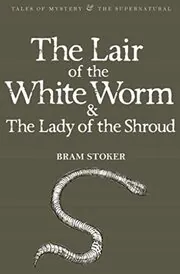
The Lair of the White Worm
by Bram Stoker
1911
In rural Derbyshire, young Australian Adam Salton inherits an estate and is drawn into the orbit of the enigmatic Arabella March, a deranged landowner, and the legend of a monstrous White Worm. Snakes, mesmerism, and ancient evil twist through this eccentric horror novel.

Dracula's Guest
by Bram Stoker
1914
An unnamed English traveler leaves Munich for a countryside walk on Walpurgis Night, ignoring warnings of snow and wolves. Lost among ruined graves and an aristocratic tomb, he encounters a beautiful corpse, a spectral wolf, and a narrow escape linked to Count Dracula.

The Bram Stoker Bedside Companion
by Bram Stoker
1973
This anthology gathers ten of Stoker's strongest shorter pieces, including “The Secret of the Growing Gold”, “Dracula’s Guest”, “The Judge’s House”, and seafaring and theatrical tales, making a handy bedside introduction to his fiction beyond *Dracula*.

Shades of Dracula
by Bram Stoker
1982
Subtitled “The Uncollected Stories of Bram Stoker”, this volume assembles rarities that echo *Dracula* in mood or subject, from early fantasies in *Under the Sunset* to later magazine pieces, with an eye to showing how his vampire novel grew from other work.

Midnight Tales
by Bram Stoker
1992
Edited as a compact horror collection, *Midnight Tales* brings together several obscure stories connected to Stoker’s theatre memoirs, along with other short pieces like “The Spectre of Doom” and “A Criminal Star”, highlighting his taste for macabre anecdotes and ironic twists.

Best Ghost and Horror Stories
by Bram Stoker
1997
This classic selection presents fourteen of Stoker’s most effective short pieces, including “The Squaw”, “The Burial of the Rats”, “The Judge’s House”, “Dracula’s Guest”, and more, offering a concentrated tour of his ghostly and gruesome imagination.

The Judge's House and Other Weird Tales
by Bram Stoker
2003
A themed collection built around “The Judge’s House”, this volume gathers several of Stoker’s stranger stories into one book, serving up ghosts, doubles, murderous animals, and psychological breakdowns for readers who enjoy his shorter, weirder fiction.
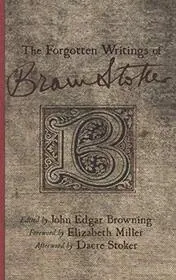
The Forgotten Writings of Bram Stoker
by Bram Stoker
2012
An anthology of rare journalism, sketches, and short fiction, this volume showcases Stoker beyond *Dracula*, from macabre tales and theatrical anecdotes to humorous pieces that originally appeared in hard-to-find newspapers and magazines.

The Lost Journal of Bram Stoker
by Bram Stoker
2012
This volume prints Stoker’s early private notebook from the 1870s, filled with story ideas, travel impressions, scraps of dialogue, and dark little vignettes. Commentary by modern editors helps trace how these jottings later fed into works like *Dracula* and *Under the Sunset*.
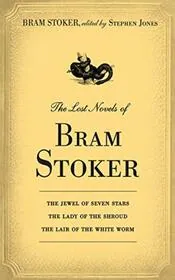
The Lost Novels of Bram Stoker
by Bram Stoker
2012
This omnibus gathers three of Stoker's later Gothic novels, including *The Jewel of Seven Stars*, *The Lady of the Shroud*, and *The Lair of the White Worm*, collecting his Egyptian mummy terror, Balkan intrigue, and bizarre dragon legend in one volume.
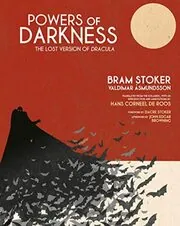
Powers of Darkness
by Bram Stoker
2017
A rediscovered Scandinavian variant of *Dracula*, Powers of Darkness recasts the story as a faster, pulpier nightmare of occult conspiracies and political extremism, expanding the Transylvanian episodes and introducing new characters, cults, and sinister plots.

A Dream of Red Hands
by Bram Stoker
2018
Jacob Settle is a gentle, solitary man haunted by a recurring dream in which his hands drip with blood as he approaches heaven’s gate. When he finally confesses the crime behind the vision, a chance at grim atonement appears.

Bram Stoker Horror Stories
by Bram Stoker
2018
Part of a modern Gothic Fantasy series, this deluxe anthology collects key Stoker tales such as “The Judge’s House”, “The Burial of the Rats”, and “Dracula’s Guest”, alongside substantial extracts from novels including *Dracula*, *The Jewel of Seven Stars*, and *The Lair of the White Worm*.
Where to start with Bram Stoker
If you want his essential Gothic horror: Dracula → Dracula's Guest
If you enjoy occult adventure with politics and treasure hunts: The Mystery of the Sea → The Jewel of Seven Stars → The Lady of the Shroud
If you like character-driven romances with Gothic touches: The Snake's Pass → The Watter's Mou' → Lady Athlyne → The Man/The Gates of Life
If you prefer short, chilling stories: The Judge's House → The Burial of the Rats → A Dream of Red Hands → Crooken Sands
If you’re curious about his early fantasies for younger readers: Under the Sunset → Snowbound
Bram Stoker collections, short stories, and related book types
Short Stories/Novellas
Short Story Collections
Non-Fiction
Standalone Bram Stoker books
Author bio
Bram Stoker was born on 8 November 1847 in Clontarf, a coastal suburb of Dublin. As a child he was mysteriously ill and spent years confined to bed, listening to stories and watching the life of the city from indoors. When he finally recovered, he threw himself into study, sport, and student life.
At Trinity College Dublin he studied mathematics and science, ran debating societies, and excelled at rugby and athletics. By day he followed his father into the civil service at Dublin Castle. By night he read widely, wrote short fiction, and began slipping away to the theatre, which quickly became his second home.
Stoker’s first publications were not horror stories at all. In the 1870s he produced a legal handbook, The Duties of Clerks of Petty Sessions in Ireland, along with early tales like “The Crystal Cup” and “The Chain of Destiny”. He also reviewed plays for the Dublin Evening Mail. One enthusiastic review of Henry Irving’s Hamlet led to a long dinner, a lifelong friendship, and a complete change of career.
In 1878 Stoker married Florence Balcombe, a noted Dublin beauty, and moved with her to London. That same year he became acting, then business manager of Irving’s Lyceum Theatre, a job he would hold for more than a quarter of a century. The work was demanding. He booked seasons and tours, managed finances, wrote hundreds of letters, soothed tempers, and sometimes even helped move scenery. Much of his life was spent on overnight trains and in borrowed offices, squeezing writing into the gaps.
Fiction, however, never stopped. Stoker’s early books ranged from children’s fantasy stories in Under the Sunset to Irish romance and folklore in The Snake’s Pass, and sea‑coast dramas such as The Watter’s Mou’ and The Shoulder of Shasta. He often drew on places he knew well, especially the Irish west and the Scottish fishing village of Cruden Bay, where he liked to holiday and write.
In the 1890s he began researching vampires, folklore, and Eastern European history. That work eventually became Dracula, published in 1897. Structured as a bundle of journals, letters, and news clippings, the novel follows Count Dracula from his Transylvanian castle to the streets of Victorian London. It mixes travel writing, modern gadgets, and old superstitions in a way that still feels oddly modern. At first the book earned steady but not spectacular attention; its lasting fame grew through stage versions and, later, film.
Stoker did not stop with one Gothic success. He wrote occult adventure in The Jewel of Seven Stars, political and romantic intrigue in The Lady of the Shroud and The Mystery of the Sea, and increasingly strange horror in The Lair of the White Worm. Alongside the fiction he produced long nonfiction works, notably Personal Reminiscences of Henry Irving and Famous Impostors, which reveal his fascination with performance, reputation, and the blurred line between truth and invention.
Away from the desk he moved in lively literary circles, knowing figures such as Arthur Conan Doyle and Oscar Wilde. His home life was more private: he and Florence had one son, Noel, and much of Stoker’s energy went into keeping the Lyceum afloat until Irving’s final tours and the theatre’s closure.
Stoker died in London on 20 April 1912, after several years of failing health. In the decades that followed, Dracula escaped its era and became a kind of modern myth, spawning films, pastiches, and a major horror award that now bears his name. The rest of his work shows a restless writer who tried many forms, from children’s stories to legal manuals, but kept circling back to questions of fear, faith, loyalty, and what happens when old terrors collide with new machines.









Edited by
Software engineer whose passion for tracking book recommendations from podcasts inspired the creation of MRB.
Lead investor at 3one4 Capital whose startup expertise and love for books helped shape MRB and its growth.
Comments
Did we miss something? Have feedback?
Help us improve this page by sharing your thoughts