
Black Magic Books in Order
Part ofDennis Wheatley Books in OrderFind the Black Magic series by Dennis Wheatley in order, with brief summaries, occult series background, and help choosing the best starting point.
Last updated:
As an Amazon Associate, we earn from qualifying purchases (at no extra cost to you).
Black Magic books in publication order
12 books

The Devil Rides Out
by Dennis Wheatley
1934
Simon Aron has fallen in with a Satanic circle, and the Duke de Richleau races to pull him back. The rescue becomes a terrifying struggle against Mocata, ritual magic, and the pull of evil.

Strange Conflict
by Dennis Wheatley
1941
The Duke de Richleau faces a case where modern ambition and black magic begin to overlap. What starts as a puzzle turns into a fight for one man's body, mind, and soul.

The Haunting of Toby Jugg
by Dennis Wheatley
1948
A badly injured young airman is sent to a remote old house to recover, but the place seems full of whispers, dread, and invisible threats. This is one of Wheatley's most intimate and unsettling books.
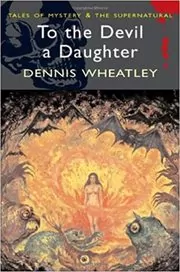
To the Devil, A Daughter
by Dennis Wheatley
1953
Molly Fountain becomes involved in the terrifying case of a young girl marked out for a Satanic purpose. The story builds from uneasy mystery to full occult confrontation.

The Ka of Gifford Hillary
by Dennis Wheatley
1956
Gifford Hillary's fascination with ancient beliefs and the human soul leads him into experiments that should have been left alone. Wheatley blends occult dread with speculative science.

The Satanist
by Dennis Wheatley
1960
Trying to uncover the truth about her husband's death, a determined woman enters a Satanic circle and risks being trapped by it. Wheatley keeps the tension grounded in secrecy, ritual, and fear.

They Used Dark Forces
by Dennis Wheatley
1964
Gregory Sallust faces Nazis, secret weapons, and an occult enemy whose influence seems to reach beyond ordinary espionage. It is a war thriller that edges fully into black magic.

Unholy Crusade
by Dennis Wheatley
1967
Lucky Adam Gordon is swept into a historical adventure where warfare, belief, and dark rites become entangled. It is one of Wheatley's later books, with a stronger occult edge than most.

The White Witch of the South Seas
by Dennis Wheatley
1968
In Rio, Gregory Sallust befriends a young rajah seeking treasure from a sunken ship. Murder, blackmail, kidnapping, and a touch of magic quickly follow.

The Devil and All His Works
by Dennis Wheatley
1971
Here Wheatley sets out his views on Satanism, black magic, and the occult traditions that fascinated him. It is part survey, part warning, and a useful companion to his fiction.

Gateway to Hell
by Dennis Wheatley
1972
A puzzling bank theft and a fresh occult threat pull the Duke de Richleau and his friends into danger in South America. The series ends with crime, black magic, and loyal friendship still intact.

The Irish Witch
by Dennis Wheatley
1973
Roger Brook enters Ireland during the closing years of the Napoleonic wars and finds politics tangled with superstition and occult fear. It gives the series one of its darkest turns.
Black Magic books in chronological order
Series background & context
The Black Magic books are less a single marching storyline than a shelf of Wheatley's darkest thrillers gathered under one heading. Some belong to the Duke de Richleau cycle, some touch the Gregory Sallust books, and some stand alone. What links them is the subject. These are the novels where cults, rituals, possession, psychic danger, and plain old human weakness move to the front.
That makes the series feel broader than a normal character set. The Devil Rides Out gives you the classic pattern, good people caught in a Satanic web and forced to fight on both physical and spiritual ground. Strange Conflict, To the Devil, A Daughter, and The Satanist keep that pressure on, but they do it with different casts and slightly different angles. Sometimes the threat comes from a charismatic occult leader. Sometimes it comes from an ordinary person who has strayed too far into forbidden knowledge.
Wheatley liked to show how evil gets in through curiosity, grief, greed, vanity, or desperation.
That is why the books often start quietly. A strange girl, an injured pilot, an inheritance, a treasure scheme, or a wartime intelligence problem does not sound supernatural at first. Then the floor shifts. The Haunting of Toby Jugg turns recovery into nightmare. The Ka of Gifford Hillary pulls speculative science toward occult terror. The White Witch of the South Seas and They Used Dark Forces show how adventure and espionage can slide into something much darker without warning.
The tone is usually serious, even when the plots are pulpy in the best way. Wheatley was interested in ritual detail, secret societies, and ceremonial danger, but he also knew how to pace a chase, a siege, or a last-minute rescue. So these books never become static studies of the occult. They stay lively, concrete, and full of jeopardy.
Expect old houses, hidden rooms, lonely roads, wartime cities, remote islands, and circles of people who know more than they admit.
If you are new to this side of Wheatley, the important thing to know is that the Black Magic label is thematic first and chronological second. The books speak to one another through mood and subject more than through one long plot. Read them for ritual dread, high stakes, and the constant warning that some doors are better left shut.











Edited by
Software engineer whose passion for tracking book recommendations from podcasts inspired the creation of MRB.
Lead investor at 3one4 Capital whose startup expertise and love for books helped shape MRB and its growth.
Comments
Did we miss something? Have feedback?
Help us improve this page by sharing your thoughts