
Bart D Ehrman Books in Order
See Bart D. Ehrman's books in order, with short summaries, background on his New Testament scholarship, and guidance on where to start reading his work.
Last updated:
As an Amazon Associate, we earn from qualifying purchases (at no extra cost to you).
Bart D Ehrman books in publication order
45 books
Didymus the Blind and the Text of the Gospels
by Bart D Ehrman
1986
Studies the gospel quotations in the works of the fourth century Alexandrian teacher Didymus the Blind, using them as evidence for the form of the New Testament text he knew and for how scribes transmitted the Gospels in his milieu.
The Text of the Fourth Gospel in the Writings of Origen
by Bart D Ehrman
1992
Catalogues and analyzes Origen's quotations of the Gospel of John, comparing them with key Greek and Latin manuscripts to reconstruct the form of John known in third century Alexandria and Caesarea and to illuminate the history of the Johannine text.
The Orthodox Corruption of Scripture
by Bart D Ehrman
1993
Argues that some early Christian scribes changed New Testament passages in the midst of christological controversies, subtly altering texts about Jesus' identity to counter adoptionist, docetic, or Gnostic opponents and leaving a theological imprint on the manuscript tradition.
The Text of the New Testament In Contemporary Research
by Bart D Ehrman
1995
Edited collection of essays by leading scholars on the state of New Testament textual criticism, covering manuscript discoveries, methods, versions, and future directions, designed as a reference work for advanced students and researchers.
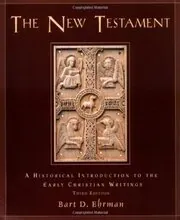
The New Testament
by Bart D Ehrman
1996
Comprehensive university textbook that introduces every New Testament writing within its historical, religious, and literary setting, surveying authorship debates, archaeological evidence, manuscript transmission, and the formation of the canon with abundant maps, sidebars, and study aids.
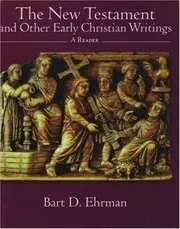
The New Testament And Other Early Christian Writings
by Bart D Ehrman
1997
Reader that places the New Testament alongside other first and early second century Christian texts, providing modern translations and short introductions so students can see how canonical books and contemporaneous writings together reveal the movement's early variety.
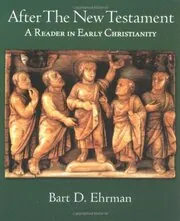
After the New Testament
by Bart D Ehrman
1998
Sourcebook of Christian writings from roughly 100 to 300 CE, including letters, sermons, martyrdom accounts, church orders, and theological treatises, chosen to illustrate the diversity of belief and practice in the generations after the New Testament.
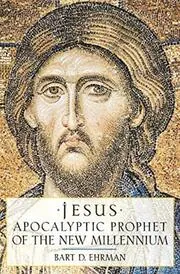
Jesus
by Bart D Ehrman
1999
Argues that the best historical explanation for Jesus' life and teaching is that he was an apocalyptic prophet who expected God soon to overthrow evil and establish his kingdom, and shows how that message runs through early Christian sources.
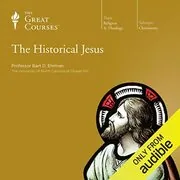
The Historical Jesus
by Bart D Ehrman
2000
Great Courses audio course that surveys the sources for Jesus, evaluates noncanonical gospels, and applies historical criteria to sayings and stories, presenting a portrait of Jesus as an apocalyptic Jewish preacher within his first century Roman and Jewish context.
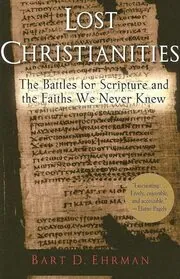
Lost Christianities
by Bart D Ehrman
2002
Introduces the many competing Christian groups of the second and third centuries, from Jewish Christian Ebionites to Marcionites and various Gnostic movements, explaining their distinctive beliefs and scriptures and how a proto orthodox majority eventually prevailed.
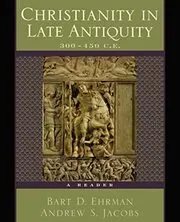
Christianity in Late Antiquity, 300-450 CE
by Bart D Ehrman
2003
Primary source reader, coedited with Andrew S Jacobs, that gathers imperial laws, sermons, letters, creeds, and narratives from the fourth and fifth centuries to show how Christianity interacted with empire, defined heresy, and spread beyond the Mediterranean.
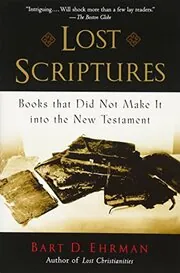
Lost Scriptures
by Bart D Ehrman
2003
Anthology of noncanonical Christian writings from the first centuries, offering modern translations of gospels, acts, letters, and apocalypses that were once read in churches but never became part of the New Testament, with brief introductions to each text.
A Brief Introduction to the New Testament
by Bart D Ehrman
2004
Condensed classroom textbook that surveys every New Testament book from a historical and literary angle, introducing students to authorship debates, Greco Roman and Jewish backgrounds, and the diversity of early Christian communities in an accessible format.
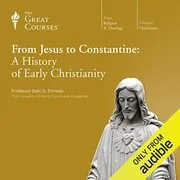
From Jesus to Constantine
by Bart D Ehrman
2004
Great Courses series tracing Christianity's first three centuries, from the historical Jesus and Paul through persecutions, internal debates, and the conversion of Constantine, explaining how a small Jewish movement became an imperially supported world religion.
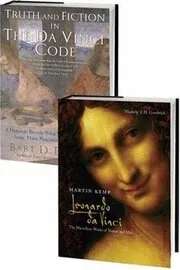
The DaVinci Set
by Bart D Ehrman
2004
Slipcased two book set that pairs Ehrman's historical critique of the claims behind The Da Vinci Code with a concise account of Leonardo da Vinci's life and art, offering readers context for separating imaginative fiction from documented history.
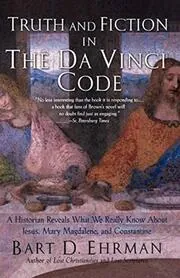
Truth and Fiction in The Da Vinci Code
by Bart D Ehrman
2004
Examines the historical assertions embedded in Dan Brown's novel, testing claims about Jesus, Mary Magdalene, Constantine, lost gospels, and the formation of the canon, and explaining where the story reflects real scholarship and where it does not.
Misquoting Jesus
by Bart D Ehrman
2005
Introduces general readers to New Testament textual criticism by explaining how copying errors, intentional edits, and lost originals affect what modern Bibles say, and by showing why those differences matter for understanding early Christian beliefs about Jesus.
The Text of the New Testament
by Bart D Ehrman
2005
Classic introduction to New Testament textual criticism, coauthored with Bruce M Metzger, explaining how manuscripts were copied, what kinds of variants appear, and how scholars sift the evidence to reconstruct the earliest attainable text.
Whose Word Is It?
by Bart D Ehrman
2005
British edition of Ehrman's account of how the New Testament was transmitted, focusing on the work of scribes, the thousands of surviving manuscripts, and significant changes that reveal how early Christian beliefs and disputes shaped the text.
Peter, Paul & Mary Magdalene
by Bart D Ehrman
2006
Explores how the figures of Peter, Paul, and Mary Magdalene are portrayed in the New Testament and later legends, separating what historians can say about their lives from stories that grew up to promote particular theological or ecclesiastical agendas.
Studies in the Textual Criticism of the New Testament
by Bart D Ehrman
2006
Collects two decades of Ehrman's scholarly essays on New Testament textual criticism, covering methods for classifying manuscripts, case studies on difficult variants, and the importance of patristic citations for tracing how the text changed over time.
The Lost Gospel of Judas Iscariot
by Bart D Ehrman
2006
Tells the story of the modern discovery, restoration, and publication of the Gospel of Judas and explores what this second century text reveals about alternative Christian views of Judas, Jesus, betrayal, and salvation in the ancient world.
God's Problem
by Bart D Ehrman
2008
Examines the Bible's many explanations for why people suffer, from punishment and testing to mystery and cosmic battle, and explains why Ehrman ultimately found none of them convincing, turning the problem of suffering into a reason for losing his faith.
Jesus, Interrupted
by Bart D Ehrman
2009
Introduces non specialists to what critical scholars say about the New Testament, highlighting contradictions, differing theologies, and the gap between historical research and what many churchgoers hear, while telling the story of Ehrman's own changing views.
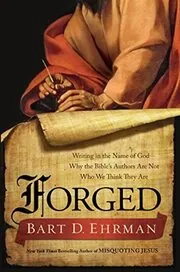
Forged
by Bart D Ehrman
2011
Written for general readers, argues that several New Testament books and many later Christian writings were composed in the names of apostles, explains why ancient critics often condemned such works as forgeries, and asks what that means for modern readers.
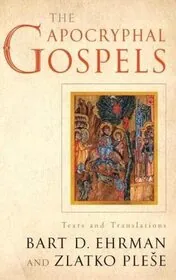
The Apocryphal Gospels
by Bart D Ehrman
2011
Comprehensive bilingual edition of more than forty noncanonical gospels, presenting Greek, Latin, and Coptic texts with facing English translations, introductions, and notes so readers can study alternative accounts of Jesus' birth, teachings, passion, and resurrection.
The Reliability of the New Testament
by Bart D Ehrman
2011
Brings together essays and a public dialogue featuring Bart Ehrman and Daniel B Wallace, offering contrasting assessments of how accurately the New Testament has been copied and whether its surviving manuscripts let us reconstruct the original text.
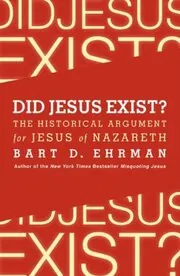
Did Jesus Exist?
by Bart D Ehrman
2012
Responds to modern mythicist claims by laying out the historical evidence that Jesus of Nazareth really lived, explaining how historians evaluate sources inside and outside the New Testament and why nearly all specialists accept his existence.
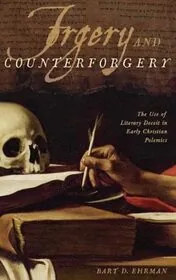
Forgery and Counter-forgery
by Bart D Ehrman
2012
Massive scholarly study of literary forgery in early Christianity, defining what counted as deceit in the ancient world and examining dozens of pseudonymous writings to see how forged texts fueled theological arguments and sometimes provoked counterforgeries in reply.
The Bible
by Bart D Ehrman
2013
Undergraduate level survey of the entire Bible, including the Apocrypha, that situates each book in its historical setting, highlights literary features, and raises the key questions scholars ask about authorship, sources, and interpretation.
The Greatest Controversies of Early Christian History
by Bart D Ehrman
2013
Great Courses lecture series that walks through major disputes in the first centuries of Christianity, from debates over Jesus' nature and the Trinity to battles about Scripture, persecution, and heresy, explaining why these controversies still matter.
The History of the Bible
by Bart D Ehrman
2013
Great Courses lecture series on the making of the New Testament canon, explaining what kinds of books early Christians wrote, how they were copied and circulated, which writings were eventually considered Scripture, and why many others were left out.
The Other Gospels
by Bart D Ehrman
2013
Collects accessible translations of numerous noncanonical gospels, from infancy stories to sayings collections and post resurrection dialogues, each introduced with notes on authorship, date, and theology to show how many different ways early Christians told Jesus' story.
How Jesus Became God
by Bart D Ehrman
2014
Explores how followers came to see an executed Jewish preacher as divine, moving from resurrection visions to exaltation language, pre existence claims, and church councils to trace the long, contested path from human Jesus to God the Son.
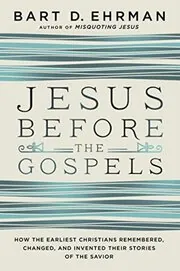
Jesus Before the Gospels
by Bart D Ehrman
2016
Draws on memory studies and anthropology to ask how stories about Jesus were remembered, reshaped, and sometimes invented before the Gospels were written, and what that long process of oral tradition means for reconstructing the historical Jesus.
The Triumph of Christianity
by Bart D Ehrman
2017
Explains how a small Jewish sect grew into a movement of millions, tracing everyday conversions, social networks, changes in Roman law, and the role of Constantine to show how Christianity became the dominant religion of the Roman Empire.
Summary and Analysis of the Books of the Bible
by Bart D Ehrman
2019
Compact guide that offers a one page overview of each biblical book, outlining traditional authorship, likely date, major themes, and sample key verses to give readers a quick reference for study, teaching, or personal reading plans.
36 Big Ideas
by Bart D Ehrman
2020
Audio collection from The Great Courses that gathers thirty six standout lectures across science, history, philosophy, religion, and more, offering bite size introductions to big questions and discoveries from a range of expert professors, including Bart D Ehrman.
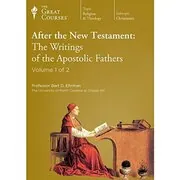
After the New Testament
by Bart D Ehrman
2020
Twenty four lecture series on the writings of the Apostolic Fathers and other second century texts, showing how Christian beliefs, leadership structures, and worship practices developed after the New Testament period and before the great church councils.
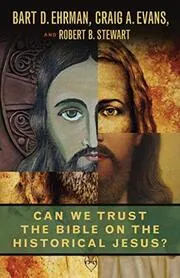
Can We Trust the Bible on the Historical Jesus?
by Bart D Ehrman
2020
Hosts a debate between Bart Ehrman and Craig Evans about whether the New Testament gives a reliable picture of the historical Jesus, with editor Robert Stewart framing their arguments, methods, and evidence for students and interested general readers.
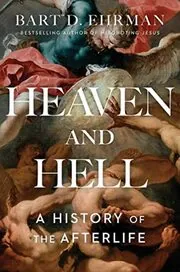
Heaven and Hell
by Bart D Ehrman
2020
Traces how ideas about heaven, hell, and life after death developed from ancient Mesopotamia and Greece through the Bible and early church, arguing that many modern images of eternal reward and punishment are later inventions, not Jesus' own teaching.
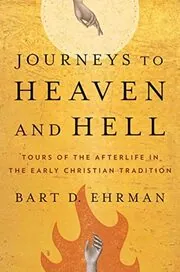
Journeys to Heaven and Hell
by Bart D Ehrman
2022
Explores early Christian stories of guided tours through heaven and hell, setting them alongside Greek, Roman, and Jewish visions of the afterlife to show how such journeys taught ethics, reinforced belief, and shaped emerging doctrine.
When Did Jesus Become God?
by Bart D Ehrman
2022
Short book built around a public debate between Bart Ehrman and Michael Bird, with Robert Stewart's introduction, in which the scholars argue over when Jesus' followers first saw him as divine and how earliest Christology should be understood.
Armageddon
by Bart D Ehrman
2023
Examines the Book of Revelation in its first century context, challenges popular rapture based readings, and considers how apocalyptic interpretations have shaped modern politics and culture, asking what a more historically grounded approach might look like today.
Love Thy Stranger
by Bart D Ehrman
2026
Traces how Jesus' command to love the stranger gradually transformed Christian thinking about outsiders, charity, and social obligation, and reflects on what that demanding ethic might mean for modern debates about immigration, refugees, and economic inequality.
Where to start with Bart D Ehrman
If you are new to his popular books: Misquoting Jesus → Jesus, Interrupted → Forged
If you want to explore early Christian diversity: Lost Christianities → Lost Scriptures → The Other Gospels
If you are curious about the historical Jesus and Christology: Did Jesus Exist? → Jesus Before the Gospels → How Jesus Became God → When Did Jesus Become God?
If you prefer big picture church history: From Jesus to Constantine → The Triumph of Christianity → Heaven and Hell
If you want to think about ethics, justice, and modern faith: God's Problem → Love Thy Stranger → Armageddon
Bart D Ehrman collections, short stories, and related book types
Non-Fiction
The Orthodox Corruption of Scripture
by Bart D Ehrman
1993The Effect of Early Christological Controversies on the Text of the New Testament
Truth and Fiction in The Da Vinci Code
by Bart D Ehrman
2004A Historian Reveals What We Really Know about Jesus, Mary Magdalene & Constantine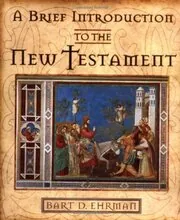

by Bart D Ehrman
2008How the Bible Fails to Answer Our Most Important Question - Why We Suffer
by Bart D Ehrman
2009Revealing the Hidden Contradictions in the Bible and Why We Don't Know About Them
by Bart D Ehrman
2012The Use of Literary Deceit in Early Christian Polemics

by Bart D Ehrman
2016How the Earliest Christians Remembered, Changed, and Invented Their Stories of the Savior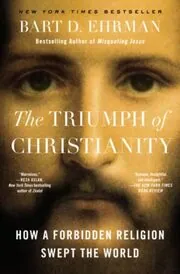



Author bio
Bart D. Ehrman is a New Testament scholar who has spent his career asking how the earliest Christian writings were copied, preserved, and remembered. Based at the University of North Carolina at Chapel Hill, he has written technical monographs and bestselling books that open academic debates about Jesus, the Bible, and early Christianity to general readers.
He was born in 1955 in Lawrence, Kansas, and grew up in a setting where the Bible was central to daily life. As a teenager he became a committed evangelical Christian, drawn to youth groups, church camps, and long conversations about salvation and the end times.
Ehrman left Kansas for the Moody Bible Institute in Chicago, where he immersed himself in biblical languages and theology. After completing the institute's three year program, he transferred to Wheaton College in Illinois for his bachelor's degree, then went on to Princeton Theological Seminary for his Master of Divinity and PhD. At Princeton he studied under textual critic Bruce M Metzger and wrote a dissertation on the fourth century teacher Didymus the Blind.
Those early projects set the course for his scholarly life.
His first books on Didymus and on how the Gospel of John appears in the writings of Origen probed the ways scribes transmitted, altered, and interpreted New Testament texts. That interest led to major studies like The Orthodox Corruption of Scripture, Studies in the Textual Criticism of the New Testament, and Forgery and Counterforgery, which map how theological controversies left their mark on the manuscripts themselves.
After an initial teaching post at Rutgers University, Ehrman joined the faculty at UNC Chapel Hill in 1988 and eventually became the James A Gray Distinguished Professor of Religious Studies. He has won multiple awards for undergraduate teaching and has reached wider audiences through lecture series with The Great Courses on the historical Jesus, the making of the canon, and the rise of Christianity.
For many readers, his name is tied to books that question familiar assumptions about the Bible.
Misquoting Jesus introduces lay audiences to textual criticism and shows how copying errors and intentional changes shaped the New Testament. Jesus, Interrupted and Forged highlight contradictions, authorship claims, and the messy process by which early Christian writings took their current form. Later works such as Heaven and Hell, Journeys to Heaven and Hell, Armageddon, Did Jesus Exist?, How Jesus Became God, and The Triumph of Christianity explore topics ranging from the afterlife and apocalyptic hope to the historical Jesus and the spread of the church.
Alongside these trade books, Ehrman has written widely used textbooks and readers, including The New Testament: A Historical Introduction to the Early Christian Writings, A Brief Introduction to the New Testament, The Bible: A Historical and Literary Introduction, After the New Testament, and The New Testament and Other Early Christian Writings. In all of them he approaches Scripture as ancient literature to be studied historically rather than as a rulebook to be defended, inviting students to ask how these writings emerged from specific cultures, conflicts, and communities.
Over time Ehrman's own views shifted from conservative evangelical belief to agnosticism, a journey he discusses candidly in God's Problem and in public interviews. The question of why innocent people suffer became, for him, the problem faith could not solve. Even so, he continues to treat Christian texts and traditions with care, arguing that honest historical work can enrich both belief and unbelief. He lives in North Carolina with his spouse, medievalist Sarah Beckwith, and runs a membership blog whose proceeds support charities focused on hunger and homelessness.










Edited by
Software engineer whose passion for tracking book recommendations from podcasts inspired the creation of MRB.
Lead investor at 3one4 Capital whose startup expertise and love for books helped shape MRB and its growth.
Comments
Did we miss something? Have feedback?
Help us improve this page by sharing your thoughts