
Barbara Pym Books in Order
See Barbara Pym's books in order, with short summaries, key background on her life and career, and simple suggestions on the best novels to start reading first.
Last updated:
As an Amazon Associate, we earn from qualifying purchases (at no extra cost to you).
Barbara Pym books in publication order
14 books
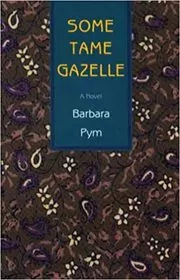
Some Tame Gazelle
by Barbara Pym
1950
Belinda and Harriet Bede, middle aged sisters in an English village, navigate small excitements, courtship offers and church politics while clinging to long standing affections. A gentle comedy of spinsters, curates and the comforts of well worn routine.
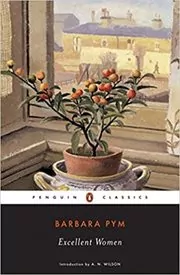
Excellent Women
by Barbara Pym
1952
Mildred Lathbury, a self effacing clergyman's daughter in postwar London, divides her days between parish work and a charity office until glamorous new neighbours and a fussy vicar's household draw her into a maze of romances, quarrels and quiet revelations.
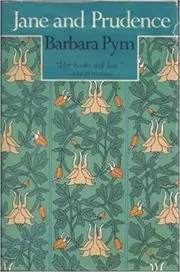
Jane and Prudence
by Barbara Pym
1953
Vicar's wife Jane Cleveland moves to a new village parish, determined to arrange a suitable marriage for her stylish younger friend Prudence Bates. Between London offices, parish teas and an unreliable widower, both women test their ideas about love and usefulness.
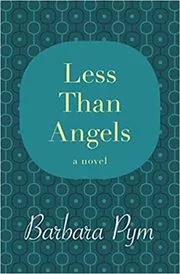
Less Than Angels
by Barbara Pym
1955
Writer Catherine Oliphant shares a flat with anthropologist Tom Mallow and observes with dry amusement as he drifts toward a young student and colleagues jostle for grants. The novel skewers academic pretensions while tracing Catherine's search for new attachments of her own.
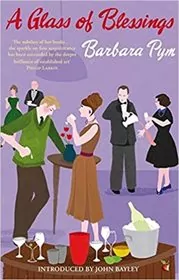
A Glass of Blessings
by Barbara Pym
1958
Wilmet Forsyth, a married woman with too much time and comfort, turns to her Anglo Catholic church for distraction and finds herself drawn into clergy households, a charismatic friend and unexpected relationships. Her settled marriage looks different once desire, faith and friendship start to shift.
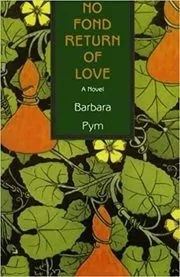
No Fond Return of Love
by Barbara Pym
1961
Recently jilted indexer Dulcie Mainwaring meets the dramatic Viola Dace and elusive scholar Aylwin Forbes at a conference. Back in London, Dulcie's curiosity about Aylwin's tangled domestic life leads her into gentle detective work, unlikely friendships and uneasy reflections on desire.
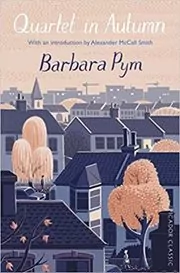
Quartet in Autumn
by Barbara Pym
1977
Four London office workers nearing retirement, Letty, Marcia, Norman and Edwin, face shrinking routines, health scares and unsteady help from social services. Their small gestures of kindness and resistance sketch a moving, sometimes darkly funny portrait of aging and urban loneliness.
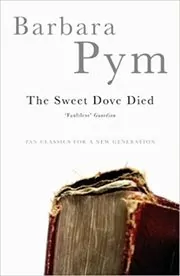
The Sweet Dove Died
by Barbara Pym
1978
Elegant, self possessed Leonora Eyre becomes fascinated by charming young James and his uncle, antiques dealer Humphrey Boyce. As James's affections wander between men and women, Leonora fights to keep her power, in a cool, unsettling story of vanity and possession.
A Few Green Leaves
by Barbara Pym
1980
Anthropologist Emma Howick rents a cottage in an Oxfordshire village, intending to write, and instead starts studying her neighbours like a field project. Clergy, doctors and long time residents slowly draw her from observer to participant as she weighs career, love and community.
An Unsuitable Attachment
by Barbara Pym
1982
Ianthe Broome is a reserved librarian with a comfortable inheritance and a proper London church circle. A trip to Rome, a respectable anthropologist neighbour and an impulsive younger colleague test her ideas about class, security and what counts as a 'suitable' match.
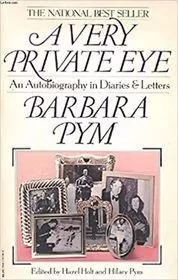
A Very Private Eye
by Barbara Pym
1984
This collection of Barbara Pym's diaries, letters and notebooks traces her life from Oxford in the 1930s through war service, publishing success, years of rejection and late rediscovery, offering an intimate, often funny record of the experiences behind her novels.
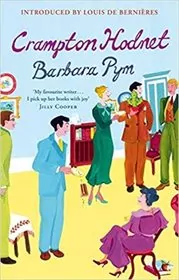
Crampton Hodnet
by Barbara Pym
1985
In prewar North Oxford, formidable Miss Doggett, her companion Jessie Morrow, a new curate and a dreamy married don embroil themselves in mild scandals and misplaced crushes. The result is a brisk comedy about respectability, romantic fantasy and the comforts of staying put.
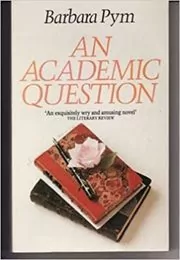
An Academic Question
by Barbara Pym
1986
Restless Caro Grimstone feels stranded as a lecturer's wife in a provincial university town until volunteer work links her to an elderly missionary with a valuable manuscript. Her husband's decision to steal it sparks academic rivalry, moral qualms and a coolly comic marital reckoning.
Civil to Strangers
by Barbara Pym
1988
In a Shropshire market town, earnest novelist Adam Marsh-Gibbon depends on his practical wife Cassandra, until the arrival of elegant Hungarian Stefan Tilos sends a ripple of romance through local lives. Their trips abroad and misread signals gently test loyalty, vanity and desire.
Where to start with Barbara Pym
If you are new to Barbara Pym: Excellent Women → Some Tame Gazelle → Jane and Prudence
If you like village comedies: Some Tame Gazelle → Crampton Hodnet → A Few Green Leaves → Civil to Strangers
If you want her later, sharper novels: No Fond Return of Love → The Sweet Dove Died → Quartet in Autumn
If you enjoy academic or church settings: Less Than Angels → A Glass of Blessings → An Unsuitable Attachment → An Academic Question
Barbara Pym collections, short stories, and related book types
Short Story Collections
Non-Fiction
Standalone Barbara Pym books
Author bio
Barbara Pym was an English novelist who turned everyday parish teas, jumble sales and office routines into quietly funny, attentive fiction. Born on 2 June 1913 in Oswestry, Shropshire, she grew up in a household where church life and amateur theatricals were part of the furniture.
As a girl she wrote plays for family and friends and devoured novels. School took her from Oswestry to Huyton College near Liverpool and then to St Hilda's College, Oxford, where she studied English in the early 1930s.
At Oxford she kept detailed notebooks, fell in and out of love, and found friends who would shape her writing life. One of them, critic Robert Liddell, read her drafts and encouraged the dry, observant style that would become her trademark. After graduating with a second class degree she went home and began Some Tame Gazelle, imagining herself and her sister as middle aged village spinsters.
The war years pulled her away from that early literary world. Pym first worked in a censorship office in Bristol, then joined the Women's Royal Naval Service and served in Naples. She kept up her diaries, noted small social details even in uniform, and later reworked a charming naval officer she met there into the character Rocky Napier in Excellent Women.
After 1946 she settled in London and took a job at the International African Institute, where she became assistant editor of the journal Africa. For nearly three decades she balanced office work with writing, living with her sister Hilary in shared flats and observing anthropologists, clergy and neighbours with the same wry attention. Between 1950 and 1961 she published six novels, including Some Tame Gazelle, Excellent Women, Jane and Prudence, Less Than Angels, A Glass of Blessings and No Fond Return of Love.
These books introduced the world many readers now think of as 'very Pym': London bedsits and country parishes, church bazaars, lonely clergy, quietly capable single women and the small embarrassments of friendship. Her humour is light but not sugar coated, and she lets unromantic facts about money, work and aging sit alongside romantic daydreams.
In the early 1960s her career stalled. Her next novel, An Unsuitable Attachment, was turned down by her long time publisher as out of step with the times, and other houses said much the same. Pym kept writing anyway, drafting the darker The Sweet Dove Died while working full time and coping with illness, including a mastectomy in 1971 and a minor stroke a few years later.
She retired from the Institute and moved with Hilary to the village of Finstock in Oxfordshire, still unsure that her books would see print again. Then, in 1977, a poll of writers named her the most underrated novelist of the century, and publishers suddenly wanted the new manuscript they had once rejected. Macmillan brought out Quartet in Autumn that year, and it was shortlisted for the Booker Prize, followed by The Sweet Dove Died and, at the end of her life, A Few Green Leaves.
Pym never married and had no children, but she maintained long friendships and a rich correspondence, most famously with the poet Philip Larkin. Her diaries and letters, later collected in A Very Private Eye, show the same mix of dry comedy and quiet feeling that runs through the novels. She died of cancer on 11 January 1980 in Oxford, and is buried at Finstock.
Readers often come to her for the comedy but stay for the way she honours apparently modest lives. Clergy wives, office workers and solitary parishioners are allowed their full share of hope, disappointment and small satisfactions. Decades after her death, those carefully drawn worlds still feel close enough to step into.







Edited by
Software engineer whose passion for tracking book recommendations from podcasts inspired the creation of MRB.
Lead investor at 3one4 Capital whose startup expertise and love for books helped shape MRB and its growth.
Comments
Did we miss something? Have feedback?
Help us improve this page by sharing your thoughts