
AS Byatt Books in Order
Explore A.S. Byatt books in order, with short summaries, Frederica Quartet background, notes on key novels, and a simple guide to where to start.
Last updated: 11 new books added
As an Amazon Associate, we earn from qualifying purchases (at no extra cost to you).
AS Byatt books in publication order
28 books
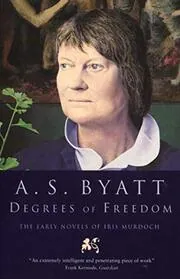
Degrees of Freedom
by AS Byatt
1965
Byatt's early critical study of Iris Murdoch tracks how freedom works across Murdoch's first eight novels. It also opens out into questions of morality, art, philosophy, and what makes a character feel truly alive.
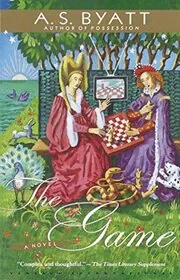
The Game
by AS Byatt
1967
Sisters Cassandra and Julia once shared an elaborate fantasy world shaped by Arthurian romance. As adults they are pulled back together by illness, memory, and an old love, and their rivalry turns imagination into something dangerous.
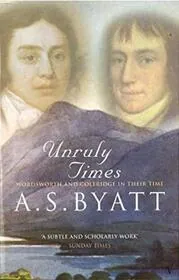
Unruly Times
by AS Byatt
1973
Byatt studies Wordsworth and Coleridge as friends, rivals, and writers shaped by revolution, politics, and changing literary ideas. It is a lively, readable account of the Romantic movement and the wider circle around the two poets.
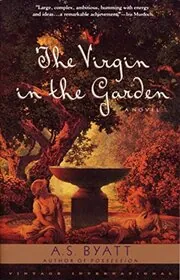
The Virgin in the Garden
by AS Byatt
1978
Set around the 1953 coronation, this first Frederica novel follows the Potter family in Yorkshire as art, desire, religion, and ambition collide. Frederica's fierce intelligence and longing for a larger life drive the book's restless energy.
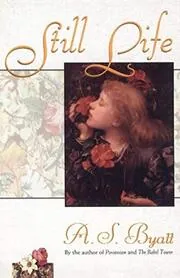
Still Life
by AS Byatt
1985
In the 1950s, the Potter siblings move deeper into adult life as Frederica heads to Cambridge, Stephanie wrestles with marriage and motherhood, and Marcus struggles toward recovery. Art, grief, and ambition press against the limits of ordinary domestic life.
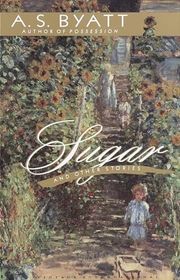
Sugar and Other Stories
by AS Byatt
1987
These stories examine the fragile bonds between generations and the memories people build against loss. Byatt follows intimate lives and unfamiliar perspectives, exploring how relationships, grief, and recollection shape the ways people understand themselves and one another.
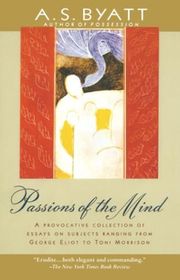
Passions of the Mind
by AS Byatt
1990
Byatt’s literary essays range from George Eliot and Sylvia Plath to Toni Morrison, Iris Murdoch, and her own fiction. Examining myth, politics, spiritual uncertainty, and artistic ambition, she explores the connections between reading, writing, and lived experience.
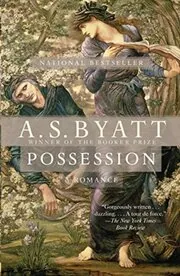
Possession
by AS Byatt
1990
Two modern scholars follow letters, poems, and journals that suggest a hidden affair between two Victorian poets. Their search becomes part literary mystery, part love story, as the past starts reshaping their own lives.
The Matisse Stories
by AS Byatt
1991
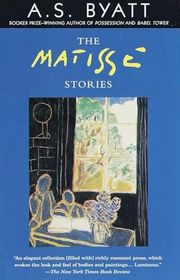
Three stories inspired by Matisse paintings explore the intimate relationship between seeing and feeling. Apparently casual observations awaken unexpected emotions, bringing artistic perception into contact with the private tensions and desires of people going about their ordinary lives.
Angels and Insects
by AS Byatt
1992
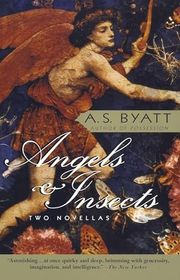
Two novellas explore Victorian England’s fascination with science and spiritualism. An explorer observes disturbing parallels between insects and a household, while a group attempts contact with the dead, exposing tensions beneath domestic propriety, faith, and intellectual curiosity.

The Djinn in the Nightingale's Eye
by AS Byatt
1994
A scholar of storytelling discovers a bottle in an Istanbul bazaar and forms an unusual relationship with the being inside. Four companion fairy stories explore obsession, political tragedy, and the meeting of everyday experience with supernatural possibilities.
The Shadow of the Sun
by AS Byatt
1994
Seventeen-year-old Anna Severell tries to find her own identity while living under the weight of her father Henry's fame. Byatt's first novel is a close study of family strain, artistic ambition, and a young woman's wish to step out of shadow.
Imagining Characters
by AS Byatt
1995
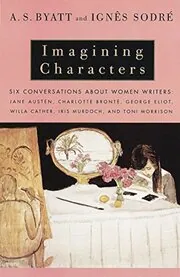
Byatt and psychoanalyst Ignes Sodre read six women writers together and argue about what makes fictional people feel alive. Their conversations move through Austen, Bronte, Eliot, Cather, Murdoch, and Morrison, mixing literary criticism with questions of desire and inner life.
Babel Tower
by AS Byatt
1996
After fleeing her violent husband, Frederica Potter tries to build an independent life in 1960s London. Her divorce case and an obscenity trial around Jude Mason's shocking novel pull private struggle and public argument into the same courtroom.
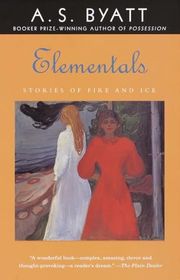
Elementals
by AS Byatt
1998
These stories bring opposing forces into contact: passion and loneliness, loyalty and betrayal, fire and ice. An ice maiden loves a desert prince, a woman abandons her past, and uncanny encounters reshape lives governed by desire and uncertainty.
On Histories and Stories
by AS Byatt
2000
These essays look at the modern historical novel, wartime fiction, and the strange life of the past inside literature. Byatt also turns inward, showing how she transformed research and history into fiction in Angels and Insects.
The Biographer's Tale
by AS Byatt
2000
Fed up with theory, postgraduate Phineas Nanson decides to write the life of a biographer and tumbles into an odd paper trail of science, travel, and obsession. It is a sly novel about research, facts, and the stories people build from them.
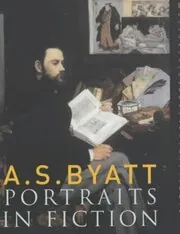
Portraits in Fiction
by AS Byatt
2001
In this compact work of criticism, Byatt explores how portraits function inside novels, as clues to character, time, and desire. Moving between painters and novelists, she shows how visual art can reshape the way a story is read.
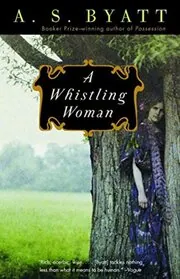
A Whistling Woman
by AS Byatt
2002
Frederica Potter lands a television job as Britain hurtles through the late 1960s. Around her, an anti-university, a mind-body conference, and a cultish community turn public argument into something far more unstable.

Little Black Book of Stories
by AS Byatt
2003
These adult fairy stories turn familiar experiences toward the uncanny. Childhood friends revisit a forest linked to a terrifying memory, a grieving woman becomes stone, and a doctor encounters an art student whose ideas challenge his rational understanding of the body.
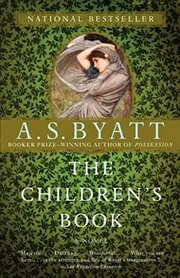
The Children's Book
by AS Byatt
2009
When a runaway boy is drawn into Olive Wellwood's circle, a bright Edwardian world of artists, craftsmen, and secret tensions opens up around him. The novel follows a large, entangled cast from the 1890s into the First World War.
A Stone Woman
by AS Byatt
2011
After her mother dies, an elderly woman discovers her body gradually turning to stone. An Icelandic stonemason becomes her only confidant, and his homeland’s legends offer a new way to understand her strange transformation.
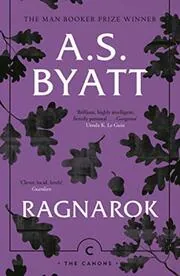
Ragnarok
by AS Byatt
2011
Framed by a wartime child's reading, Byatt retells the Norse myths of the gods and their destruction. It is both a clear, eerie version of the old stories and a reflection on endings, war, and the damaged natural world.
Raw Material
by AS Byatt
2011
A discouraged writing teacher regains his enthusiasm when an elderly student submits unusually compelling accounts of ordinary life. Her work seems to vindicate his advice to write from experience, but its origins prove unsettling.

The Thing in the Forest
by AS Byatt
2011
Two girls evacuated from wartime London encounter a terrifying presence in a forest. Meeting again as adults, they confront the lasting effects of that experience and the uneasy relationship between memory, fear, and storytelling.
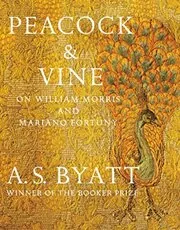
Peacock and Vine
by AS Byatt
2016
Byatt pairs William Morris with Mariano Fortuny, tracing the lives, houses, textiles, and ideas of two artists who turned craft into a way of life. It is a short, richly visual meditation on art, pattern, and making.
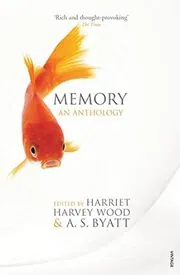
Memory
by AS Byatt
2018
Co-edited with Harriet Harvey Wood, this anthology gathers essays and extracts on how memory works, from science and philosophy to literature. It ranges from Plato and Shakespeare to modern neuroscience, making big ideas feel connected and readable.
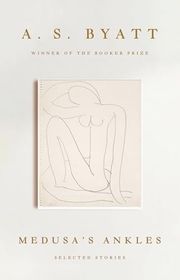
Medusa's Ankles
by AS Byatt
2021
Selected stories gather Byatt’s artists, poets, and fantastical creatures across settings from candy factories to fairy-tale palaces. Ordinary encounters and mythic transformations explore creativity, identity, and desire, revealing strange possibilities beneath familiar places and everyday appearances.
Where to start with AS Byatt
If you want the Booker winner: Possession
If you want the long family sequence: The Virgin in the Garden → Still Life → Babel Tower → A Whistling Woman
If you want sweeping historical fiction: The Children's Book
If you want something shorter and mythic: Ragnarok
If you want her critical side: On Histories and Stories → Portraits in Fiction
AS Byatt sub-series and character series
The Frederica Quartet books in order
Explore this seriesThe Frederica Quartet books in chronological order
Standalone AS Byatt books
Author bio
A.S. Byatt was born Antonia Susan Drabble in Sheffield on 24 August 1936. Her father was a barrister, her mother was a teacher, and the family moved to York during the Second World War. She grew up in a house where books, argument, and ambition were ordinary parts of daily life, and she became the kind of reader who wanted not just stories, but the ideas inside them.
She was educated in York and then studied English at Newnham College, Cambridge. After that came further study at Bryn Mawr College in Philadelphia and Somerville College, Oxford. Those years mattered. They gave her a deep knowledge of literature, but they also gave her material, the bright young scholars, the pressure of institutions, the thrill of ideas, and the awkward question of how an intellectual woman was supposed to build a life.
She started writing early.
Her first two novels, The Shadow of the Sun and The Game, appeared in the 1960s. Even in those early books, you can see subjects that stayed with her for decades: family conflict, artistic ambition, fierce inner life, and the push and pull between ordinary duties and private imagination. She was also publishing criticism from early on, including Degrees of Freedom, her study of Iris Murdoch.
For years, writing had to fit around teaching. Byatt worked in adult education, taught at the Central School of Art and Design, and later became a lecturer, then senior lecturer, in English at University College London. That life as a teacher and critic fed the fiction. Her books are full of readers, scholars, artists, scientists, and people trying to think clearly in the middle of emotional mess. By the mid-1980s, she had left teaching behind and was writing full time.
Then Possession changed her public profile.
Published in 1990, it follows two modern scholars who uncover the hidden connection between two Victorian poets through letters, poems, and journals. The novel won the Booker Prize and brought her a much wider readership. Many readers still start there, and it makes sense: it has mystery, romance, scholarship, comedy, and a real sense that the past is not dead at all, only waiting for someone nosy enough to start turning pages.
Just as central to her work is the Frederica sequence, The Virgin in the Garden, Still Life, Babel Tower, and A Whistling Woman. Across those four books, she follows Frederica Potter, her family, and the changing culture of Britain from the 1950s into the late 1960s. Readers who love these novels usually love the same things in Byatt more broadly, exact social detail, intellectual intensity, women who want room to think, and the uneasy bargain between love, work, family, and freedom.
She kept widening the frame. The Biographer's Tale plays with research and the strange business of life-writing. The Children's Book opens out into the Edwardian world of artists, makers, children, and secrets on the edge of war. Ragnarok returns to the Norse myths she loved from childhood. And in books such as On Histories and Stories, Portraits in Fiction, and Peacock and Vine, she showed how naturally criticism, storytelling, painting, design, and history all belonged together in her mind.
That range was real. So was her eye for concrete things.
Even at her most learned, Byatt liked texture. In her fiction and nonfiction alike, you keep running into glass, textiles, insects, flowers, myth, painting, weather, and the handmade world. She returned again and again to large questions: how stories shape memory, how art meets ordinary life, how desire and thought tangle together, and how people carry the past without ever fully mastering it.
She died in 2023, after a career that lasted roughly six decades. Along the way she received the Booker Prize, the Erasmus Prize, and the Hans Christian Andersen Literature Award, among other honors. But the reason readers keep coming back is simpler than any prize list. She wrote books for people who want a serious story, rich language, and the pleasure of following a sharp mind wherever it goes.

Edited by
Software engineer whose passion for tracking book recommendations from podcasts inspired the creation of MRB.
Lead investor at 3one4 Capital whose startup expertise and love for books helped shape MRB and its growth.
Comments
Did we miss something? Have feedback?
Help us improve this page by sharing your thoughts