
Amish Vines and Orchards Books in Order
Part ofCindy Woodsmall Books in OrderSee the Amish Vines and Orchards books in order by Cindy Woodsmall, with summaries, series background, reading guidance, and where to start.
Last updated:
As an Amazon Associate, we earn from qualifying purchases (at no extra cost to you).
Amish Vines and Orchards books in publication order
4 books
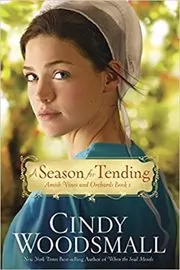
A Season for Tending
by Cindy Woodsmall
2012
Rhoda Byler’s unusual intuition and gift with herbs have made her an outsider in her Amish community. When the struggling King family crosses her path, business, love, and long-buried guilt begin pulling her out from behind her garden walls.
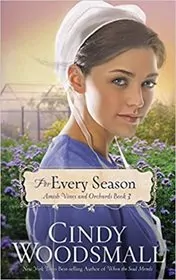
For Every Season
by Cindy Woodsmall
2013
In Maine, Rhoda throws herself into the orchard and the settlement she helped build. Trouble in love and an old secret among nearby Englisch neighbors test whether her insight can guide her, or only make everything messier.
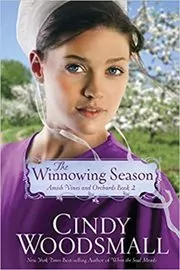
The Winnowing Season
by Cindy Woodsmall
2013
After a tornado devastates the orchard, Rhoda, Jacob, and Samuel head to Maine to help build a new Amish settlement. Fresh land brings hope, but secrets, old debts, and community suspicion travel with them.
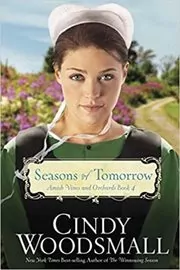
Seasons of Tomorrow
by Cindy Woodsmall
2014
Rhoda finally feels steadier in Orchard Bend, until Leah King’s forbidden relationship and a sudden tragedy shake the whole settlement. As old hurts return, the community must decide whether its shared dream can survive another blow.
Amish Vines and Orchards books in chronological order
Series background & context
Amish Vines and Orchards starts with one of Cindy Woodsmall’s most unusual heroines, Rhoda Byler. Rhoda is Old Order Amish, gifted with a deep intuition she does not fully understand, and far more comfortable among herbs, berries, and canning jars than in the center of community life. People around her do not always know what to make of her, and that tension gives the series its first big pull. Rhoda is not just shy or eccentric. She is someone who has spent years carrying grief, caution, and the feeling of being slightly out of step with the people around her.
The other major thread comes through the King family and their orchard business. Samuel, Jacob, Leah, and the rest of the family bring in farm pressures, sibling strains, romantic complications, and plenty of practical stakes. What begins in Pennsylvania widens after a devastating tornado pushes key characters toward Maine, where they work to establish a new Amish settlement and rebuild an orchard from the ground up. That move gives the series a bigger scope than many community-based Amish stories. You are not only watching relationships shift. You are watching people try to make a place, a business, and a future.
The orchard is not background scenery.
It shapes nearly everything. Fruit harvests, canning work, land decisions, weather, labor, and money all matter, and Woodsmall uses those details to keep the series rooted in everyday effort. Rhoda’s intuition also keeps the emotional tone a little different from standard romance. The books are interested in what her gift means, how others judge it, and whether she can learn to live with it instead of hiding behind it.
The tone is a mix of romance, family drama, and community-building, with a little more ongoing tension than you get in a cozy series. There are love triangles, secrets, strained loyalties, questions of faith, and the constant pressure of starting over without much margin for error. Even when the books are tender, they are rarely idle.
This is a series that really benefits from reading in order, A Season for Tending, The Winnowing Season, For Every Season, and Seasons of Tomorrow. Rhoda’s growth is the backbone, but the Kings, the settlement, and the orchard all develop alongside her. If you want Amish fiction that mixes emotional intimacy with work, weather, land, and the long grind of building a community, this is one of Woodsmall’s most satisfying worlds.





Edited by
Software engineer whose passion for tracking book recommendations from podcasts inspired the creation of MRB.
Lead investor at 3one4 Capital whose startup expertise and love for books helped shape MRB and its growth.
Comments
Did we miss something? Have feedback?
Help us improve this page by sharing your thoughts