
Act Of God Books in Order
Part ofJohn Maddox Roberts Books in OrderSee the Act Of God books by John Maddox Roberts in order, with quick summaries, series background, and help choosing where to start.
Last updated:
As an Amazon Associate, we earn from qualifying purchases (at no extra cost to you).
Act Of God books in publication order
4 books

Act of God
by John Maddox Roberts
1985
A crisis from space collides with Cold War politics on Earth. Roberts and Eric Kotani build a near-future adventure where science, fear, and international rivalry all matter at the same time.
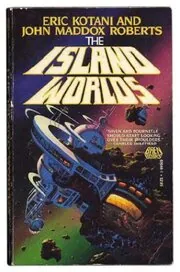
The Island Worlds
by John Maddox Roberts
1987
The outer-system frontier is no empty backdrop here. Roberts and Eric Kotani turn space settlement into a story of power, commerce, and conflict, where human expansion brings both opportunity and war.
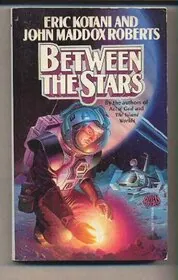
Between the Stars
by John Maddox Roberts
1988
A new discovery in space forces old rivals to look past narrow interests, at least for a while. Roberts and Eric Kotani balance political tension with the sense that humanity is standing on the edge of something much bigger.
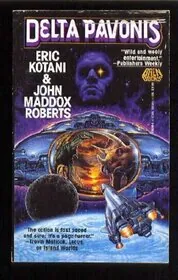
Delta Pavonis
by John Maddox Roberts
1990
Humanity pushes farther outward with an expedition tied to the Delta Pavonis system. Roberts and Eric Kotani mix exploration, frontier tension, and big scientific stakes in a novel that opens space even wider.
Act Of God books in chronological order
Series background & context
The Act Of God books, written with Eric Kotani, sit in the part of science fiction where politics, engineering, and raw space adventure all have to share the page. These are stories about humanity pushing outward under pressure, not because everything is tidy and inspiring, but because crisis, competition, and necessity keep forcing the issue.
The first book begins in a near-future world shaped by Cold War tension, which gives the whole sequence a grounded start. Earth is divided, suspicious, and still very much itself. Then the scale expands. Space stops being a distant backdrop and becomes the place where national rivalry, private ambition, scientific discovery, and human survival start colliding in new ways.
One useful thing about the series is that it does not feel locked to a single type of protagonist. Depending on the book, the pressure falls on scientists, pilots, military people, politicians, business figures, or frontier settlers. That shifting viewpoint matches the subject. A real move into space would not belong to only one sort of person, and these books remember that.
As the sequence goes on, the problems get bigger. The setting stretches from Earth orbit into the outer system and then farther still. New resources, strange discoveries, corporate games, and open conflict all arrive in the same lane. Roberts and Kotani keep the tone readable and brisk even when the ideas turn large.
So this is a good series for readers who want space opera energy without losing the sense that systems, governments, and physics still matter. It likes action, but it also likes consequences.
There is a frontier feeling running through all of it. Space is opportunity, danger, argument, and temptation at the same time. That mix keeps the books moving.







Edited by
Software engineer whose passion for tracking book recommendations from podcasts inspired the creation of MRB.
Lead investor at 3one4 Capital whose startup expertise and love for books helped shape MRB and its growth.
Comments
Did we miss something? Have feedback?
Help us improve this page by sharing your thoughts