
19 Best Michael Crichton Books
The best Michael Crichton books, ranked by how many expert sources recommend each one, with notes on who each suits, from science-thriller fans to newcomers.
Our take
Michael Crichton often builds suspense around an impressive system that people understand less well than they think. His best-known novels combine technical explanations with dangerous experiments, corporate pressure, or isolated teams trying to work out what has gone wrong. He also wrote historical adventures and nonfiction, giving readers several routes beyond the familiar dinosaurs.
Jurassic Park is a natural introduction to his science-thriller style; read it before The Lost World. The Andromeda Strain leans toward scientific procedure, while Sphere puts uncertainty inside a confined underwater setting. Airframe follows an engineering investigation without needing a speculative invention. For historical adventure, try The Great Train Robbery, Eaters of the Dead, or Dragon Teeth. Readers curious about the person behind the fiction can turn to Travels, while Five Patients offers an earlier view of hospital life. Start with the setting and type of suspense you enjoy, then explore another side of his writing.
19 books · 5 sources · Last updated
As an Amazon Associate, we earn from qualifying purchases (at no extra cost to you).
Reading Michael Crichton in order? See all Michael Crichton books in order
How to choose from this list
Skip to the full rankingIf you're new to his science thrillers: Jurassic Park → The Lost World
If you like scientific investigation: The Andromeda Strain → Airframe
If you want claustrophobic suspense: Sphere
If you prefer historical adventure: The Great Train Robbery → Dragon Teeth
If you want medieval adventure: Eaters of the Dead → Timeline
If you want his nonfiction: Five Patients → Travels
The 19 books, ranked
Ranked by how many expert sources name each book. Ties go to the book more people recommend.
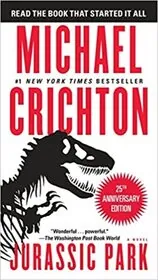
For readers who want Crichton’s combination of scientific explanation and a fast survival plot. The novel gives systems failure and ethical questions more room than the film, but technical digressions and graphic violence interrupt the adventure.
What it's about
A billionaire’s dinosaur theme park on Isla Nublar is almost ready for guests, so he invites a few experts to sign off on the science. Then systems fail, predators break free, and the visitors learn how thin the line is between control and chaos.
Also recommended by
1 person Richard Branson recommended this book
Richard Branson
Richard Branson recommended this book on his "70 must-read books" blog post.
Richard Branson's recommendation of this book

Prey
For readers who want a fast speculative-technology thriller with escalating physical danger. Crichton connects technical explanation with a survival setup efficiently, but the science is heightened and the family drama can feel schematic.
What it's about
In a Nevada lab, a cloud of nanorobots escapes into the desert—self-sustaining, self-reproducing, and learning fast. Programmer Jack Forman is pulled into the cleanup, only to realize the swarm has been designed as a predator.
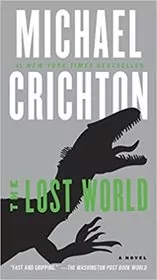
For readers who enjoyed Jurassic Park and want another dinosaur survival story with more evolutionary discussion. Familiar connections make the return accessible, but the setup repeats parts of the first book and works best after it.
What it's about
Rumors of dinosaurs still living in the wild draw Ian Malcolm toward Isla Sorna, the island where they were bred. A rescue-and-research expedition turns into a survival test as rival agendas collide and the animals prove they don’t need fences.

For readers who want a historical adventure powered by a science-fiction premise. The medieval setting gives physical danger more emphasis than laboratory investigation, but the technology explanations and highly convenient twists require some suspension of disbelief.
What it's about
A technology company sends history students back to 14th-century France to rescue their missing professor. Stranded in a brutal feudal world, they must survive sieges, shifting loyalties, and the problem of getting home alive.

State of Fear
For readers interested in Crichton’s argumentative side as well as high-concept suspense. The novel makes institutional fear its central concern, but lengthy polemics slow the action, and its fictional framing should not substitute for climate-science evidence.
What it's about
After a philanthropist’s death, young lawyer Peter Evans is pulled into a globe-hopping plot that mixes eco-terrorism, staged disasters, and big-money agendas. The chase forces him to question what’s real, who benefits, and what fear can be used for.
Also recommended by
1 person Charles Koch recommended this book
Charles Koch
Charles Koch recommended this book on his website.
Charles Koch's recommendation of this book

For readers who want a corporate murder investigation rather than a speculative-science disaster. Its surveillance and business tensions sustain the mystery, but the treatment of Japan and economic rivalry reflects dated stereotypes and early-1990s anxieties.
What it's about
At a glitzy opening party in Los Angeles, a young woman is found murdered inside a Japanese corporation’s tower. Detective Peter Smith and veteran investigator John Connor follow the trail through corporate pressure, politics, and surveillance.

Airframe
For readers who prefer an engineering investigation to a speculative creature or invention. The focus on evidence, manufacturing, and media pressure makes a distinctive procedural thriller, but aviation explanations and corporate detail can slow the pace.
What it's about
When a passenger jet hits violent trouble midflight, quality-assurance VP Casey Singleton is sent to find out what really happened. With media pressure and corporate blame games rising, she has to separate mechanical facts from human spin.
Also recommended by
1 person Ev Williams recommended this book
Ev Williams
On the "books read" section of Ev Williams' GoodReads profile.
Ev Williams's recommendation of this book

Congo
For readers who want a high-tech expedition with a lost-city adventure at its center. Its mixture of corporate pressure, wilderness danger, and animal communication keeps the premise varied, but the setting and characterizations carry dated adventure stereotypes.
What it's about
Primatologist Peter Elliot and a signing gorilla named Amy lead an expedition into the Congo rainforest to find a lost city and its diamonds. High-tech gear and corporate stakes meet lethal wildlife—and something intelligent guarding the ruins.

For readers who want fossil hunting as a Western adventure rather than resurrected dinosaurs. Its historical rivalry gives the action a tangible setting, but the relatively straightforward journey offers less speculative complexity than Crichton’s best-known science thrillers.
What it's about
In 1876, Yale student William Johnson heads west after a reckless bet and gets swept into the Bone Wars rivalry between fossil hunters Marsh and Cope. What starts as adventure turns into a survival story on a dangerous frontier.

Eaters of the Dead
For readers who enjoy historical adventure told through a deliberately documentary frame. Its outsider’s perspective gives familiar heroic material a different texture, but the distancing voice and reconstructed-manuscript style offer less immediacy than Crichton’s modern thrillers.
What it's about
Framed as an edited manuscript of Ibn Fadlan’s travels, this tale drops an outsider into a Viking band’s mission. He witnesses a brutal mystery in the north that feels like a realistic root for a monster legend.

Five Patients
For readers interested in the medical observation behind Crichton’s storytelling. Individual hospital cases make institutional questions concrete, but the account describes late-1960s practice and belongs to medical history rather than guidance on current care.
What it's about
A clear-eyed nonfiction look inside a major teaching hospital, told through the stories of five patients. Crichton explains how wards, residents, and departments fit together—and how the system can help or fail the people inside it.

Next
For readers who enjoy biotech questions presented through satire and intersecting stories. Its shifting strands explore ownership and commercial incentives from several angles, but the fragmented construction offers less continuous suspense than a single-crisis thriller.
What it's about
A man discovers his cells have been sold to a biotech company, sparking lawsuits, bounty hunters, and a messy fight over who “owns” DNA. Along the way, transgenic animals and researchers collide in a darkly comic look at genetic capitalism.

For readers who want a direct pirate adventure with a mission and a dangerous crew. Its period setting and frequent hazards make an easy change from the science thrillers, but the posthumous novel has a more conventional, episodic shape.
What it's about
In 1665 Jamaica, Captain Charles Hunter is hired to raid a supposedly impregnable Spanish treasure stronghold. He recruits a rough crew and sails into storms, ambushes, and jungle hazards where greed makes every alliance shaky.
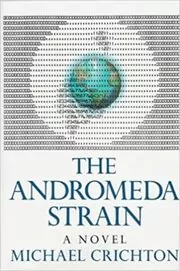
For readers who enjoy methodical investigations, laboratory procedures, and scientific uncertainty. The documentary style gives the crisis a distinctive plausibility, but its detached characters and older technology make it cooler and slower than Jurassic Park.
What it's about
A military satellite crashes near a small Arizona town—and almost everyone is dead. A secret team of scientists races to identify and contain an alien microorganism inside an underground lab before it escapes and becomes a global catastrophe.

The Great Train Robbery
For readers who enjoy careful criminal planning, period detail, and an ensemble of specialists. Crichton turns the logistics of a Victorian heist into the attraction, but the documentary passages make it less immediate than his action-heavy novels.
What it's about
Victorian-era thief Edward Pierce plans an audacious raid on a gold shipment moving by rail. With disguises, inside help, and careful timing, the job looks possible—until one wrong assumption threatens to blow everything apart.

The Terminal Man
For readers interested in early anxieties about computers, medicine, and attempts to control behavior. Its compact medical-thriller structure makes a focused alternative to the larger adventures, but the science and assumptions about neurological illness reflect its period.
What it's about
Harry Benson, a computer scientist with violent seizures and blackouts, becomes the test case for an experimental brain implant meant to calm his mind. The treatment works—until he learns how to trigger the soothing pulses on his own terms.

Sphere
For readers who prefer confined settings and psychological uncertainty to a wide-ranging chase. Its underwater isolation makes distrust especially effective, but the explanations and escalating twists can feel more speculative than Crichton’s procedural thrillers.
What it's about
A mysterious craft is discovered on the Pacific seafloor, and psychologist Norman Johnson joins a Navy team in an underwater habitat to study it. Inside the ship sits a perfect sphere—and soon the crew’s fears begin to feel dangerously real.
Also recommended by
1 person- Ev Williams recommended this book
Ev Williams
On the "books read" section of Ev Williams' GoodReads profile.
Ev Williams's recommendation of this book

Travels
For readers who want Crichton’s personal voice beyond his thrillers. Its episodes range from medical training to journeys and self-exploration, but the later interest in spiritual and unusual experiences may surprise readers expecting a conventional travel memoir.
What it's about
Crichton’s memoir of travel, risk, and curiosity, from medical-school days and Hollywood work to journeys through remote places. He writes about meditation, altered states, and the moments that pushed him to question what “normal” even means.
Also recommended by
1 person- Ev Williams recommended this book
Ev Williams
On the "books read" section of Ev Williams' GoodReads profile.
Ev Williams's recommendation of this book

Disclosure
For readers drawn to workplace power struggles and legal suspense. The corporate setting gives Crichton a different arena for institutional conflict, but the gender politics and treatment of harassment are confrontational and firmly shaped by the 1990s.
What it's about
Tech executive Tom Sanders expects a promotion—until his new boss, a former lover, accuses him of sexual harassment. As lawyers and HR close in, he fights to prove what happened while corporate politics threaten to erase him.
Sources





Edited by
Software engineer whose passion for tracking book recommendations from podcasts inspired the creation of MRB.
Lead investor at 3one4 Capital whose startup expertise and love for books helped shape MRB and its growth.
Comments
Spotted a missing book, a wrong order or a mistake? Tell us and we'll fix this page.
We're a reading guide, not the author or publisher, so we can't send books or pass on messages.