
13 Best Ian McEwan Books
The best Ian McEwan books, ranked by how many expert sources recommend each one, with notes on who each novel suits and which book to start reading.
Our take
Ian McEwan’s novels often begin with a private life that seems understandable, then expose how little its owner knows about other people. Accidents, mistaken judgments, desire, and professional pride become tests of responsibility. Readers who enjoy psychological tension will find it throughout his work, but the books differ sharply in scale and tone: the unsettling early fiction feels very different from the broader historical perspective of Lessons.
Atonement combines an intimate family setting with war and questions about the stories people tell. On Chesil Beach narrows its attention to intimacy and regret, while Enduring Love gives philosophical disagreement the pressure of a thriller. Amsterdam and Solar turn toward satire; Nutshell experiments with an improbable narrator. These are standalone novels, so there’s no series order to follow. Start with Atonement for range, On Chesil Beach for a shorter emotional study, or Enduring Love if suspense matters most.
13 books · 8 sources · Last updated
As an Amazon Associate, we earn from qualifying purchases (at no extra cost to you).
Reading Ian McEwan in order? See all Ian McEwan books in order
How to choose from this list
Skip to the full rankingIf you want a broad introduction: Atonement → Lessons
If you want something short and intimate: On Chesil Beach → The Children Act
If you want psychological suspense: Enduring Love → The Innocent
If you want dark comedy: Amsterdam → Nutshell
If you want the unsettling early style: The Cement Garden
If you want grief and the passage of time: The Child in Time → Lessons
The 13 books, ranked
Ranked by how many expert sources name each book. Ties go to the book more people recommend.
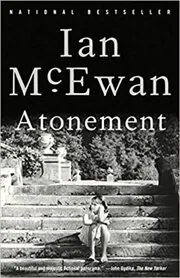
For readers seeking McEwan’s widest blend of emotional involvement and questions about storytelling. Its movement from intimate scenes to wartime consequences gives it unusual range, though the careful opening asks for patience before the larger design emerges.
What it's about
On a hot 1935 afternoon at an English country house, young Briony Tallis misreads what she sees between her sister Cecilia and Robbie, the housekeeper’s son. Her accusation reverberates through war, exile and old age in a story about guilt, memory and storytelling itself.
Also recommended by
1 person Ann Patchett recommended this book
Ann Patchett
Ann Patchett recommended this book on the Parnassus Books website.
Ann Patchett's recommendation of this book
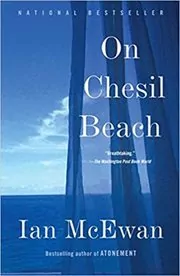
On Chesil Beach
For readers who prefer a short, concentrated study of intimacy and missed communication. Its close attention to embarrassment makes small moments matter, though the slow examination of a single relationship can feel emotionally claustrophobic.
What it's about
Set on an English seaside honeymoon in 1962, this novella follows nervous newlyweds Edward and Florence through one disastrous wedding night. A few misread gestures and unspoken fears threaten to derail a love story shaped by class and sexual taboo.
Also recommended by
1 person Christopher Hitchens recommended this book
Christopher Hitchens
"Evokes [the author's] homeland's natural beauty and the straitened sexual manners of the early 1960s." - Christopher Hitchens
Christopher Hitchens's recommendation of this book
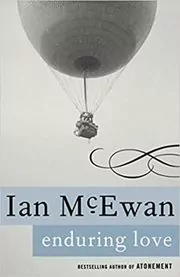
For readers wanting psychological suspense alongside arguments about reason and belief. Its immediate tension offers an accessible route into McEwan, though the scientific and philosophical discussion sometimes interrupts the momentum of the threat.
What it's about
After a freak hot‑air‑balloon accident in the English countryside ends in tragedy, science writer Joe Rose finds himself stalked by Jed Parry, a stranger convinced they share a spiritual bond. The novel turns escalating obsession into a test of reason, love and belief.
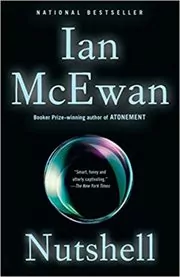
For readers willing to accept an impossible narrator in exchange for dark comedy and verbal play. Its inventive perspective makes this a distinctive short introduction, though anyone seeking realism may find the central conceit distracting.
What it's about
A heavily pregnant woman and her lover plot a murder in a crumbling London house, narrated by the sharp, unnervingly eloquent foetus listening from the womb. This short novel riffs on Hamlet while musing on betrayal, conscience and a world in crisis.
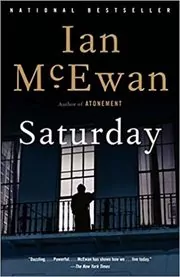
Saturday
For readers interested in how a comfortable private life absorbs political anxiety. Its sustained access to one mind gives everyday decisions unusual weight, though lengthy reflection and medical detail slow the approach to the central confrontation.
What it's about
Set over a single Saturday in 2003, as London marches against the Iraq war, the novel follows neurosurgeon Henry Perowne through domestic routines, surgery and a chance encounter with a volatile stranger. By nightfall, global anxieties slam into his seemingly secure family life.
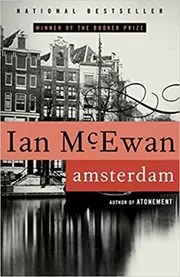
For readers who enjoy compact satire about professional vanity and moral compromise. Its brisk movement makes it an easier short read than the more meditative novels, though the farcical machinery can outweigh emotional attachment to the characters.
What it's about
Two old friends—a composer and a newspaper editor—reunite at a former lover’s funeral and make a private pact to spare each other future suffering. As career pressures and political scandal mount, their agreement curdles into rivalry and farce in this dark, tightly plotted novel.
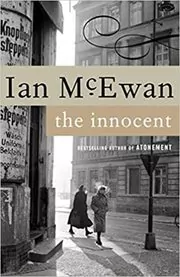
For readers who enjoy espionage fiction with psychological pressure and black comedy. Its Berlin setting gives McEwan’s interest in guilt a concrete historical frame, though the graphic violence makes this much harsher than a conventional spy adventure.
What it's about
In 1950s Berlin, naïve British engineer Leonard Marnham helps build a secret tunnel to tap Soviet phone lines. His passionate affair with German divorcée Maria draws him into a grisly crime and cover‑up, forcing him to confront guilt, loyalty and the end of innocence.
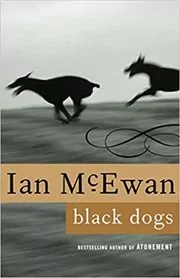
For readers drawn to philosophical disagreement within intimate relationships. Its compact form connects personal memory with European political history, though its competing explanations of evil can feel more schematic than the emotional development in the broader novels.
What it's about
Framed as a son‑in‑law piecing together family history, this novel traces June and Bernard Tremaine from post‑war idealism through disillusionment with Communism. A terrifying encounter with two black dogs in rural France becomes a symbol of enduring evil and competing ways of seeing the world.
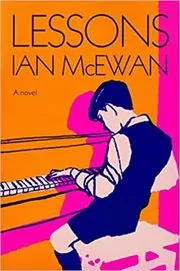
For readers who prefer following a whole life to watching a tightly engineered crisis. Its generous timespan connects private choices with public history, though the episodic structure and length can feel less urgent than the shorter novels.
What it's about
Lessons follows Roland Baines across seven decades, from a 1950s military childhood abroad and a damaging affair with his piano teacher to adult relationships shadowed by history, Chernobyl, Brexit and COVID‑19. It’s a long, reflective study of chance, regret and endurance.
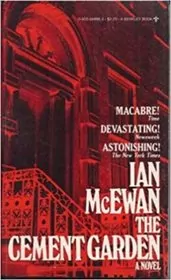
The Cement Garden
For readers curious about the disturbing early work rather than a reassuring introduction. Its compressed domestic unease shows how much tension McEwan can create in little space, though the sexual taboo and bleakness make it a demanding choice.
What it's about
When four siblings lose both parents in quick succession, they encase their mother’s body in cement in the cellar to keep authorities away. As isolation deepens in their decaying house, childhood games slide toward taboo and the family dynamic warps into something perilous.
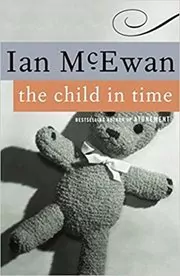
The Child in Time
For readers interested in grief, marriage, and experiments with the experience of time. It marks a move beyond the claustrophobia of the earliest novels, though its political satire and unusual shifts can interrupt the emotional focus.
What it's about
When children’s author Stephen Lewis momentarily looks away in a supermarket, his three‑year‑old daughter vanishes. Years later he drifts through government committees, a fractured marriage and strange experiences of time slipping, in a novel about loss, politics and the elasticity of reality.
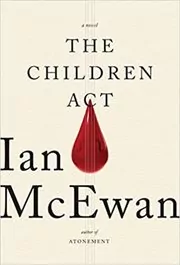
The Children Act
For readers who want a short novel built around a concrete ethical dilemma. Its legal perspective makes the conflict unusually focused, though the emotional consequences extend beyond the courtroom argument and may frustrate readers seeking a straightforward debate.
What it's about
High Court judge Fiona Maye specialises in difficult family cases, but her cool professionalism is shaken when she must decide whether a gravely ill teenage Jehovah’s Witness should receive a life‑saving blood transfusion. Her visit to the boy’s hospital bed changes both their lives.
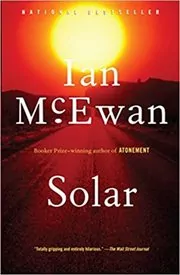
Solar
For readers who want McEwan’s darker comedy applied to scientific ambition and environmental politics. Its unsparing treatment of self-interest distinguishes it from his more sympathetic novels, though spending time with its central character can be deliberately unpleasant.
What it's about
This satire tracks Michael Beard, a Nobel‑winning but washed‑up physicist whose chaotic private life collides with a lucrative solar‑energy scheme. Blending farce with climate‑change politics, the novel follows his attempts to reinvent himself while cutting ethical corners at every turn.
Sources
- 1
Where to start with Ian McEwan: a guide to his best books
thebookerprizes.com
- 2
Where to start reading Ian McEwan
penguin.co.uk
- 3
From shocking short stories to a talking foetus: Ian McEwan’s 10 best books – ranked!
theguardian.com
- 4
Best of Ian McEwan
goodreads.com
- 5
Where to start with Ian McEwan?
reddit.com
- 6
Suggest me an Ian McEwan book (or 10)?!
reddit.com
- 7
The Essential Ian McEwan
bookmarks.reviews
- 8
Ian McEwan Website: Books Written by Ian McEwan
ianmcewan.com








Edited by
Software engineer whose passion for tracking book recommendations from podcasts inspired the creation of MRB.
Lead investor at 3one4 Capital whose startup expertise and love for books helped shape MRB and its growth.
Comments
Spotted a missing book, a wrong order or a mistake? Tell us and we'll fix this page.
We're a reading guide, not the author or publisher, so we can't send books or pass on messages.