
13 Best Archaeology Books
The best archaeology books, ranked by how many expert sources recommend each one, with notes for beginners, students, and readers drawn to discoveries and fieldwork.
Our take
Archaeology investigates human lives through material traces, from tools and buildings to landscapes and discarded objects. Its books can teach you how evidence is recovered, show how interpretations are argued, or recount the people and discoveries that shaped the field. A regional history and an excavation memoir offer different kinds of insight from a methods textbook.
Three Stones Make a Wall introduces discoveries alongside questions about archaeological practice. For deeper study, Colin Renfrew's Archaeology offers a broad methods foundation, followed by Matthew Johnson's Archaeological Theory. In Small Things Forgotten demonstrates the value of ordinary objects, while After the Ice takes a long view of prehistoric societies. Come, Tell Me How You Live and Lives in Ruins bring fieldwork closer through personal experience and reporting. Start with Three Stones Make a Wall for a readable overview, or Paul Bahn's Archaeology for a compact introduction before committing to a larger textbook.
13 books · 10 sources · Last updated
As an Amazon Associate, we earn from qualifying purchases (at no extra cost to you).
How to choose from this list
Skip to the full rankingIf you want a readable overview: Three Stones Make a Wall → Archaeology by Paul Bahn
If you're preparing for academic study: Archaeology by Colin Renfrew → Archaeological Theory
If you want everyday objects to tell the story: In Small Things Forgotten
If you want a broad prehistoric history: After the Ice
If you're curious about life around excavations: Come, Tell Me How You Live → Lives in Ruins
If you want a focused Bronze Age case: 1177 B.C.
The 13 books, ranked
Ranked by how many expert sources name each book. Ties go to the book more people recommend.

For students who want a substantial introduction to how archaeology is practised. Its coverage connects fieldwork, scientific techniques, and interpretation across many settings, though the textbook scale is more demanding than a short general overview.
What it's about
Colin Renfrew and Paul Bahn survey how archaeologists investigate the past through theory, fieldwork, and scientific methods. Examples from around the world connect the discipline's major questions with practical approaches to finding and interpreting evidence.

For students who want to understand why archaeologists interpret the same evidence differently. Johnson makes assumptions and competing approaches explicit, though the conceptual discussion works best alongside concrete examples or an introductory methods course.
What it's about
Matthew Johnson introduces the debates and assumptions that shape archaeological interpretation. Examples and accessible discussions explore science, material culture, evolution, identity, and politics, showing how theoretical approaches influence the questions archaeologists ask of the past.

For readers interested in how archaeologists explain large historical disruptions. Cline weighs interacting causes within an interconnected region rather than offering a single culprit, though the many places and rulers can require patient orientation.
What it's about
Eric Cline examines the collapse of interconnected Late Bronze Age civilizations around the eastern Mediterranean. He considers invasion, revolt, earthquakes, drought, and disrupted trade, arguing that multiple interacting failures contributed to the breakdown.

For readers drawn to the history of discoveries and the personalities behind them. Ceram makes the development of archaeology into a narrative, though its older adventure-centered perspective gives less attention to current ethics and methods.
What it's about
C.W. Ceram recounts archaeological explorations through the experiences of the people who uncovered ancient civilizations. Stories of Troy, Tutankhamen's tomb, Babylon, and Maya ruins connect dramatic discoveries with the growth of archaeological scholarship.

For readers who want to see what ordinary objects can reveal about past lives. Deetz makes material culture central to historical interpretation, though its early American focus is narrower than the global introductions.
What it's about
James Deetz explores early American life through ordinary objects, buildings, gravestones, and other material traces. His archaeological interpretations reveal changes in daily habits and examine how women and African Americans shaped colonial society.

For readers who want a broad picture of human life after the Ice Age. Mithen connects environmental changes with different societies and everyday experience, though the global scope and long chronology make it a substantial reading commitment.
What it's about
Steven Mithen traces human societies from the peak of the last Ice Age to the emergence of farming and towns. Archaeological and environmental evidence illuminate changing landscapes, migration, and daily life across fifteen thousand years.
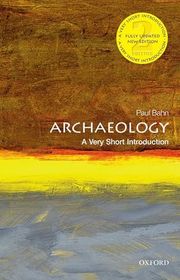
Archaeology: A Very Short Introduction
For curious readers who want to understand the discipline before buying a large textbook. Bahn surveys its scope, methods, and interpretive questions in a compact form, though the brevity limits detailed examples and practical instruction.
What it's about
Paul Bahn introduces archaeology as a global discipline concerned with recovering and interpreting material traces of the past. The short overview considers fieldwork, scientific developments, and theoretical questions, showing how different approaches contribute to reconstructing human lives.

For readers curious about daily life on an excavation rather than technical instruction. Christie's personal account captures practical mishaps and social encounters, though its colonial perspective needs to be read as part of the memoir's historical context.
What it's about
Christie recalls travelling and living around archaeological excavations with her husband, Max Mallowan, in Syria and Iraq. This personal memoir follows the practical difficulties, encounters and everyday pleasures of life on a dig, away from her fictional murder investigations.

For readers considering archaeology as work rather than a sequence of spectacular discoveries. Johnson's reporting foregrounds people, funding pressures, and field conditions, though the selected personal accounts offer neither a comprehensive curriculum nor a career manual.
What it's about
Marilyn Johnson follows contemporary archaeologists through fieldwork in the Mediterranean, Caribbean, and beyond. Their experiences reveal demanding conditions, scarce resources, and the commitment to recovering stories of ordinary people that might otherwise disappear.

The Horse, the Wheel, and Language
How Bronze-Age Riders from the Eurasian Steppes Shaped the Modern World
For readers interested in the relationship between material evidence and language history. Anthony develops a detailed argument about steppe societies and mobility, though its specialized terminology and extensive evidence require more attention than a popular survey.
What it's about
David Anthony combines archaeological and linguistic evidence to investigate the origins and spread of Indo-European languages. He examines how horseback riding, wagons, and chariots transformed Eurasian steppe societies and expanded networks of communication and cultural exchange.
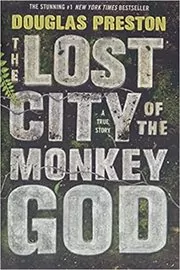
For readers who prefer firsthand reporting and expedition narrative. Preston makes modern mapping and field exploration accessible through a personal account, though the adventure and medical aftermath occupy more space than systematic explanation of archaeological methods.
What it's about
Douglas Preston joins an expedition searching the Honduran rainforest for the legendary White City. His account follows aerial mapping, archaeological exploration, and the dangers faced by the team, including a serious disease contracted during their journey.

For readers interested in how prehistoric art might connect with human consciousness. Lewis-Williams brings several kinds of evidence into a distinctive interpretive framework, though the argument is a debated explanation rather than a settled account of all cave art.
What it's about
David Lewis-Williams investigates what prehistoric cave paintings reveal about the origins of image-making and human consciousness. Drawing on anthropology and neurological research, he connects European caves with studies of rock art in Africa and North America.
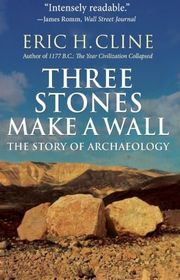
Three Stones Make a Wall
For newcomers who want discoveries connected with the practical questions of archaeology. Cline combines the field's history with explanations of excavation and interpretation, though the broad tour leaves less depth for any single region or technique.
What it's about
Eric Cline traces archaeology from early excavations to modern scientific investigation through major sites and discoveries. Alongside the history, he explains questions about where to dig, how finds are dated, and who should care for recovered objects.
Sources
- 1
Ancient Digger Archaeology: 22 Archaeology Books every Future Archaeologist should be reading
ancientdigger.com
- 2
100 Best Archaeology Books of All Time
shortform.com
- 3
Archaeology Books
goodreads.com
- 4
Any good books for starters?
reddit.com
- 5
Layout 1
downloads.bbc.co.uk
- 6
The List: Recommended reading
archaeologyherald.com
- 7
Readings in Historical Archaeology
sha.org
- 8
Top 10 Books About Archaeology & Anthropology – Michelle Paver
michellepaver.com
- 9
Can you guys recommend some good/interesting books about archaeology?
reddit.com
- 10
The Best Books on Archaeology
fivebooks.com







Edited by
Software engineer whose passion for tracking book recommendations from podcasts inspired the creation of MRB.
Lead investor at 3one4 Capital whose startup expertise and love for books helped shape MRB and its growth.
Comments
Spotted a missing book, a wrong order or a mistake? Tell us and we'll fix this page.
We're a reading guide, not the author or publisher, so we can't send books or pass on messages.