
8 Best Abstract Algebra Books
The best abstract algebra books, ranked by how many expert sources recommend each one, with notes on who each text suits and where to start learning.
Our take
Abstract algebra studies structures such as groups, rings, and fields, asking what follows from the rules they obey. Moving into the subject means spending more time with definitions, examples, and proofs than with solving familiar equations. These books offer different routes through that transition, from informal explanations and diagrams to substantial texts for advanced study.
A Book of Abstract Algebra provides a conversational starting point, while Contemporary Abstract Algebra offers many concrete examples and applications. Visual Group Theory uses pictures to make the group-theory part of the subject easier to imagine. A First Course in Abstract Algebra follows a conventional introductory path, and Dummit and Foote’s Abstract Algebra gives readers room to continue further. The two books titled Algebra, by Michael Artin and Serge Lang, serve different levels, with Lang better suited to experienced readers. Start with a text whose exercises you can attempt, then work through problems as carefully as the explanations.
8 books · 7 sources · Last updated
As an Amazon Associate, we earn from qualifying purchases (at no extra cost to you).
How to choose from this list
Skip to the full rankingIf you're learning on your own: A Book of Abstract Algebra → A First Course in Abstract Algebra
If you want concrete examples and applications: Contemporary Abstract Algebra
If you want pictures to explain groups: Visual Group Theory → A Book of Abstract Algebra
If you want a substantial course and reference: A First Course in Abstract Algebra → Abstract Algebra
If you want a compact theorem-focused treatment: Elements of Abstract Algebra
The 8 books, ranked
Ranked by how many expert sources name each book. Ties go to the book more people recommend.

Abstract Algebra
For readers who want a substantial text that can continue into advanced study. Dummit and Foote offer detailed examples and a wide range of problems, though the size can overwhelm someone seeking a short first course.
What it's about
David Dummit and Richard Foote develop abstract algebra from basic definitions toward more advanced results. Examples and exercises explore algebraic structures and their relationships, providing material for advanced undergraduate and graduate study and preparation for specialized topics.

Contemporary Abstract Algebra
For beginners who want many examples and applications alongside formal definitions. Gallian gives unfamiliar structures several concrete forms, though the amount of material still calls for regular proof practice rather than passive reading.
What it's about
Joseph Gallian introduces abstract algebra through definitions, examples, computations, and proofs. The text develops group theory and related algebraic structures, with exercises encouraging students to generalize ideas and connect them with mathematical applications.

A Book of Abstract Algebra
For readers learning abstract algebra on their own who want ideas introduced conversationally. The carefully developed exercises help build understanding, though some important extensions live in the problems and require active work.
What it's about
Pinter introduces undergraduate abstract algebra through informal discussions followed by themed exercises. Historical background and explanations motivate the concepts, while problems extend the core material into applications and additional topics for students at different levels.
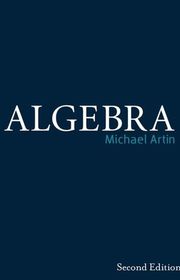
Algebra
For readers who want linear algebra and geometry to motivate more abstract structures. Artin develops connections that can make the subject feel coherent, though the substantial exercises and proofs expect mathematical confidence.
What it's about
Michael Artin develops groups, rings, fields, and other algebraic structures with a strong role for linear algebra and geometry. Examples and exercises connect formal definitions with symmetry, transformations, and the reasoning used to prove algebraic results.

A First Course in Abstract Algebra
For students taking a first course who want a conventional progression through groups, rings, and fields. Its exercises support steady practice, though readers wanting a more informal conversation may prefer Pinter.
What it's about
John B. Fraleigh introduces abstract algebra through groups, rings, and fields. The textbook emphasizes understanding algebraic structures, with exercises and applications that build a foundation for more specialized mathematical study.

Algebra
For graduate students who already have a firm algebra foundation and want a broad reference. Lang connects many structures in a compact treatment, though the compressed exposition makes it a demanding first encounter.
What it's about
Serge Lang develops algebra through groups, rings, modules, polynomials, and field extensions. The graduate textbook continues into linear algebra, representations, and homological methods, combining proofs and exercises across interconnected algebraic structures.
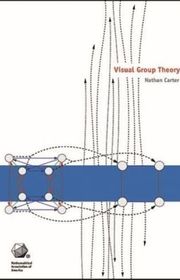
Visual Group Theory
For readers who want to see what group-theoretic ideas mean before confronting dense notation. Carter’s diagrams make symmetry and structure concrete, though the focus on groups cannot replace a full course in rings and fields.
What it's about
Nathan Carter introduces group theory through symmetry, diagrams, and visual examples. The book develops subgroups, products, quotients, homomorphisms, and further topics, giving readers a picture-based route into concepts that are often presented mainly through notation.

Elements of Abstract Algebra
For readers who want a relatively compact introduction with substantial theorem-based development. Clark covers a considerable range in a short space, though the concise proofs and exercises reward prior comfort with mathematical reasoning.
What it's about
Allan Clark develops abstract algebra through careful proofs and exercises, progressing from sets and groups to fields, Galois theory, rings, and classical ideal theory. Historical notes accompany a treatment that emphasizes important theorems.
Sources
- 1
The 12 Best Abstract Algebra Books—Basic and Advanced
celsiuselements.com
- 2
Mathematics Textbooks for Self Study -- A Guide for the Autodidact
marktomforde.com
- 3
Links to other books
homepage.math.uiowa.edu
- 4
Abstract Algebra Books
goodreads.com
- 5
which one is better? C.C Pinter A book of abstract algebra vs T.W Hungerford abstract algebra: an introduction
reddit.com
- 6
Is there any abstract algebra book which explains the concepts and interpreting them rather than just theorems and demonstarions
reddit.com
- 7
A good book for beginning Group theory
math.stackexchange.com





Edited by
Software engineer whose passion for tracking book recommendations from podcasts inspired the creation of MRB.
Lead investor at 3one4 Capital whose startup expertise and love for books helped shape MRB and its growth.
Comments
Did we miss something? Have feedback?
Help us improve this page by sharing your thoughts