
Yuri Rytkheu Books in Order
Explore Yuri Rytkheu's books in order, with concise summaries, reading guidance, and background on his Chukchi stories of Arctic life and change.
Last updated:
As an Amazon Associate, we earn from qualifying purchases (at no extra cost to you).
Yuri Rytkheu books in publication order
3 books
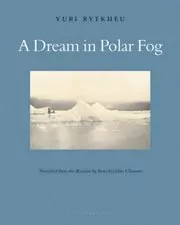
A Dream in Polar Fog
by Yuri Rytkheu
1970
In 1910, Canadian sailor John MacLennan is stranded on the Siberian coast after a devastating accident. Taken in by a Chukchi community, he must learn new skills and reconsider everything he believed about its people and their Arctic home.
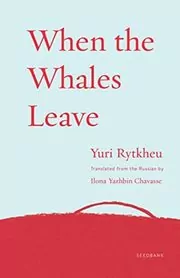
When the Whales Leave
by Yuri Rytkheu
1977
Nau, a woman living alone on the Eastern Siberian coast, forms a life-changing bond with Reu, a whale who can take human form. Their descendants inherit a world built on kinship with the sea, then test its fragile balance.
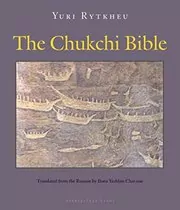
The Chukchi Bible
by Yuri Rytkheu
2000
Blending creation stories, family memory, and history, this novel follows the Chukchi people across the Arctic world. Its later sections center on Mletkin, Rytkheu’s grandfather, a whaler, traveler, and the last shaman of Uelen.
Where to start with Yuri Rytkheu
For an accessible first read: A Dream in Polar Fog → When the Whales Leave → The Chukchi Bible
If you want an Arctic survival and cross-cultural story: A Dream in Polar Fog → The Chukchi Bible
If you prefer myth and ecological themes: When the Whales Leave → The Chukchi Bible
For family history and Chukchi tradition: The Chukchi Bible → A Dream in Polar Fog
Yuri Rytkheu sub-series and character series
Author bio
Yuri Rytkheu was born on March 8, 1930, in Uelen, a Chukchi village on Russia’s far northeastern coast. He grew up in a family of hunters and trappers, in a place shaped by the Bering Sea, sea ice, hunting, and long winters. The stories, songs, customs, and oral traditions he heard as a child stayed with him and became the living material of his fiction.
After finishing school in Uelen, Rytkheu hoped to continue his education at the Institute of the Peoples of the North. He was considered too young, so he set his sights on Leningrad instead. Getting there took time and money he didn’t have.
As a teenager and young man, he worked wherever work could be found. He hunted with a marine-mammal brigade, painted buildings, loaded ships, sailed in the Bering Sea, and joined geological expeditions as a laborer and translator. These jobs gave him firsthand knowledge of the Arctic working life that would later fill his books with practical detail.
In Anadyr, he attended teacher-training school while working for the regional newspaper Soviet Chukotka. The paper published his early poems, reports, and sketches. A meeting with linguist Pyotr Skorik helped him make the move to Leningrad, where he studied literature at Leningrad State University.
Writing gave him a way to carry home with him.
Rytkheu published his first story collection, The People of Our Coast, in 1953. He also translated works by Pushkin, Tolstoy, Lermontov, Gorky, and others into Chukchi. After graduating in 1954, he worked for a newspaper in Magadan before returning to Leningrad, the city where he spent most of the rest of his life.
His books often bring readers to Chukotka, the huge northeastern region where the tundra meets the sea. He wrote about hunters, sailors, families, elders, visitors, and people caught between inherited ways of life and rapid change. The landscape is never just a backdrop. Weather, ice, animals, travel, food, and the sea all shape what his characters can do and what they risk losing.
A Dream in Polar Fog follows a stranded Canadian sailor who is taken in by a Chukchi community and slowly learns to see its members as people rather than strangers. When the Whales Leave draws on an origin story linking humans and whales, then follows the strain placed on that bond across generations. In The Chukchi Bible, myth, family history, and the life of Rytkheu’s grandfather, the last shaman of Uelen, meet in one wide-ranging story.
He wrote in both Chukchi and Russian, and he kept returning to questions of language, memory, belonging, and the pressure placed on Indigenous communities by outside systems. His work does not treat Chukchi life as a museum piece. It is full of arguments, humor, work, affection, grief, and people making hard choices.
Rytkheu also traveled widely, lectured abroad, and worked for eleven years as a UNESCO expert. After the Soviet Union ended, his books were published more often in translation outside Russia than at home. He continued writing and visiting Chukotka, and died in Saint Petersburg on May 14, 2008.
His stories remain a direct route into an Arctic world seen from within.




Edited by
Software engineer whose passion for tracking book recommendations from podcasts inspired the creation of MRB.
Lead investor at 3one4 Capital whose startup expertise and love for books helped shape MRB and its growth.
Comments
Did we miss something? Have feedback?
Help us improve this page by sharing your thoughts