
Winnie the Pooh Books in Order
Part ofAA Milne Books in OrderExplore the Winnie the Pooh series by A. A. Milne in order, with story summaries, Hundred Acre Wood background, reading order help, and where to start.
Last updated:
As an Amazon Associate, we earn from qualifying purchases (at no extra cost to you).
Winnie the Pooh books in publication order
4 books
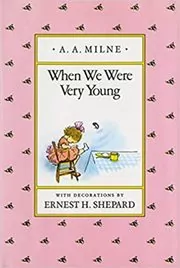
When We Were Very Young
by AA Milne
1924
A collection of playful rhymes about nursery life, rainy walks and a small boy very like Christopher Robin. These short, musical poems capture everyday moments from a child’s point of view and quietly introduce the teddy bear who becomes Winnie the Pooh.
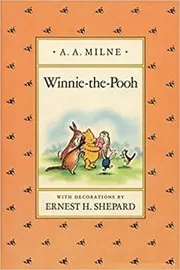
Winnie-the-Pooh
by AA Milne
1926
Ten linked stories follow Pooh and his friends through the Hundred Acre Wood, from honey hunts and heffalump traps to birthdays, floods and parties. The adventures are gentle, funny and warm, always circling back to friendship and small acts of bravery.
Recommended by
2 people Dr. Gabor Maté recommended this book
Dr. Gabor Maté
"One of the seminal books of my childhood. [...] What struck me about Pooh, of course, [was that] there was this bear of little brains who was so much wiser than everybody else." - Dr. Gabor Maté
Dr. Gabor Maté's recommendation of this book  Hillary Clinton recommended this book
Hillary Clinton
Hillary Clinton mentioned reading this book as a child.
Hillary Clinton's recommendation of this book
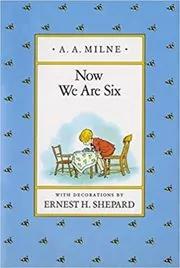
Now We Are Six
by AA Milne
1927
These verses look at the world through the eyes of a child who has just turned six, mixing nonsense, daydreams and sudden wisdom. Many poems feature Christopher Robin and Pooh, making this a companion to the earlier book of nursery rhymes.
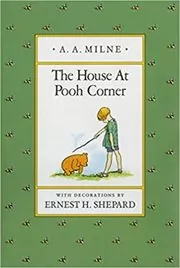
The House at Pooh Corner
by AA Milne
1928
The second Pooh story collection brings Tigger bouncing into the forest, sends the friends out to play Poohsticks and even finds a new house for Eeyore. Under the adventures runs a quieter story about Christopher Robin beginning to grow up and move on.
Winnie the Pooh books in chronological order
Series background & context
The Winnie the Pooh books follow the small adventures of a toy bear and his friends in the Hundred Acre Wood, a fictional version of the real Ashdown Forest in Sussex where Milne walked with his son. Christopher Robin appears as the boy who listens, leads and occasionally rescues, but the stories mostly belong to the animals who share his world.
At the centre is Pooh, a self described Bear of Very Little Brain whose love of honey and quiet thoughtfulness guide most of the tales. Around him cluster Piglet, anxious but brave when it matters, gloomy Eeyore, efficient Rabbit, fussy Owl, gentle Kanga and energetic Roo, and later the springy newcomer Tigger. Each character has a clear voice and set of habits, and much of the pleasure comes from watching those personalities bump up against one another over very small problems.
The original shape of the series comes from two story collections, Winnie-the-Pooh and The House at Pooh Corner. In them the characters set heffalump traps, hunt Woozles in the snow, build a house for Eeyore, fish for the North Pole, invent the game of Poohsticks and survive floods and blustery weather. The stakes are rarely larger than a lost tail, an over eaten honey pot or a friend in a tight place, yet the stories never feel thin because the emotional weather is taken seriously even when the plot is light.
Milne writes in a conversational style, with a narrator who chats to the reader, pauses to explain a long word or lets us know what Pooh is really thinking. Misheard phrases and half remembered long words become jokes in themselves, from an 'expotition' to the North Pole to the worry that Piglet might be Entirely Surrounded by Water. Children recognise the logic; adults recognise their own childhood voices, and that double perspective is part of the series charm.
Running under the cosy surface is a quieter thread about time passing. Across the two main books Christopher Robin slowly shifts from constant playmate to a child who has lessons and other duties beyond the Wood. Milne never over explains this, but readers can feel the moment when make believe starts to give way to something else, which makes the earlier games and parties feel even more precious.
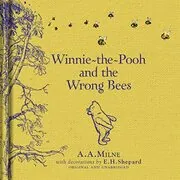
Many of the smaller volumes in this series, such as Winnie-the-Pooh and the Wrong Bees, Piglet Meets a Heffalump, or Pooh Goes Visiting and Pooh and Piglet Nearly Catch a Woozle, take a single chapter from the originals and present it as a stand alone picture book. They keep Milne's text and E. H. Shepard's drawings but focus on one episode, making it easy to share a short story at bedtime or give a young reader a first meeting with Pooh and friends.
Read in order, the Pooh books let you watch the Hundred Acre Wood fill up with new characters and games. Dipped into at random, they offer self contained tales about kindness, muddle, apology and cake. Either way, the series rewards being read aloud, because the rhythms of Milne's sentences and the gentle comedy of his dialogue are built to be heard as much as seen.

Edited by
Software engineer whose passion for tracking book recommendations from podcasts inspired the creation of MRB.
Lead investor at 3one4 Capital whose startup expertise and love for books helped shape MRB and its growth.
Comments
Did we miss something? Have feedback?
Help us improve this page by sharing your thoughts