
William Bayer Books in Order
Explore William Bayer books in order, with short summaries, series background, reading order help, and clear advice on where to start.
Last updated:
As an Amazon Associate, we earn from qualifying purchases (at no extra cost to you).
William Bayer books in publication order
20 books

In Search of a Hero
by William Bayer
1966
Bayer's 1962 debut novel is now a rare early work. Best for completists, it offers a look at the writer before the award-winning thrillers and detective novels that later made his name.

The Great Movies
by William Bayer
1973
Bayer surveys sixty landmark films and explains what makes them endure. It is a compact guide for movie lovers who want smart, readable entry points into classic cinema.
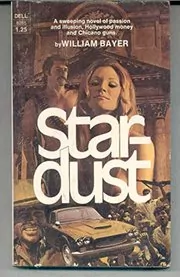
Stardust
by William Bayer
1974
One of Bayer's early standalones, this 1974 novel is now mostly of interest to completists. It offers an early look at his voice before the Janek books and the later psychological thrillers.
Visions of Isabelle
by William Bayer
1976
A fictionalized portrait of Isabelle Eberhardt, the restless writer and traveler who crossed borders of place, gender, and identity. Bayer turns her life into a moody historical novel about freedom, reinvention, and the cost of living outside the rules.

Tangier
by William Bayer
1978
In Tangier's uneasy expatriate world, Moroccan police inspector Hamid watches rich foreigners, drifters, and spies circle one another in games of sex and power. As he tries to understand his enigmatic mistress, the city's secrets start to open.

Punish Me With Kisses
by William Bayer
1980
After her beautiful sister Suzie is murdered in Bar Harbor, shy Penny Berring is left with an acquittal, a scandal, and too many unanswered questions. Years later, a secret diary pulls her back into the case and toward a darker family truth.
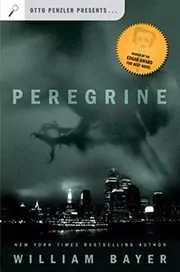
Peregrine
by William Bayer
1983
A trained peregrine falcon becomes a murder weapon in Manhattan, and NYPD detective Frank Janek is thrown into a case unlike any he has seen. As killings continue, a television reporter becomes dangerously entangled with the killer's obsession.
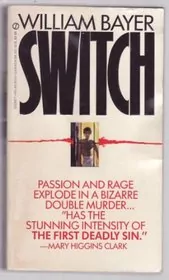
Switch
by William Bayer
1984
Two women are murdered in different parts of New York, and their severed heads are switched. Frank Janek must make sense of a crime that looks motiveless, while the case exposes old wounds inside the police department and in his own life.
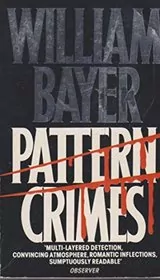
Pattern Crimes
by William Bayer
1987
In Jerusalem, detective David Bar-Lev investigates a string of murders linked only by strange markings on the bodies. The deeper he digs into zealotry, politics, and family secrets, the more the case begins to cut into his own life.
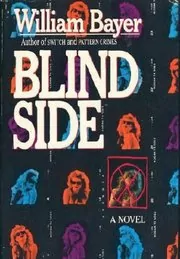
Blind Side
by William Bayer
1989
Night photographer Geoffrey Barnett is drawn in by actress Kimberly Yates, who jolts him out of his artistic dead end and into danger. When she disappears, he is pulled through a noir maze of blackmail, sadism, and murder.
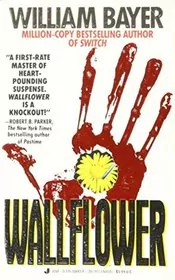
Wallflower
by William Bayer
1991
Janek is called home from Venice after his goddaughter is murdered, apparently by a serial killer the FBI wants stopped fast. His search leads into damaged psyches, buried secrets, and a case that feels more personal with every step.

Mirror Maze
by William Bayer
1994
When a man is found dead after a bar pickup, Janek links the crime to a woman who drugs and robs men and to a much older sex murder. The trail leads him into a maze of abuse, corruption, and revenge.

The Magician's Tale
by William Bayer
1997
Kay Farrow, a San Francisco photographer who sees only in black, white, and gray, investigates the brutal murder of male hustler Tim Lovsey. Her search ties a present killing to an older serial case and to her father's ruined police career.
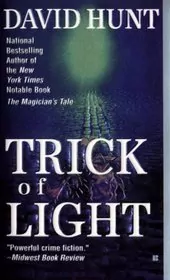
Trick of Light
by William Bayer
1998
After her mentor Maddy Yamada is killed in a late-night hit and run, photographer Kay Farrow refuses to accept it as an accident. Old film, hidden rooms, and a circle of wealthy collectors lead her toward a darker story.
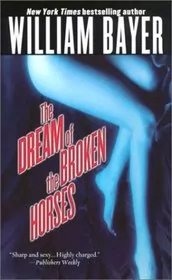
The Dream of the Broken Horses
by William Bayer
2002
Forensic sketch artist David Weiss returns to his hometown and becomes obsessed with an old double murder tied to a kidnapped child and his late psychoanalyst father. Diaries, case notes, and half-buried memories turn the investigation into a personal descent.

Breaking Through, Selling Out, Dropping Dead and Other Notes on Filmmaking
by William Bayer
2004
Part glossary, part survival manual, this nonfiction book walks through the practical language and hard realities of getting movies made. Bayer writes from firsthand film experience, so the advice stays concrete and unsentimental.

City of Knives
by William Bayer
2006
A prostitute's murder pulls incorruptible detective Marta Abecasis into a web of political power in Buenos Aires. Around her, a professor, a psychoanalyst, and a dealer chasing a Nazi dagger move toward the same dangerous crossroads.
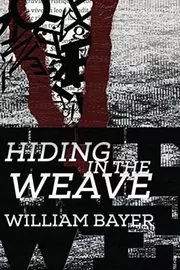
Hiding in the Weave
by William Bayer
2013
At an arts-focused boarding school, senior Joel Barlev falls for gifted dancer and weaver Liv Anders. When tragedy strikes and something important is found hidden in one of her weavings, Joel and his friends start digging for the truth.
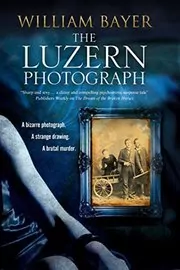
The Luzern Photograph
by William Bayer
2016
Performance artist Tess Berenson becomes obsessed with the murdered dominatrix who once lived in her Oakland loft. Her search leads from contemporary California to Freud's Vienna and to an infamous nineteenth-century photograph.

The Murals
by William Bayer
2019
Former war photographer Jason Poe finds a haunting set of murals in the attic of an abandoned house and cannot let them go. With help from friends and a reporter, he starts uncovering a history of cult rumors, corruption, fire, and buried damage.
Where to start with William Bayer
If you want the Frank Janek police novels: Peregrine → Switch → Wallflower → Mirror Maze
If you like international city mysteries: Tangier → Pattern Crimes → City of Knives
If you want art-soaked noir: The Magician's Tale → Trick of Light
If you prefer later standalone psychological mysteries: The Dream of the Broken Horses → The Luzern Photograph → The Murals
William Bayer sub-series and character series
William Bayer collections, short stories, and related book types
Non-Fiction
Standalone William Bayer books
Author bio
William Bayer was born in Cleveland, Ohio, on February 20, 1939. He grew up in a family where storytelling was normal work: his father, Leo G. Bayer, was a lawyer, and his mother became the screenwriter Eleanor Perry. Both parents also wrote fiction, so books, scripts, and crime plots were part of the household early on.
He attended Sidwell Friends, Hawken School, Phillips Exeter, and then Harvard, where he studied art history. His honors thesis focused on a single Gauguin painting, which tells you something about his habits as a writer too: he likes to look hard, circle the same image, and keep asking what is really going on underneath it.
Writing came alongside other work, not after some neat lightning-bolt moment. His first novel, In Search of a Hero, appeared in 1962, and soon after he spent six years with the United States Information Agency, working in Washington, Vietnam, and New York. That stretch also pulled him toward documentary filmmaking, which sharpened his eye for cities, atmosphere, and the way people perform versions of themselves.
Film mattered to him. He wrote and directed Mississippi Summer, which won a first-feature prize at the Chicago International Film Festival, and he later wrote nonfiction about moviemaking and film history in Breaking Through, Selling Out, Dropping Dead and Other Notes on Filmmaking and The Great Movies.
Then the crime novels took over.
Bayer's breakthrough as a suspense writer came with books like Tangier, Peregrine, Switch, and Pattern Crimes. Readers tend to come to him for psychological pressure, strong city settings, and investigations that feel both cerebral and dirty-handed. His detectives are rarely just clue machines. They think, brood, double back, and get pulled into the moral mess around them.
Frank Janek, the New York homicide detective at the center of four novels, is probably his best-known recurring character. Bayer also wrote the Kay Farrow books, The Magician's Tale and Trick of Light, under the pen name David Hunt. Those novels follow a San Francisco photographer with total color blindness, and they show how comfortably Bayer could mix crime fiction with art, sexuality, memory, and a very physical sense of place.
The awards tell part of the story, but plain facts tell it better. Peregrine won the Edgar for Best Novel. The Magician's Tale won a Lambda Literary Award. French editions of Switch, Mirror Maze, and The Dream of the Broken Horses also picked up major mystery prizes. Switch went on to become the basis for a run of television films starring Richard Crenna as Janek.
Cities matter in Bayer's books.
Tangier, Jerusalem, Buenos Aires, New York, San Francisco, Oakland, and Vienna are never just backdrops. He is drawn to border places, damaged glamour, outsiders, artists, journalists, cops, and people who think they can control their obsessions right up until they can't. He also received support from both the American Film Institute and the National Endowment for the Arts. Bayer married food writer Paula Wolfert, and over the years the two lived in Paris, New York, Connecticut, Tangier, and San Francisco. Later author bios place him in Sonoma Valley in Northern California, which feels fitting for a writer so alert to mood, place, and the strange pressure a landscape can put on people.









Edited by
Software engineer whose passion for tracking book recommendations from podcasts inspired the creation of MRB.
Lead investor at 3one4 Capital whose startup expertise and love for books helped shape MRB and its growth.
Comments
Did we miss something? Have feedback?
Help us improve this page by sharing your thoughts