
Weina Dai Randel Books in Order
Browse Weina Dai Randel books in order, with quick summaries, series notes, and easy where-to-start help for her historical novels and duology.
Last updated: 1 new book added
As an Amazon Associate, we earn from qualifying purchases (at no extra cost to you).
Weina Dai Randel books in publication order
6 books
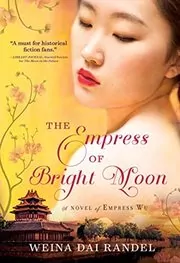
The Empress of Bright Moon
by Weina Dai Randel
2016
With Pheasant now emperor, Mei faces a deadly struggle with Empress Wang for power inside the Tang court. As attacks reach her family and allies, she must decide how far she will go to survive and claim her place.
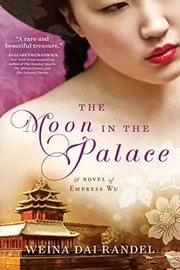
The Moon in the Palace
by Weina Dai Randel
2016
After her father's death, young Mei enters Emperor Taizong's palace as a concubine and discovers a court ruled by jealousy, strategy, and danger. To survive, she must rely on her sharp mind as love and ambition pull her in opposite directions.

The Last Rose of Shanghai
by Weina Dai Randel
2021
In Japanese-occupied Shanghai, nightclub owner Aiyi Shao hires Ernest Reismann, a Jewish refugee pianist, and music draws them together. Their growing bond must survive war, prejudice, and a city becoming more dangerous by the day.

Night Angels
by Weina Dai Randel
2023
In 1938 Vienna, Chinese consul general Ho Fengshan and his American wife, Grace, watch Nazi persecution close in on their friends. When Grace befriends violinist Lola Schnitzler, the couple are drawn into a dangerous effort to help Jews escape.

The Master Jeweler
by Weina Dai Randel
2025
In 1925 Harbin, teenager Anyu Zhang returns a lost Fabergé egg to Russian émigré Isaac Mandelburg, a choice that changes her future. In Shanghai she pursues jewelry making, only to learn that talent and ambition can attract ruthless enemies.

The Lost Kingdom of Daughters
by Weina Dai Randel
2026
In 1950s China, Moso woman Lazo welcomes two stranded American brothers into her matriarchal community. Their contrasting beliefs and growing attraction to her create tensions, while jealousy and a buried secret threaten consequences reaching into the next generation.
Where to start with Weina Dai Randel
If you want palace intrigue first: The Moon in the Palace → The Empress of Bright Moon
If you want a wartime Shanghai love story: The Last Rose of Shanghai
If you want a rescue story set in Nazi-era Europe: Night Angels
If you want old Shanghai ambition and craft: The Master Jeweler
Weina Dai Randel sub-series and character series
Empress of Bright Moon books in order
Explore this seriesEmpress of Bright Moon books in chronological order
Standalone Weina Dai Randel books
Author bio
Weina Dai Randel was born and raised in Wenzhou, a coastal city in Zhejiang province, China. She has said she grew up in the 1980s, when books were precious and not always easy to find, and one early favorite was The Dream of the Red Mansion, read secretly by flashlight. The urge to tell stories started young too. By third grade, she already wanted to be a writer.
She came to the United States at twenty-four.
Before that move, she had worked as a journalist and online magazine editor in Shanghai. English was her second language, and in her early years in Texas she studied every morning, kept notes, and carried an English-Chinese dictionary. Later she earned an M.A. in English from Texas Woman's University in Denton, where graduate study helped turn a lifelong wish into a real writing path.
That time at Texas Woman's University mattered. Randel has said that a class in Asian American literature pushed her toward Empress Wu, and more broadly toward the women history leaves at the edge of the page. Instead of centering emperors and generals, she found herself drawn to women who had to survive around power, and sometimes outlast it.
Her writing career took patience.
Randel spent about a decade working on the novel that became The Moon in the Palace, and she has spoken openly about collecting 82 rejections before publication finally came. That long apprenticeship feels connected to the people she writes about. Her heroines are often boxed in by family, politics, war, or class, and they keep moving anyway.
Her debut, The Moon in the Palace, and its sequel, The Empress of Bright Moon, reimagine the rise of Wu Zetian, the only woman to rule China in her own name. The books mix palace intrigue, romance, strategy, and the daily pressure of court life. They also set up one of Randel's lasting interests: what power looks like when a woman is denied it officially but learns to reach for it all the same.
Later, she moved into twentieth-century settings with The Last Rose of Shanghai, Night Angels, and The Master Jeweler. Those novels widen the frame to jazz clubs, refugees, diplomats, artists, and cities reshaped by war, but they still carry her interest in Chinese history and women under pressure. Readers who like her work often come for the historical setting and stay for the emotional stakes.
She returns again and again to outsiders. A nightclub owner under occupation. A diplomatic couple watching Nazi power close in around their friends. A young woman trying to build a life through craft and ambition in old Shanghai. Even when the setting changes, her fiction keeps asking who gets remembered, who gets erased, and what survival costs.
Success came in clear, practical ways. The Last Rose of Shanghai became a Wall Street Journal bestseller, Night Angels was longlisted for the Massachusetts Book Awards, and her books have been translated into many languages. Alongside her fiction, she has also worked as a subject-matter expert for Southern New Hampshire University's MFA program and as an adjunct professor.
She now lives in Massachusetts with her family. Her path to publication, immigrant, academic, stubborn, and built one draft at a time, feels a lot like the lives she writes about: hard won, forward moving, and shaped by people who refuse to give up.









Edited by
Software engineer whose passion for tracking book recommendations from podcasts inspired the creation of MRB.
Lead investor at 3one4 Capital whose startup expertise and love for books helped shape MRB and its growth.
Comments
Did we miss something? Have feedback?
Help us improve this page by sharing your thoughts