
Vladimir Nabokov Books in Order
See Vladimir Nabokov's books in order, with brief summaries, background on his Russian and American years, and clear suggestions on where to start reading.
Last updated:
As an Amazon Associate, we earn from qualifying purchases (at no extra cost to you).
Vladimir Nabokov books in publication order
40 books
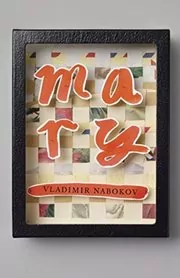
Mary
by Vladimir Nabokov
1926
In a shabby Berlin boardinghouse, émigré Ganin discovers that his neighbour's absent wife is Mary, his first love from pre-revolutionary Russia, and becomes consumed by memories and a plan to meet her, forcing him to choose between idealised past and uncertain present.
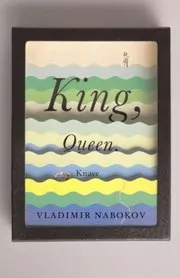
King, Queen, Knave
by Vladimir Nabokov
1928
Naive young Franz joins his wealthy uncle Dreyer's household in Berlin and soon becomes the lover and pawn of Dreyer's restless wife Martha, who begins plotting a clumsy murder amid department store intrigues, mannequin schemes, and farcical misunderstandings.
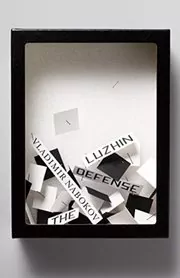
The Luzhin Defense
by Vladimir Nabokov
1929
An awkward, isolated boy grows into a world-famous chess grandmaster whose life becomes indistinguishable from the game, as obsessive calculation and pressure push Luzhin toward a mental collapse that his adoring but helpless wife cannot prevent.
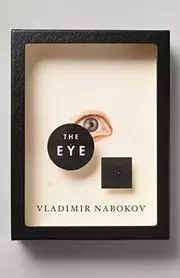
The Eye
by Vladimir Nabokov
1930
After a beating and apparent suicide attempt, the narrator seems to exist only as an observing 'eye', watching fellow Russian émigrés discuss a man named Smurov and discovering how other people's stories can create, distort, or erase a self.
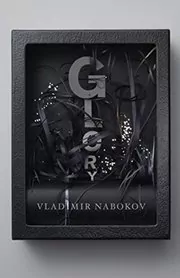
Glory
by Vladimir Nabokov
1931
Martin Edelweiss, a young Russian émigré, drifts through boarding schools, Cambridge, and European travels, nursing an unrequited love and finally seeking a dangerous secret return to Soviet Russia in a quixotic quest for meaning and courage.
Laughter in the Dark
by Vladimir Nabokov
1932
Albert Albinus, a prosperous Berlin art critic, abandons his family for Margot, a teenage usherette and would-be actress, only to be blinded and cruelly exploited by her and her lover in a relentless tale of lust, betrayal, and humiliation.
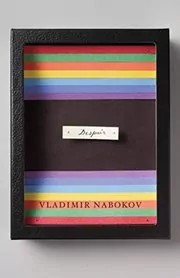
Despair
by Vladimir Nabokov
1934
Hermann, a chocolate factory owner convinced he has found his exact double in a down-and-out tramp, devises what he believes is the perfect murder and insurance scam, narrating his own scheme in a way that steadily exposes his vanity and self-deception.
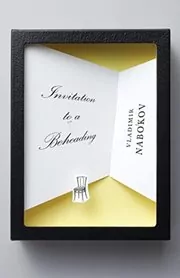
Invitation to a Beheading
by Vladimir Nabokov
1938
Cincinnatus C, imprisoned in a surreal totalitarian state for the vague crime of 'gnostical turpitude', waits for an unnamed execution date while trying to write and to locate a more authentic inner reality than the flimsy world around him.
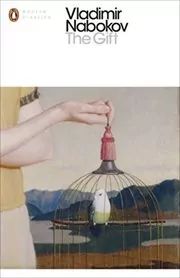
The Gift
by Vladimir Nabokov
1938
Set among Russian émigrés in 1920s Berlin, this richly layered novel traces young writer Fyodor Godunov-Cherdyntsev as he recalls his explorer father, falls in love, and composes a scandalous biography, blending parody, autobiography, and a portrait of artistic growth.
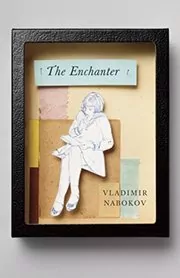
The Enchanter
by Vladimir Nabokov
1939
Written in Russian in 1939, this brief, disturbing novella follows a middle-aged man who marries a widow solely to gain access to her young daughter, sketching the obsessive fantasies and moral collapse that anticipate themes later expanded in Lolita.
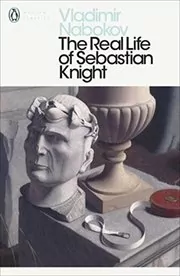
The Real Life of Sebastian Knight
by Vladimir Nabokov
1941
After the death of his half brother, a Russian born English novelist, the narrator V sets out to write Sebastian Knight's biography, interviewing friends and lovers and discovering how easily facts blur into fiction and self-projection.
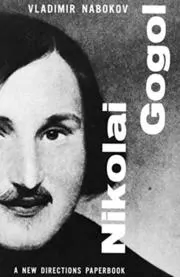
Nikolai Gogol
by Vladimir Nabokov
1944
This short critical study explores the life and work of Russian writer Nikolai Gogol, from The Overcoat and Dead Souls to his religious crises, highlighting the bizarre humour, grotesque images, and technical daring that shaped modern Russian prose.
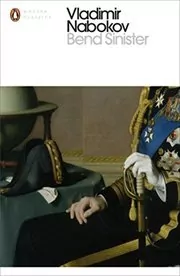
Bend Sinister
by Vladimir Nabokov
1947
In a grim, invented European state ruled by the Party of the Average Man, philosopher Adam Krug resists a brutish new regime that tries to coerce his support, turning his grief and moral refusal into a bleak, nightmarish fable about totalitarianism.
Recommended by
1 person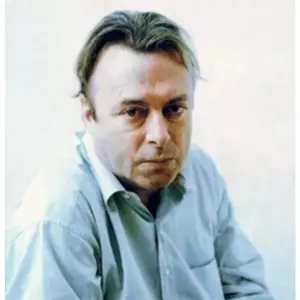 Christopher Hitchens recommended this book
Christopher Hitchens
"Prescient and haunting." - Christopher Hitchens
Christopher Hitchens's recommendation of this book
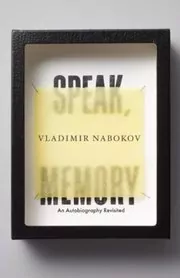
Speak, Memory
by Vladimir Nabokov
1951
Nabokov's memoir revisits his aristocratic Russian childhood, family estates, first love, exile, Cambridge years, and early writing life, arranging memories as intricate motifs that link butterflies, games, and loss across time.
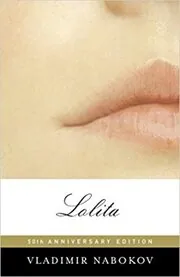
Lolita
by Vladimir Nabokov
1955
Told by the self-justifying professor Humbert Humbert, this novel follows his grooming, abduction, and sexual abuse of twelve-year-old Dolores Haze during a road trip across America, exposing how language and charm can mask violence, self-delusion, and a child's suffering.
Recommended by
5 people J.K. Rowling recommended this book
J.K. Rowling
"There are two books whose final lines make me cry without fail, irrespective of how many times I read them, and one is [this book]." - J.K. Rowling
J.K. Rowling's recommendation of this book  Ev Williams recommended this book
Ev Williams
On the "books read" section of Ev Williams' GoodReads profile.
Ev Williams's recommendation of this book  PewDiePie recommended this book
PewDiePie
"Loved it." - PewDiePie
PewDiePie's recommendation of this book  Tavi Gevinson recommended this book
Tavi Gevinson
"For articulating, intentionally or not, what it means to be in love with the idea of love, in love with your own memories, with your own control, with a prevailing aloneness." - Tavi Gevinson
Tavi Gevinson's recommendation of this book  Bryan Callen recommended this book
Bryan Callen
Bryan Callen recommended this book on YouTube.
Bryan Callen's recommendation of this book
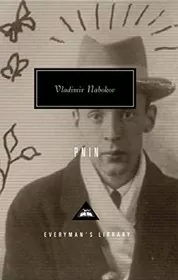
Pnin
by Vladimir Nabokov
1957
Timofey Pnin, a hapless but dignified Russian professor in small-town America, stumbles through mispronounced lectures, housing mishaps, and academic politics, while the sly narrator alternates between gently mocking and quietly honouring his stubborn decency.
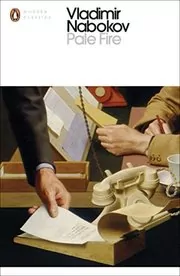
Pale Fire
by Vladimir Nabokov
1962
Presented as a 999-line poem by John Shade plus a sprawling commentary by his deranged neighbour Charles Kinbote, this novel lets footnotes, fantasies, and literary puzzles slowly reveal competing stories of grief, exile, and possible delusion.
Recommended by
1 person- Christopher Hitchens recommended this book
Christopher Hitchens
"Instead of making you want to write, [makes] you wonder why you bother." - Christopher Hitchens
Christopher Hitchens's recommendation of this book
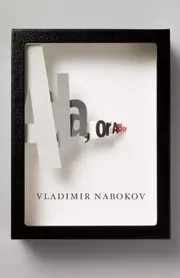
Ada, or Ardor
by Vladimir Nabokov
1969
Told as the memoir of Van Veen, this sprawling family chronicle on an alternate Earth traces his lifelong, taboo love affair with his sister Ada, weaving together romance, mock science, philosophy, and elaborate wordplay over decades.
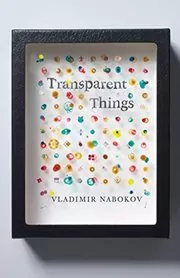
Transparent Things
by Vladimir Nabokov
1972
Hugh Person, a timid American editor, revisits a Swiss town four times across his life, falling in love, marrying, and stumbling toward tragedy as unseen narrators peel back "transparent" layers of objects and memories to show how the past haunts the present.

A Russian Beauty and Other Stories
by Vladimir Nabokov
1973
Thirteen stories written in Russian between the late 1920s and 1940 portray émigré lives, doomed romances, fantastical journeys, and sudden shifts of reality, offering a compact tour of Nabokov's early themes and narrative tricks.

Strong Opinions
by Vladimir Nabokov
1973
Collected interviews, essays, letters, and short pieces capture Nabokov sounding off on literature, politics, translation, censorship, language, and butterflies, revealing both his sharp intolerance for clichés and his precise ideas about how fiction should work.
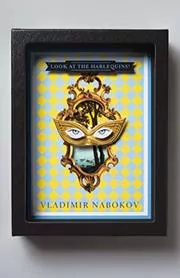
Look at the Harlequins!
by Vladimir Nabokov
1974
An aging Russian émigré novelist named Vadim narrates a wildly unreliable autobiography that mirrors and distorts Nabokov's own life, turning failed marriages, shifting identities, and literary games into a darkly comic puzzle about memory and self-invention.

Tyrants Destroyed and Other Stories
by Vladimir Nabokov
1975
This collection gathers thirteen tales, mostly from Nabokov's Berlin and Paris years, ranging from political allegories of dictatorship to uncanny ghostly pieces and intricate character studies, culminating in the haunting English story The Vane Sisters.

Details of a Sunset & Other Stories
by Vladimir Nabokov
1976
Early émigré stories set in Berlin and elsewhere dwell on small sensory details, chance encounters, and sudden blows of fate, hinting at the preoccupations with memory, illusion, and pattern that would later shape Nabokov's novels.
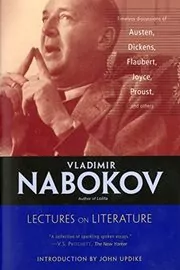
Lectures on Literature
by Vladimir Nabokov
1980
Here Nabokov dissects European and American novels from Austen, Flaubert, Dickens, Kafka, Proust, Joyce, and others, showing how he mapped plots, drew diagrams, and taught students to read slowly, noticing patterns rather than searching for simple messages.
Lectures on Ulysses
by Vladimir Nabokov
1980
This slim volume extracts Nabokov's extended classroom commentary on James Joyce's Ulysses, offering scene-by-scene guidance through Dublin's streets, Homeric echoes, and the novel's shifting styles for readers tackling Joyce's modernist epic.
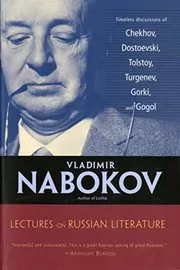
Lectures on Russian Literature
by Vladimir Nabokov
1981
Drawn from his celebrated courses, these lectures guide readers through nineteenth-century Russian masters such as Tolstoy, Dostoevsky, Gogol, Turgenev, Gorky, and Chekhov, emphasising close attention to style, structure, and the concrete details of each scene.
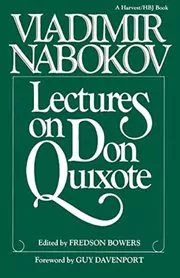
Lectures on Don Quixote
by Vladimir Nabokov
1983
Based on his Harvard course, this book presents Nabokov's close, sometimes prickly reading of Cervantes, tracing Don Quixote's journeys chapter by chapter while probing questions of cruelty, narrative structure, and what makes a classic endure.

Man From The USSR Other Plays
by Vladimir Nabokov
1984
Bringing together four of Nabokov's Russian-language dramas, including The Pole and The Man from the USSR, this volume showcases his rarely seen work for the stage, where exile, historical catastrophe, and theatrical artifice collide.
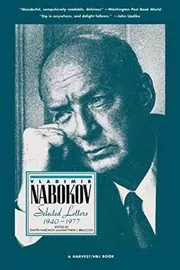
Selected Letters, 1940-1977
by Vladimir Nabokov
1989
Covering his American and Swiss years, these letters to editors, translators, friends, and family reveal Nabokov negotiating publishers, defending his artistic choices, discussing politics and butterflies, and struggling to shepherd Lolita into print.
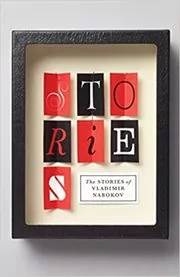
The Stories of Vladimir Nabokov
by Vladimir Nabokov
1995
A single-volume collection of nearly all Nabokov's short fiction, from early Russian tales to late English pieces, showcasing his gift for compressed storytelling, intricate wordplay, and abrupt shifts between whimsy, melancholy, and flashes of cruelty.
Recommended by
1 person Safi Bahcall recommended this book
Safi Bahcall
"When I opened [this book] up to at random [page], and I started reading his sentences, my jaw dropped. I didn’t know the English language could do that." - Safi Bahcall
Safi Bahcall's recommendation of this book

Nabokov's Butterflies
by Vladimir Nabokov
2000
An expansive anthology of Nabokov's writings on butterflies, from field notes and scientific articles to letters, poems, and fiction excerpts, interleaved with commentary that traces how lepidoptery shaped both his scientific career and his literary imagination.
The Original of Laura
by Vladimir Nabokov
2009
Left unfinished at Nabokov's death, this fragmentary novel follows a self-destructive writer obsessed with a young woman named Flora and with the idea of erasing himself, offering tantalising glimpses of late-style brilliance alongside Nabokov's handwritten index cards.

Collected Stories
by Vladimir Nabokov
2010
Arranged roughly in order of composition, this edition of Nabokov's sixty-five short stories lets readers watch his development from early Russian sketches to sophisticated English pieces, blending fairy-tale motifs, puzzles, melancholy, and flashes of absurd comedy.

Selected Poems
by Vladimir Nabokov
2012
Covering six decades of work, this selection gathers Nabokov's Russian and English poems, from early lyric pieces to later narrative works, revealing recurring obsessions with exile, lost time, language, love, and of course butterflies.

The Tragedy of Mister Morn
by Vladimir Nabokov
2012
This early verse drama follows Morn, a masked king whose secret affair with Midia, the wife of a revolutionary, sets off a duel, abdication, and political upheaval in a nameless European kingdom, mixing Shakespearean rhetoric with reflections on power and desire.
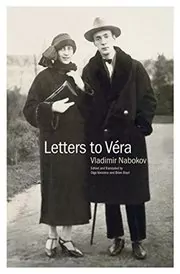
Letters to Vera
by Vladimir Nabokov
2014
These letters to his wife Vera form an intimate chronicle of their marriage, from courtship in 1920s Europe through exile and fame, mixing playful love notes with glimpses of daily work on novels, lectures, and butterfly hunts.
Insomniac Dreams
by Vladimir Nabokov
2017
Centred on Nabokov's 1960s experiment recording his dreams to test a theory of precognitive dreaming, this book reproduces his dream notes and commentary, linking them to scenes from his fiction and revealing his fascination with time, memory, and chance.

Lance
by Vladimir Nabokov
2018
Nabokov's final short story centres on Lance, a young American who volunteers for a perilous interplanetary mission, while his parents wrestle with pride and terror at home, blending science-fiction motifs with metaphysical hints and piercing family tenderness.
Think, Write, Speak
by Vladimir Nabokov
2019
Gathering essays, reviews, interviews, and letters to the editor, this volume traces Nabokov's opinions on literature, politics, translation, butterflies, and his own novels, offering a candid, sometimes combative self-portrait across five decades.
Where to start with Vladimir Nabokov
If you want his most famous English language novels: Lolita → Pnin → Pale Fire.
If you enjoy long, intricate family chronicles: Ada, or Ardor → Look at the Harlequins!.
If you're curious about his Russian years in translation: Mary → The Luzhin Defense → Invitation to a Beheading → The Gift.
If you prefer memoir and essays: Speak, Memory → Strong Opinions → Think, Write, Speak → Nabokov's Butterflies.
Vladimir Nabokov collections, short stories, and related book types
Plays
Collections
Non-Fiction
Standalone Vladimir Nabokov books
Author bio
Vladimir Nabokov was a Russian born American novelist, memoirist, translator, teacher, and butterfly specialist, admired for sentences that seem playful on the surface but hide careful patterns of memory, exile, cruelty, and joy.
He was born in 1899 in St. Petersburg to a wealthy liberal family; his father was a lawyer, politician, and newspaper editor, his mother an heiress with a taste for art and travel. The household was multilingual, full of books, tutors, and games, and young Nabokov absorbed French and English alongside Russian.
As a child he discovered two lifelong passions at once: he saw letters and sounds in specific colours and shapes, and he chased butterflies across the family estate with the same focused delight he would later bring to prose.
The Russian Revolution shattered that world. In 1919 the family fled to Britain, and Nabokov enrolled at Trinity College, Cambridge, first studying zoology and then French and Russian literature. While finishing his degree he published poems, translated verse, played soccer and tennis, and began to understand that writing, not science, would be his main work.
After Cambridge he rejoined his family in Berlin, where his father was soon assassinated while shielding a political colleague at a public meeting, an event that quietly echoes through several later novels. In the émigré communities of Berlin and Paris he wrote in Russian under the pen name Vladimir Sirin, producing early novels such as Mary, King, Queen, Knave, The Luzhin Defense, Glory, Despair, Invitation to a Beheading, and The Gift.
In 1925 he married Vera Slonim, who became his closest reader and practical lifeline. She typed manuscripts, managed correspondence, drove the family car on butterfly collecting trips, and protected his working hours with a seriousness that matched his own. Their son Dmitri was born in 1934, and the three remained a tight unit for the rest of Nabokov's life.
The rise of Nazi power pushed them west again, first to France and then, in 1940, to the United States. Nabokov supported the family by teaching at Wellesley College and later Cornell University, where his idiosyncratic lectures on Gogol, Tolstoy, Flaubert, Kafka, Joyce, and others became legendary. At the same time he reinvented himself in English, publishing the novel The Real Life of Sebastian Knight, the dystopian Bend Sinister, the campus comedy Pnin, and the memoir Speak, Memory.
When he was not in the classroom or at his desk, he worked as an unpaid curator of butterflies at Harvard's Museum of Comparative Zoology, publishing technical papers on tiny blue species that would later be confirmed by modern genetics.
Lolita, drafted on index cards during summer road trips across the American West and first published in 1955, changed everything. The book's narrator, Humbert Humbert, tries to charm readers as he recounts his abuse of twelve year old Dolores Haze; Nabokov uses that voice to explore obsession, self deception, and the way beautiful language can hide brutality. The novel's success finally gave the family financial security and allowed him to give up teaching.
In 1961 the Nabokovs settled in a hotel in Montreux, Switzerland, where he wrote Pale Fire, Ada, or Ardor, Transparent Things, Look at the Harlequins!, more stories, essays, translations, and lectures, as well as working on the unfinished The Original of Laura. Visitors remember him drafting at a small table, then stepping outside with a net to hunt butterflies along the lake or in the Alps.
Across all this work certain patterns recur: exiles trying to rebuild a life, doubles and mirrors, private jokes folded into elaborate structures, sudden flashes of remembered childhood, and an insistence that art should give what he called a shiver of aesthetic bliss rather than a simple lesson. He died in Montreux in 1977, leaving behind fiction and criticism that continue to reward rereading and to unsettle easy interpretations.



Edited by
Software engineer whose passion for tracking book recommendations from podcasts inspired the creation of MRB.
Lead investor at 3one4 Capital whose startup expertise and love for books helped shape MRB and its growth.
Comments
Did we miss something? Have feedback?
Help us improve this page by sharing your thoughts