
Vietnam War Books in Order
Part ofSteve Watkins Books in OrderBrowse the Vietnam War books by Steve Watkins in order, with short summaries, background on the stories, and tips on which title to start with first.
Last updated:
As an Amazon Associate, we earn from qualifying purchases (at no extra cost to you).
Vietnam War books in publication order
1 book
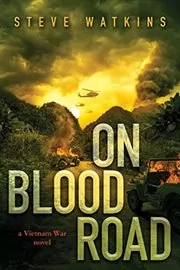
On Blood Road
by Steve Watkins
2018
Taylor Sorenson sneaks out during Tet in Saigon and is captured by the North Vietnamese Army. Forced onto the Ho Chi Minh Trail, he has to survive a brutal journey that changes how he sees war, enemies, and himself.
Vietnam War books in chronological order
Series background & context
Steve Watkins's Vietnam War books are less about battlefield heroics than about confusion, fear, and the human cost of a war that never feels simple. Some are written for middle grade readers, some for older teens, but they share the same basic idea: history is not remote. It gets into families, friendships, memory, and the way young people learn what adults have done.
That gives this page a slightly different feel from a neat numbered saga. These books are linked more by subject, mood, and moral questions than by one continuing cast. In Lost at Khe Sanh, Anderson, Greg, and Julie are pulled into a ghost mystery tied to a Vietnam soldier and an old grenade. In On Blood Road, the war is immediate and physical. Taylor Sorenson is in Saigon during the Tet Offensive, gets captured by the North Vietnamese Army, and is forced onto the Ho Chi Minh Trail.
The range in age level matters.
For younger readers, Watkins often uses mystery or the supernatural to open a door into the period. A kid starts by trying to understand one dead soldier, one relic, one unfinished story. For older readers, he drops the buffer. The war becomes mud, exhaustion, political confusion, captivity, and survival. That shift makes the page useful for different kinds of readers. You can enter through a haunting and end up in a much harsher landscape.
Setting does a lot of work in these books. Saigon during Tet, jungle routes through Laos and Cambodia, military memories that refuse to stay buried, and American communities still living with the aftermath all help explain why the war feels so disorienting. Nobody has a full map. People are trying to stay alive, make sense of what they are seeing, or piece together what happened years earlier. Watkins taught Vietnam War literature for years, and that background shows in the way the stories care about context without stopping the plot cold.
The tone is tense, serious, and often sad, but not hopeless. Watkins keeps looking for moments when empathy breaks through propaganda. Enemies become people. Missing pieces of the past start to connect. Young characters who begin with half-formed opinions are forced to revise them. That is one of the steady strengths of his war fiction. It does not pretend the conflict was clean, and it does not rush to easy lessons.
If you want action, the books have it. If you want history, they have that too. But what really links Watkins's Vietnam War novels is their interest in memory, unfinished business, and the cost of seeing the war up close, whether through a ghost story, a survival story, or both.






Edited by
Software engineer whose passion for tracking book recommendations from podcasts inspired the creation of MRB.
Lead investor at 3one4 Capital whose startup expertise and love for books helped shape MRB and its growth.
Comments
Did we miss something? Have feedback?
Help us improve this page by sharing your thoughts