
Vanessa Diffenbaugh Books in Order
Explore Vanessa Diffenbaugh's books in order, with short summaries, background on her novels, and simple advice on where to start reading today.
Last updated:
As an Amazon Associate, we earn from qualifying purchases (at no extra cost to you).
Vanessa Diffenbaugh books in publication order
2 books
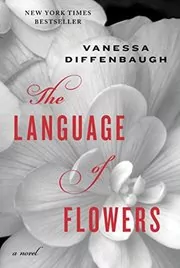
The Language of Flowers
by Vanessa Diffenbaugh
2011
On her eighteenth birthday, Victoria Jones ages out of foster care with nowhere safe to land. Her gift for the language of flowers opens a door into San Francisco's flower world, but a painful secret makes love and trust feel dangerous.
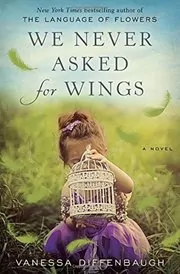
We Never Asked for Wings
by Vanessa Diffenbaugh
2015
Letty Espinosa has spent years working three jobs while her parents raise her children, Alex and Luna. When they return to Mexico, Letty has to become the mother her family needs, even as one risky plan could undo everything.
Where to start with Vanessa Diffenbaugh
If you want her breakout novel: The Language of Flowers
If you want family drama rooted in the Bay Area: We Never Asked for Wings
If you want to read both in order: The Language of Flowers → We Never Asked for Wings
Standalone Vanessa Diffenbaugh books
Author bio
Vanessa Diffenbaugh was born in San Francisco in 1978 and grew up in Chico, California. She studied at Stanford, where writing, education, and mentoring began to pull in the same direction. The mix of art, language, and social questions that shows up in her novels was there early.
After college, she did not head straight into a purely literary life. She taught art and writing to young people in low-income communities, including East Palo Alto, and spent years working close to kids whose lives were shaped by poverty, uneven schools, and unstable homes. That practical experience gave her a sharp eye for how systems affect ordinary families.
That work stayed with her.
Her connection to foster care became personal as well as professional. She and her husband became foster parents, and she has spoken about wanting to push back against the easy stereotypes people carry about the foster system. Later she co-founded the Camellia Network, which was created to help young people aging out of foster care find support, resources, and real human connection. She has also served on the board of Youth Villages.
That mix of advocacy and storytelling shaped her first novel, The Language of Flowers. Diffenbaugh has said she wanted to write about foster care in a way that felt emotionally honest, not simplified into heroes and villains. She also carried a longtime fascination with the old Victorian language of flowers, something she discovered as a teenager. In the novel, those two threads meet in Victoria Jones, a young woman leaving foster care who understands flowers better than people.
The book came out in 2011 and quickly found a wide readership. It became a New York Times bestseller and was translated into more than forty languages. Readers tend to remember its unusual premise, but what keeps the novel with people is the emotional pull: Victoria's anger, fear, tenderness, and slow struggle toward trust. Diffenbaugh is good at writing characters who are bruised but not flattened by their past.
Her second novel, We Never Asked for Wings, arrived in 2015 and widened her focus. This time she turned to a Bay Area family stretched thin by money, work, immigration status, and the daily demands of parenting. Letty Espinosa is not drawn as a saint or a symbol. She is overwhelmed, imperfect, and trying, which is often exactly the kind of person Diffenbaugh wants to put at the center of a story.
California matters in her books. Not the postcard version, but the lived-in one: marshes near the bay, flower markets, crowded apartments, school boundaries, and neighborhoods that sit right next to wealth without sharing much of it. Again and again, she writes about belonging, second chances, and the question of what care really looks like when life is messy.
Success did not pull her away from the work that shaped her.
Diffenbaugh lives in Monterey, California, with her husband and their four children. She remains closely tied to foster care advocacy, and that grounding helps explain why her fiction feels so human. Even when her novels take on big subjects, they stay close to the small choices people make for love, survival, and the hope of building a steadier life.






Edited by
Software engineer whose passion for tracking book recommendations from podcasts inspired the creation of MRB.
Lead investor at 3one4 Capital whose startup expertise and love for books helped shape MRB and its growth.
Comments
Did we miss something? Have feedback?
Help us improve this page by sharing your thoughts