
U.S. Landmark Non-Fiction Books in Order
Part ofRobert Leckie Books in OrderSee the U.S. Landmark Non-Fiction books by Robert Leckie in order, with short summaries, historical background, and an easy place to start reading.
Last updated:
As an Amazon Associate, we earn from qualifying purchases (at no extra cost to you).
U.S. Landmark Non-Fiction books in publication order
1 book
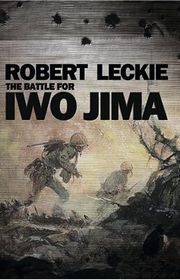
Battle for Iwo Jima
by Robert Leckie
1967
Written for younger readers, this book explains why Iwo Jima mattered and why the battle was so costly. Leckie lays out the plans, the defenses, and the human toll of one of the Pacific war's fiercest fights.
U.S. Landmark Non-Fiction books in chronological order
Series background & context
Leckie's U.S. Landmark books are short, self-contained histories written for younger readers who want a story, not a textbook. The subjects are American wars and turning points, but the books work less like dry school summaries and more like guided narrative tours. Each one takes a large event and gives it shape, pressure, and consequences.
The World Turned Upside Down retells the American Revolution from its roots to Yorktown. The war Nobody Won, 1812 looks at a conflict that was messy, divided, and hard to summarize in simple victory terms. Battle for Iwo Jima moves far forward in time to one of the Pacific war's most brutal campaigns. The books do not share characters, of course, but they do share Leckie's way of telling military history as a chain of decisions made under strain.
Leckie liked history when it moved.
That matters because these books are written for readers who may be meeting the subject for the first time. Leckie keeps the cast manageable, the chronology clear, and the stakes easy to follow. He pays attention to commanders and strategy, but he also remembers the ordinary soldier and the practical problems of war, bad ground, bad information, exhaustion, fear, and plans that fall apart the moment fighting starts.
The tone is direct and serious without being heavy. Leckie does not pretend that war is neat, and he does not flatten history into slogans. The Revolution is a hard struggle, not a parade. The War of 1812 is confused on purpose, because the conflict itself was confused. Iwo Jima is shown as costly, claustrophobic, and important without being dressed up as easy heroics.
Taken together, these Landmark books make a useful sample of what Leckie did well. He could take a broad national subject, strip it down to its essentials, and still leave readers with the sense that real people had to live through it. They are especially good for readers who want a first pass at American military history before stepping into his bigger, denser books.





Edited by
Software engineer whose passion for tracking book recommendations from podcasts inspired the creation of MRB.
Lead investor at 3one4 Capital whose startup expertise and love for books helped shape MRB and its growth.
Comments
Did we miss something? Have feedback?
Help us improve this page by sharing your thoughts