
Trilogy Books in Order
Part ofLydia Millet Books in OrderSee Lydia Millet’s Trilogy books in order, with summaries, series context, and a clear guide to the connected Los Angeles novels.
Last updated:
As an Amazon Associate, we earn from qualifying purchases (at no extra cost to you).
Trilogy books in publication order
3 books
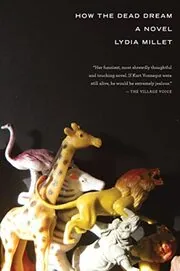
How the Dead Dream
by Lydia Millet
2007
T., an ambitious Los Angeles real estate developer, sees money and success as life’s organizing principles. Family upheaval and grief send him into an unexpected obsession with endangered animals, changing how he sees his work and himself.
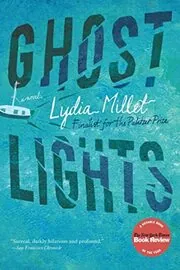
Ghost Lights
by Lydia Millet
2011
Hal, an IRS bureaucrat troubled by his family life, sets out for Central America to find his wife’s vanished young employer. His impulsive mission turns into a disorienting journey through danger, desire, and increasingly strange terrain.
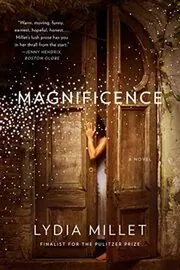
Magnificence
by Lydia Millet
2012
After her husband’s death, Susan Lindley inherits a vast Pasadena mansion filled with taxidermy. As she restores the animals and fends off opportunistic relatives, a peculiar household forms around her, offering grief, chaos, and unexpected possibility.
Trilogy books in chronological order
Series background & context
Lydia Millet’s Trilogy, sometimes called the Los Angeles trilogy, links How the Dead Dream, Ghost Lights, and Magnificence. The novels are connected by people, consequences, and shared concerns, rather than by one hero carrying the whole story. Reading them in order gives the fullest picture, but each book changes focus and has its own emotional center.
How the Dead Dream begins with T., a young Los Angeles real estate developer who believes in money, ambition, and a carefully controlled life. Family trouble and personal loss disrupt that plan. As T. starts fixating on endangered animals, the book asks what it means to pursue success in a world where living things are disappearing.
Nothing stays as tidy as T. wants it to be.
In Ghost Lights, the perspective shifts to Hal, an IRS bureaucrat. Hal is married to Susan, who is preoccupied with T., her younger employer, and he is also carrying the weight of his daughter Casey’s devastating accident. When T. vanishes, Hal takes a reckless trip to Central America to find him. The story becomes a strange, uneasy travel novel, full of confusion, dark comedy, and a man trying to act bravely when he has no idea what he is doing.
The final novel, Magnificence, turns to Susan after a shattering change in her life. She inherits a large Pasadena house filled with taxidermied animals and begins restoring its neglected collection. The mansion draws in relatives, elderly women, and other people in need of somewhere to land. It is a strange setting, but it gives Susan room to confront grief, family, and what she may want next.
Animals are everywhere in these books, whether they are living, endangered, remembered, or preserved behind glass. Millet uses them to keep the characters’ personal troubles connected to larger questions about extinction, consumption, and human responsibility. The novels also return to parents and children, infidelity, loneliness, money, and the difficulty of making a decent life after things fall apart.
The tone shifts across the trilogy. How the Dead Dream is satirical and sad. Ghost Lights is more surreal and suspenseful. Magnificence is warmer, funnier, and interested in the odd communities people create after loss. What holds the books together is not a neat plot machine, but the sense that one person’s choices keep echoing into another person’s life.
Start with How the Dead Dream. T., Hal, Susan, and Casey all matter to the connections that follow, and later books reveal more about the fallout around them. The trilogy works best for readers who enjoy unusual, character-driven novels where private grief and environmental unease are always in the same room.







Edited by
Software engineer whose passion for tracking book recommendations from podcasts inspired the creation of MRB.
Lead investor at 3one4 Capital whose startup expertise and love for books helped shape MRB and its growth.
Comments
Did we miss something? Have feedback?
Help us improve this page by sharing your thoughts