
Tom Stoppard Books in Order
Explore Tom Stoppard’s books and series in order, with short summaries and reading lists to help you find your next book and decide where to begin reading.
Last updated:
As an Amazon Associate, we earn from qualifying purchases (at no extra cost to you).
Tom Stoppard books in publication order
23 books
Lord Malquist and Mr. Moon
by Tom Stoppard
1966
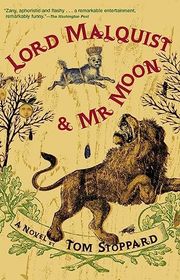
An eccentric, penniless aristocrat employs the anxious Mr. Moon to record his life while Moon carries a ticking bomb. Their encounters with cowboys, an unwelcome lion, and a self-proclaimed risen Christ turn contemporary London into an absurd comic landscape.
Rosencrantz and Guildenstern Are Dead
by Tom Stoppard
1966
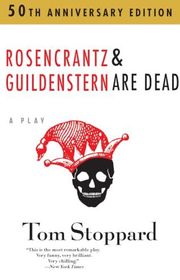
Two minor figures from Hamlet struggle to understand the events unfolding around them as they wait on the edges of a tragedy. Their bewildered conversations turn questions of identity, chance and fate into an unsettling theatrical comedy.
Enter a Free Man
by Tom Stoppard
1968
Unemployed inventor Riley clings to schemes he believes will transform his life, while his daughter tires of supporting him. As impractical inventions and family disappointments accumulate, his determination to remain a free spirit strains those closest to him.
Jumpers
by Tom Stoppard
1972
A professor of moral philosophy tries to pursue abstract questions while his household becomes the scene of a murder investigation. The shooting of a gymnast who also teaches logic brings an inconvenient collision between intellectual argument and messy reality.
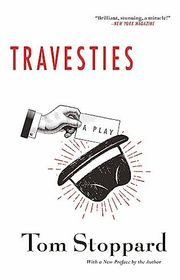
Travesties
by Tom Stoppard
1975
An aging British official remembers wartime Zurich, where James Joyce, Lenin and Dadaist Tristan Tzara once lived. His unreliable recollections transform their possible encounters into a comedy about art, revolution and the distortions of personal history.
Every Good Boy Deserves Favour
by Tom Stoppard
1977
A political prisoner and a psychiatric patient share a name and a cell in a Soviet institution. Their conflicting experiences, accompanied by an orchestra one man believes he hears, expose the troubling boundary between dissent, conformity and madness.
Night and Day
by Tom Stoppard
1978
Journalists converge on a fictional African country facing revolution, gathering around a mine owner's household. Professional rivalries and personal entanglements turn the search for news into an argument about press freedom, solidarity, exploitation and the ethics of reporting.
On the Razzle
by Tom Stoppard
1981
Two grocer's assistants seize their employer's absence as a chance to escape to Vienna for an adventure. Their secret excursion becomes a frantic chase through mistaken identities, romantic complications and the possibility of meeting the very man they fled.
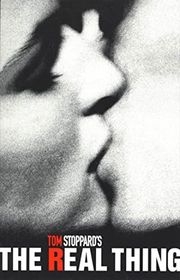
The Real Thing
by Tom Stoppard
1982
Playwright Henry, married to actress Charlotte, falls in love with her colleague Annie, who is also married. Their relationship forces him to confront whether the emotional truths he writes for the stage can survive the compromises of actual intimacy.
Hapgood
by Tom Stoppard
1988
British intelligence officer Hapgood investigates the leaking of scientific secrets to the Soviets. As double agents and personal betrayals multiply, her effort to establish what is true becomes tangled with questions about identity, perception and her responsibilities as a mother.
The Plays for Radio, 1964-1983
by Tom Stoppard
1990
This collection gathers seven radio plays, including Albert's Bridge, Artist Descending a Staircase and The Dog It Was That Died. Stoppard's experiments with voices and dramatic form range from short pieces to more sustained works for the medium.
In the Native State
by Tom Stoppard
1991
In 1930s India, poet Flora Crewe sits for a portrait by local artist Nirad. Decades later, his son visits her surviving sister in England, reopening questions about their parents' relationship and the cultural legacies linking their families.
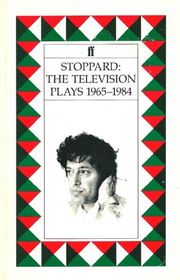
The Television Plays, 1965-1984
by Tom Stoppard
1994
Six television plays written between 1965 and 1984 bring together A Separate Peace, Teeth, Another Moon Called Earth, Neutral Ground, Professional Foul and Squaring the Circle. The volume collects Stoppard's dramatic writing for the screen.
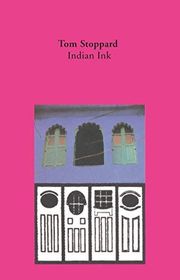
Indian Ink
by Tom Stoppard
1995
English poet Flora Crewe travels through 1930s India and forms an intricate connection with a local artist. Decades later, her sister and a biographer pursue different versions of her legacy, reopening questions of intimacy, art and colonial power.
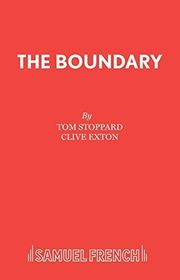
The Boundary
by Tom Stoppard
1995
A dictionary compiler arrives at a ransacked library and discovers his wife's body hidden among scattered papers. As he and his collaborator seek an explanation, their assumptions turn an apparent domestic mystery into a comic exercise in language and perception.
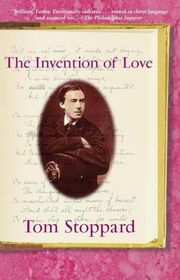
The Invention of Love
by Tom Stoppard
1997
Crossing the Styx after his death, poet and scholar A. E. Housman encounters memories of his younger self. Recalling Oxford and an unreturned love, he considers the relationship between suppressed desire, Victorian morality and the poetry it helped shape.
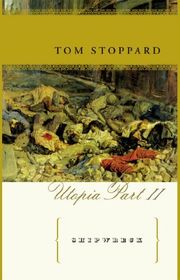
Shipwreck
by Tom Stoppard
2002
Alexander Herzen and fellow Russian intellectuals grapple with political hopes, personal relationships, and loss under the shadow of tsarist autocracy. The second Coast of Utopia play explores the distance between revolutionary ideals and the difficult realities of love and reform.
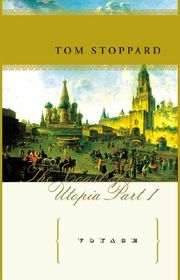
Voyage
by Tom Stoppard
2002
Young Russian thinkers including Bakunin, Belinsky, Turgenev, and Herzen seek intellectual freedom under Nicholas I. The opening Coast of Utopia play follows their emerging ambitions and relationships as arguments about art, politics, and society begin shaping their futures.
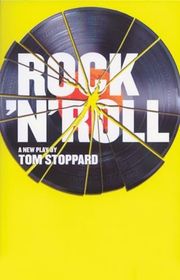
Rock 'n' Roll
by Tom Stoppard
2006
A Czech graduate student returns home with his treasured records as Soviet tanks enter Prague. Across decades of repression and political change, his life intersects with an English communist's family, testing loyalties to ideology, music, freedom and love.
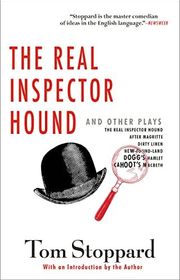
The Real Inspector Hound and Other Plays
by Tom Stoppard
2011
Six plays turn detective fiction, political scandal and theatrical convention into experiments in absurdity and language. From critics drawn into a murder mystery to Shakespeare performed under repression, Stoppard explores the uneasy relationship between entertainment, power and freedom.
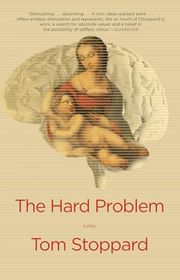
The Hard Problem
by Tom Stoppard
2015
Psychology researcher Hilary brings a private sorrow to a brain science institute studying consciousness. Her questions about goodness and the limits of material explanations put her at odds with colleagues, while her personal needs draw her toward hope and faith.
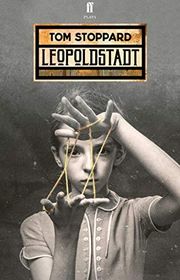
Leopoldstadt
by Tom Stoppard
2020
A prosperous Jewish family gathers in Vienna at the turn of the twentieth century, confident in its place within society. Across fifty years, war, persecution and the Holocaust transform that world, leaving later generations to confront memory and loss.
Penelope
by Tom Stoppard
2022
Penelope recounts the years spent waiting for Odysseus and his eventual return to Ithaca. Drawing on the ancient story in her own voice, she reflects on marriage, endurance and the love that survives a husband's long absence.
Where to start with Tom Stoppard
Comic theatre and wordplay: Rosencrantz and Guildenstern Are Dead → Jumpers → Travesties
Love and relationships: The Real Thing → The Invention of Love
Science, belief and family history: The Hard Problem → Leopoldstadt
The opening of the Utopia sequence: Voyage → Shipwreck
Tom Stoppard sub-series and character series
Standalone Tom Stoppard books
Author bio
Tom Stoppard was a playwright and screenwriter whose work made room for philosophical arguments, theatrical jokes and people struggling to understand their own lives. Born Tomas Straussler in Zlin, Czechoslovakia, in 1937, he spent parts of his childhood in Singapore and India. His father died during the war. After his mother married Kenneth Stoppard, the family moved to England in 1946.
He entered writing through newspapers rather than university.
Leaving school at seventeen, Stoppard became a reporter in Bristol and later worked as a theatre critic and feature writer in London. He began writing for radio and the stage alongside that work. The different forms remained part of his career: this list includes collections of radio and television plays as well as the scripts written for theatre audiences.
His breakthrough was Rosencrantz and Guildenstern Are Dead. After a successful Edinburgh Festival fringe production in 1966, it reached London’s Old Vic in 1967. The play moves two minor figures from Shakespeare’s Hamlet into the foreground, where their confusion becomes both a source of comedy and a question about how much control anyone has over a life. It is a useful first encounter with his wordplay and his habit of changing the angle on a familiar story.
His only novel, Lord Malquist and Mr. Moon, appeared in the same period.
For readers drawn to relationships, The Real Thing offers another starting point. Its playwright Henry and actress Annie fall in love while both are married to other people. Their lives complicate the distinction between convincing language and reliable feeling, placing infidelity and artistic work in the same frame. The play won a Tony Award for Best Play, one concrete measure of a theatre career that continued across decades.
The later The Hard Problem takes its title from the question of how consciousness arises. Hilary, a psychology researcher at a brain-science institute, brings a private sorrow into a workplace devoted to explaining the mind. Ideas are part of what the characters argue about, but those arguments also bear on how they treat one another. It is an entry point for readers interested in the meeting of science, belief and personal responsibility.
Leopoldstadt follows a Jewish family in Vienna across generations, bringing memory, belonging and persecution into the domestic setting. It won both Olivier and Tony awards for Best Play. Alongside the stage work, Stoppard co-wrote Shakespeare in Love with Marc Norman and received an Oscar for its original screenplay, extending his interest in theatre into film.
Stoppard died at home in Dorset in November 2025, aged eighty-eight. The books here preserve several sides of his career: the absurd comedy of his breakthrough, the intimacy of his relationship drama, the questions posed by his later work and the radio and television writing collected alongside the stage plays.

Edited by
Software engineer whose passion for tracking book recommendations from podcasts inspired the creation of MRB.
Lead investor at 3one4 Capital whose startup expertise and love for books helped shape MRB and its growth.
Comments
Spotted a missing book, a wrong order or a mistake? Tell us and we'll fix this page.
We're a reading guide, not the author or publisher, so we can't send books or pass on messages.