
Thomas B Costain Books in Order
See Thomas B Costain's books in order, with summaries, series background, and reading guides to help you explore his historical novels and narrative histories.
Last updated:
As an Amazon Associate, we earn from qualifying purchases (at no extra cost to you).
Thomas B Costain books in publication order
19 books
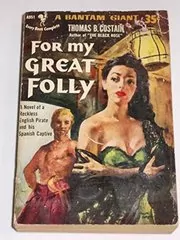
For My Great Folly
by Thomas B Costain
1942
A young English scholar abandons his quiet life to join a pirate ship and sails into the hazardous world of seventeenth century privateering. Fighting beside the legendary buccaneer John Ward, he discovers both the lure of Spanish gold and the cost of loyalty.
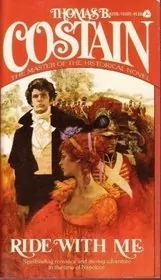
Ride With Me
by Thomas B Costain
1944
Set during the Napoleonic wars, this novel follows Francis Ellery, a London newspaper owner who campaigns against invasion while falling for French exile Gabrielle de Salle. As he becomes a war correspondent from Portugal to Russia, public duty and private passion collide.

The Black Rose
by Thomas B Costain
1945
In thirteenth century England, Walter of Gurnie, the illegitimate son of a nobleman, flees Oxford after a riot and sets out for distant Cathay with his friend Tristram. Their journey through Mongol ruled Asia brings them wealth, love, and a dangerous new understanding of power.
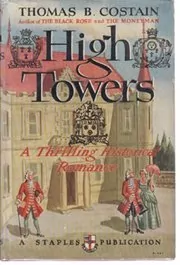
High Towers
by Thomas B Costain
1947
This New France saga focuses on the Le Moyne family of Montreal, whose sons push down the Mississippi and help found the city of New Orleans. Against wars, intrigue, and swamps, Costain follows their ambitions, rivalries, and sacrifices as they try to build a continental empire.
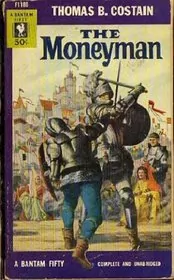
The Moneyman
by Thomas B Costain
1947
Set in fifteenth century France, this novel follows Jacques Coeur, the brilliant merchant who finances King Charles VII while navigating court intrigue. Around him swirl Lady Agnes Sorel, the orphan Valerie, and plots that entangle love, loyalty, and the vast sums needed to drive out the English.
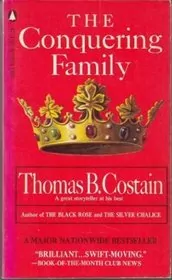
The Conquering Family
by Thomas B Costain
1949
First in Costain's Plantagenet history, this volume follows England from William the Conqueror's 1066 invasion through the troubled reign of King John. It highlights quarrels, reforms, and rebellions as Norman rule hardens into a distinct English kingdom.
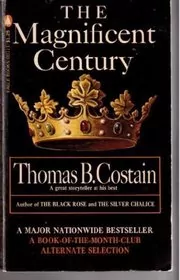
The Magnificent Century
by Thomas B Costain
1949
This second Plantagenet volume centers on Henry III, whose long reign mixed political blunders with remarkable growth in art, architecture, and learning. Costain shows how baronial revolt and new institutions began reshaping royal power in thirteenth century England.
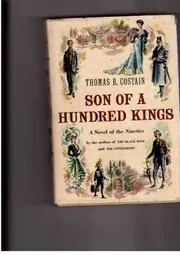
Son of a Hundred Kings
by Thomas B Costain
1950
A six year old boy named Ludar Prentice arrives alone in 1890s Ontario with a note pinned to his coat sending him to a father no one seems to know. Taken in by townspeople, he grows up determined to uncover his past and earn his own place in Balfour.
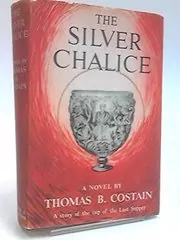
The Silver Chalice
by Thomas B Costain
1952
Set in the first century after the death of Jesus, this novel follows Basil, a gifted young artisan enslaved and later freed for his skill in silver. Commissioned to create an ornate casing for the cup used at the Last Supper, he must seek out apostles and believers while dodging persecution and spiritual doubt.
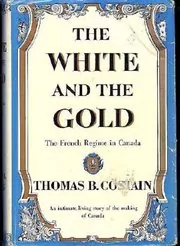
The White and the Gold
by Thomas B Costain
1954
Costain's history of the French regime in Canada follows explorers, missionaries, traders, and settlers as they push along the St Lawrence and into the wilderness. It blends vivid episodes with careful research to show how New France took shape and ultimately fell.
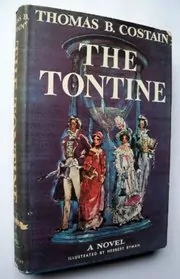
The Tontine
by Thomas B Costain
1955
Beginning on the day of Waterloo and stretching to the end of the nineteenth century, this two volume saga traces three intertwined families bound by a high stakes tontine. As fortunes rise and fall, the shrinking pool of beneficiaries turns inheritance into obsession.

Below the Salt
by Thomas B Costain
1957
Framed by a modern senator's strange claim of having lived before, the heart of this story lies in twelfth and thirteenth century England. There, dispossessed knight Richard of Rawan serves under King John and witnesses the unrest that will force the barons' charter at Runnymede.
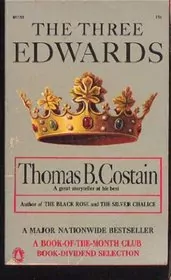
The Three Edwards
by Thomas B Costain
1958
Covering the reigns of Edward I, II, and III, this book moves from campaigns in Wales and Scotland to the opening phases of the Hundred Years War. It links battlefield victories and disasters to changing life for nobles, soldiers, and commoners.
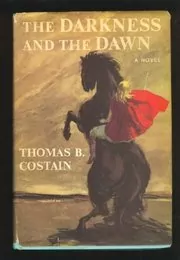
The Darkness and the Dawn
by Thomas B Costain
1959
Against the backdrop of Attila the Hun's invasion of Europe, a fair haired girl and a black stallion are drawn into a sweeping conflict between Rome and the steppe. Costain uses their journey to explore loyalty, fear, and hope in a world on the edge of collapse.
William the Conqueror
by Thomas B Costain
1959
Written for younger readers, this biography recounts William of Normandy's rise from embattled duke to victor at Hastings and king of England. Costain emphasizes both the brutal side of conquest and the political skill needed to hold a sullen new kingdom together.
The Last Plantagenets
by Thomas B Costain
1962
Here Costain tells the story of England between 1377 and 1485, when peasants' uprisings, court intrigues, and the Wars of the Roses shattered Plantagenet rule. He closes with a close look at Richard III and the unresolved mystery of the princes in the Tower.
The Chord of Steel
by Thomas B Costain
1963
In this biographical narrative, Costain focuses on the years when Alexander Graham Bell moved with his family to Brantford, Ontario and pursued his experiments with sound. The book follows Bell's work with the deaf and the chain of inspirations that led to the first practical telephone.
The Last Love
by Thomas B Costain
1963
On the remote island of St Helena, the exiled Napoleon Bonaparte befriends spirited English teenager Betsy Balcombe while Longwood House is prepared for him. Their sharp, often funny conversations reveal the fallen emperor as a complex, lonely man facing the closing chapters of his life.

The Conquerors
by Thomas B Costain
2022
This earlier version of Costain's first Plantagenet history traces the same ground later covered in The Conquering Family. Beginning with William the Conqueror in 1066 and ending with King John in 1216, it presents the Norman kings as a force that reshaped England.
Where to start with Thomas B Costain
If you want a big medieval history sweep: The Conquering Family → The Magnificent Century → The Three Edwards → The Last Plantagenets.
If you enjoy adventure with a romantic edge: The Black Rose → Ride With Me → For My Great Folly.
If you are curious about early Christianity: The Silver Chalice (then, for late antiquity, The Darkness and the Dawn).
If you prefer stories rooted in Canada: High Towers → The White and the Gold → Son of a Hundred Kings.
Thomas B Costain sub-series and character series
Thomas B Costain collections, short stories, and related book types
Non-Fiction
Standalone Thomas B Costain books
Author bio
Thomas B Costain was born in Brantford, Ontario, in 1885 and spent most of his life thinking about stories from the past.
As a teenager he attended Brantford Collegiate Institute and was already filling notebooks with ambitious historical romances. Those early manuscripts went nowhere, but in 1902 the Brantford Courier bought a mystery story from him and hired him as a five dollar a week reporter, giving him his first steady foothold in print. Over the next few years he moved through Ontario newsrooms, including a stint as editor of the Guelph Daily Mercury, and in 1910 he married Ida Randolph Spragge. They raised two daughters while he built a reputation as a calm, meticulous editor who championed Canadian writers and watched circulation figures as closely as sentences.
In 1910 Costain joined the Maclean publishing group, editing trade journals and then Maclean's magazine itself, where he became editor in 1917. His success there drew the attention of the Saturday Evening Post in New York, and in the early 1920s he moved south to become the magazine's long serving fiction editor, eventually becoming a US citizen. By the mid 1930s he was also working in Hollywood, heading the story department at a major film studio and hunting for books that could be turned into movies. The work was well paid, but he still wanted to write his own long historical tales, the kind he had dreamt about as a boy.
He did not publish his first major novel until his late fifties, but once the door opened he rushed through it.
That breakthrough came in 1942, when For My Great Folly, a swashbuckling novel about the seventeenth century pirate John Ward, was published and quickly became a book club favorite. At fifty seven, Costain suddenly had a best seller of his own, and within a few years he left full time editing, set himself a daily quota of about three thousand words, and settled into the steady routine that would carry him through the 1950s and early 1960s. Readers soon came to him through novels like The Black Rose, in which a dispossessed Saxon clerk named Walter of Gurnie travels with an English archer to the court of Kublai Khan, and The Silver Chalice, which follows a young artisan asked to fashion an ornate casing for the cup used at the Last Supper. Both books mix adventure, romance, and carefully researched detail, and both were turned into big screen films not long after publication.
Alongside those blockbusters he produced a stream of large scale historical novels set in many periods. Ride With Me sends a London newspaper owner across Europe as a war correspondent during the Napoleonic campaigns, The Moneyman follows Jacques Coeur at the court of Charles VII, and High Towers and Son of a Hundred Kings draw on Canadian settings he knew well. Later works such as Below the Salt, The Darkness and the Dawn, and The Last Love pushed into medieval rebellion, the world of Attila the Hun, and Napoleon's exile on St Helena.
Costain also became a popular narrative historian. His four volume Plantagenets series, beginning with The Conquering Family and ending with The Last Plantagenets, retells English history from the Norman Conquest to the fall of Richard III in clear, story driven prose. He wrote The White and the Gold and later volumes on Canada under French and British rule, a lively biography of Alexander Graham Bell titled The Chord of Steel, and William the Conqueror for younger readers.
Across these books you can see the same interests at work. Costain loved hinge moments when societies shift, and he enjoyed putting obscure merchants, inventors, soldiers, and clerks alongside kings and queens. His histories and novels linger over food, clothes, ships, and street life, turning long episodes of politics or war into something that feels close and human. Colleagues remembered him as soft spoken and animal loving, more likely to listen than to lecture, even after his sales climbed into the millions, and he was honoured with an academic doctorate, a gold medallion from a New York club, and schools and a community centre named after him in his hometown.
Costain died of a heart attack in New York in 1965, still working on new material. Today his books stand as generous, story driven guides to everything from medieval England to New France and early Christianity, written by a former editor who never stopped trying to make history feel alive on the page.










Edited by
Software engineer whose passion for tracking book recommendations from podcasts inspired the creation of MRB.
Lead investor at 3one4 Capital whose startup expertise and love for books helped shape MRB and its growth.
Comments
Did we miss something? Have feedback?
Help us improve this page by sharing your thoughts