
The Western Quartet Books in Order
Part ofDW Buffa Books in OrderExplore The Western Quartet by D.W. Buffa in order, with short summaries, series background, and where to start with these historical novels.
Last updated:
As an Amazon Associate, we earn from qualifying purchases (at no extra cost to you).
The Western Quartet books in publication order
4 books

Helen
by DW Buffa
2014
Told through the eyes of a young Sicilian woman, this novel moves from tyranny in Sicily to the age of Pericles in Athens. Helen witnesses philosophers, statesmen, war, and the birth of a new way of thinking.
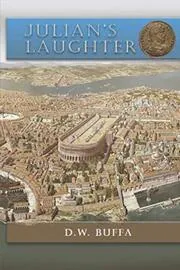
Julian’s Laughter
by DW Buffa
2020
Julian rises from sidelined scholar to Roman emperor in this historical novel about belief, power, and a dying empire. Told through two men who knew him, it follows his attempt to save Rome and restore its older gods.

The Autobiography of Niccolo Machiavelli
by DW Buffa
2020
Buffa imagines Machiavelli telling his own story, turning Renaissance Florence into a struggle over power, loyalty, and survival. It is a historical novel about the man behind The Prince, and the hard lessons that shaped his politics.

Neumann's Last Concert
by DW Buffa
2021
An American piano prodigy, Wilfred Malone, falls under the spell of Isaac Neumann, a German Jewish refugee and once-great concert pianist. Their bond opens into a story of music, memory, and the question of how modern Europe slid into catastrophe.
The Western Quartet books in chronological order
Series background & context
The Western Quartet is not a conventional series with one hero moving from book to book. It is four standalone historical novels linked by a larger idea. Across Helen, Julian’s Laughter, The Autobiography of Niccolo Machiavelli, and Neumann's Last Concert, D.W. Buffa traces a long arc in Western thought, from ancient Greece to the late Roman world, through the Renaissance, and into the twentieth century.
That sounds large, and it is, but the books work because Buffa keeps bringing those questions back to individual lives. In Helen, the story is told through a young woman who escapes violence in Sicily, reaches Athens, and finds herself close to figures such as Aspasia, Socrates, and Alcibiades. The novel moves through the age of Pericles and the Peloponnesian War, but it stays grounded in what one intelligent observer can see, feel, and slowly come to understand.
Then the world shifts.
Julian’s Laughter moves to the Roman Empire in decline and centers on Julian, the emperor later known as Julian the Apostate. Buffa treats him not as a simple villain or hero, but as a philosopher trying to rule at a moment when religion, empire, and culture are all being remade. The story is told through two men who knew him, which gives the book both reach and intimacy. You get the scale of history, but also the sense of a real person trying, and failing, to turn thought into action at the highest possible level.
The third book, The Autobiography of Niccolo Machiavelli, turns to Renaissance Florence and the problem of political realism. Even the title tells you what Buffa is after here, a direct, personal way into a man whose name has become shorthand for cold power. Machiavelli is a natural Buffa subject because he stands where politics, ambition, statecraft, and hard truth meet. This part of the quartet looks most directly at what it costs to understand power clearly.
The final book, Neumann's Last Concert, brings the sequence into the modern era through music, war, memory, and moral wreckage. An American boy, Wilfred Malone, comes under the influence of Isaac Neumann, a German Jewish pianist who once stood at the center of European culture and now lives quietly near San Francisco. Their relationship gives the novel a human scale while it asks much larger questions about Germany, the Second World War, art, and the search for what led to modern catastrophe.
If you want fast historical adventure, this may not be the first series you reach for. These books are reflective, idea-driven, and interested in philosophy as much as plot. But they are still novels, with vivid settings, strong personalities, and people caught at turning points they only partly understand. Read in order, the quartet becomes a long conversation about how civilizations think, what they value, and how easily intelligence can fail when history turns hard.













Edited by
Software engineer whose passion for tracking book recommendations from podcasts inspired the creation of MRB.
Lead investor at 3one4 Capital whose startup expertise and love for books helped shape MRB and its growth.
Comments
Did we miss something? Have feedback?
Help us improve this page by sharing your thoughts