
The Umbrella Academy Books in Order
Part ofGerard Way Books in OrderSee The Umbrella Academy series by Gerard Way in reading order, with volume summaries, character overviews, spin-off notes and simple advice on the best place to start.
Last updated: 1 new book added
Coming soonNext book: Plan B (2027) · Pre-order on Amazon
As an Amazon Associate, we earn from qualifying purchases (at no extra cost to you).
The Umbrella Academy books in publication order
4 books

Apocalypse Suite
by Gerard Way
2007
The first Umbrella Academy arc reunites estranged superpowered siblings after the death of their adoptive father, Sir Reginald Hargreeves. As they bicker over old scars, a returning brother warns that the end of the world is imminent—and that the threat may come from within the family.
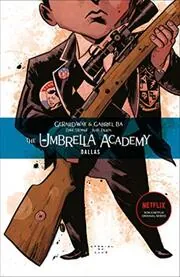
Dallas
by Gerard Way
2009
In the second Umbrella Academy volume, the broken siblings are dragged into a time‑travel plot centered on the Kennedy assassination. Number Five’s past as a child assassin collides with his family’s unresolved trauma, creating a twisted, funny and violent trip through history.
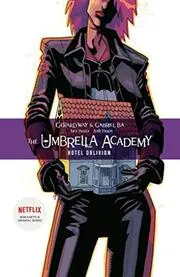
Hotel Oblivion
by Gerard Way
2019
Years after Sir Reginald Hargreeves secretly imprisoned the Academy’s enemies in a remote extradimensional hotel, cracks in that system send supervillains spilling back into the world. Scattered and damaged, the siblings have to reunite to face a wave of old ghosts at once.
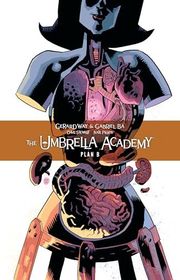
Plan B
by Gerard Way
2027
After the chaos unleashed from Hotel Oblivion, the Umbrella Academy confronts another group of Hargreeves siblings. The ruthless Sparrows bring their own connections to the family and a determination to impose control, turning kinship into a dangerous rivalry.
The Umbrella Academy books in chronological order
Series background & context
The Umbrella Academy begins with an impossible event: on a single day in the late 20th century, dozens of children are spontaneously born to women who showed no signs of pregnancy the day before. An eccentric, secretly alien millionaire named Sir Reginald Hargreeves adopts seven of them, gives them numbers instead of normal childhoods, and trains them to “save the world.” The result is less a classic superhero team than a damaged family trying to grow up under a weight they never chose.
The main series is structured as a set of limited volumes. Apocalypse Suite introduces the children as both ten‑year‑old heroes and estranged adults reunited by Hargreeves’s death. Luther (Spaceboy), Diego (the Kraken), Allison (the Rumor), Klaus (the Séance), Five, Ben (the Horror), and Vanya are all coping with the fallout of their upbringing when a returning brother warns them the apocalypse is only days away. The story swings from talking chimps and rampaging Eiffel Towers to quiet scenes of resentment and guilt, establishing the mix of surreal action and bruised emotion that defines the book.
Dallas picks up after that catastrophe. The Academy is scattered, nursing injuries and grudges, when time‑travel bureaucracy and a shadowy assassination plot drag them into the orbit of President Kennedy’s murder. The volume digs deeper into Number Five’s past as a child assassin and into the cost of constantly rewriting history. It also introduces fan‑favorite weirdos like Hazel and Cha‑Cha, the pastel-masked killers whose chaos later spins off into their own Tales story.
In Hotel Oblivion, Way and artist Gabriel Bá finally show readers one of Hargreeves’s darkest ideas: an extradimensional prison hotel where he stashed the Academy’s defeated villains. Years after his death, cracks in the system trigger a massive jailbreak just as the siblings are at their most fractured. Five is working as a hired gun, Rumor is trying to reconnect with her daughter, Spaceboy has exiled himself to Tokyo, and Vanya is relearning how to move her body. The volume reads like both a reckoning with Hargreeves’s legacy and a bridge to even larger stories.
Across all three volumes, the series plays with superhero tropes without ever feeling like a parody. Its powers are flamboyant—reality‑bending rumors, time-hopping child assassins, violin‑driven apocalypse—but the core conflicts are intimate: siblings who never learned how to talk to each other, adults trying to outgrow childhood roles, and the question of whether you can really escape the person who raised you. The artwork leans into that contrast, staging big, cinematic set pieces in sparse, slightly askew environments that make the characters’ isolation feel literal.
Beyond the comics, The Umbrella Academy also lives on in adaptations and spin‑offs. The Netflix series brought new layers and divergences to the story, while the upcoming Plan B/Sparrow arc in the comics continues to push the family into stranger territory. For new readers, though, everything starts with Apocalypse Suite and the idea that the world might end—not just because of aliens or violin concertos, but because a broken family can’t quite hold itself together when it matters most.






Edited by
Software engineer whose passion for tracking book recommendations from podcasts inspired the creation of MRB.
Lead investor at 3one4 Capital whose startup expertise and love for books helped shape MRB and its growth.
Comments
Did we miss something? Have feedback?
Help us improve this page by sharing your thoughts