
The Spice Box Books in Order
Part ofLou Jane Temple Books in OrderExplore The Spice Box series by Lou Jane Temple in order, with quick summaries, historical mystery background, and help choosing where to start.
Last updated:
As an Amazon Associate, we earn from qualifying purchases (at no extra cost to you).
The Spice Box books in publication order
2 books
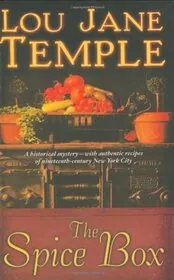
The Spice Box
by Lou Jane Temple
2005
Civil War-era New York gives Irish immigrant Bridget Heaney her chance to cook in a wealthy household, then hands her a corpse in the dough box on day one. Her search for the killer also pulls her toward her missing sister.
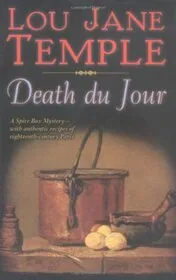
Death du Jour
by Lou Jane Temple
2006
In 1790 Paris, young cook Fanny Delarue is caught between revolutionary chaos and kitchen ambition when a neighboring chef is murdered. A spice box full of recipes, jewels, and secrets turns her hunt for answers into a dangerous gamble.
The Spice Box books in chronological order
Series background & context
The Spice Box series is a historical mystery setup with a clever twist. Instead of following one sleuth through book after book, it follows an old spice box and the cooks who come into possession of it. That gives Lou Jane Temple room to move across countries, centuries, and kitchens, while keeping food at the center of the story.
In The Spice Box, the series begins in Civil War-era New York. Bridget Heaney is a young Irish immigrant who has survived hard years and wants something steadier than scraping by on the street. She lands a job as an assistant cook in the Manhattan home of merchant Isaac Gold, then finds the family's missing son dead in a dough box on her first day. Bridget is quick, practical, and used to reading danger fast, so she ends up helping the Gold household search for answers while also looking for her own missing sister.
Then the series jumps again.
Death du Jour moves to Paris in 1790, where Fanny Delarue is cooking for a wealthy family as the French Revolution reshapes daily life. Fanny cares about food, wants a future in kitchens, and suddenly has murder, unrest, and family secrets closing in around her. When a neighboring chef is killed and valuables are discovered in the spice box, the mystery widens from one death to questions of loyalty, survival, and who can still trust whom in a city that feels ready to explode.
The box is the thread.
That makes the series feel less like a standard whodunit and more like a tour through food history. Temple uses servants' halls, markets, bread ovens, spice drawers, and dining rooms to show how people lived, worked, and ate. The mysteries matter, but so do the everyday mechanics of cooking. You spend time with ingredients, kitchen hierarchy, and the way a good cook has to think on the fly.
The tone sits somewhere between cozy mystery and historical suspense. The books are inviting because of the recipes, the food detail, and the focus on smart young women making their way in difficult places. But the stakes are real. Poverty, class difference, political violence, and family loss are always close by, and both Bridget and Fanny have more to protect than just their jobs.
Because there are only two books, this is a short series and an easy one to sample. If you like historical mysteries where the setting does real work, and if you enjoy stories that treat kitchens as busy, serious places instead of cute wallpaper, The Spice Box is a good fit. It is especially appealing for readers who want both atmosphere and motion, a solid mystery, vivid food scenes, and heroines who solve problems with nerve as much as charm.





Edited by
Software engineer whose passion for tracking book recommendations from podcasts inspired the creation of MRB.
Lead investor at 3one4 Capital whose startup expertise and love for books helped shape MRB and its growth.
Comments
Did we miss something? Have feedback?
Help us improve this page by sharing your thoughts