
The Centurions Books in Order
Part ofAnthony Riches Books in OrderSee The Centurions trilogy by Anthony Riches in order, with short summaries, background on the Batavian revolt and guidance on the best reading order.
Last updated:
As an Amazon Associate, we earn from qualifying purchases (at no extra cost to you).
The Centurions books in publication order
3 books
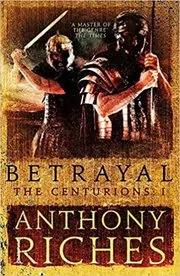
Betrayal
by Anthony Riches
2017
In the power vacuum after Nero's death, Emperor Galba disbands the German bodyguard and recalls the Batavian cohorts, freeing Julius Civilis and setting the stage for revolt as four centurions, Batavian and Roman, struggle to decide where their loyalty lies.
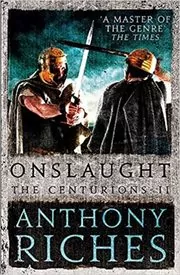
Onslaught
by Anthony Riches
2017
The Batavian revolt explodes along the Rhine as rebel cohorts and tribal allies besiege Rome's Old Camp, leaving the outnumbered Fifth and Fifteenth Legions and the centurions trapped with them to endure hunger, treachery and wave after wave of furious assaults.

Retribution
by Anthony Riches
2018
With the Batavi army seemingly victorious and Rome distracted by civil war, the uprising reaches its peak, but Vespasian's legions are already marching north, forcing the four centurions who began as comrades to face the empire's inevitable and ruthless revenge.
The Centurions books in chronological order
Series background & context
The Centurions trilogy steps back a generation from the Empire books to the turbulent years around AD 68 and 69. Instead of the northern British frontier, these novels are set along the Rhine, where Rome's grip on its German allies is starting to fail.
The story opens in Betrayal. Emperor Nero has killed himself, the Julio Claudian line has ended, and the new emperor Galba decides he no longer trusts the Germans who have guarded Caesar's successors for a century. He disbands the Batavian bodyguard and frees Julius Civilis, a Batavian officer released from a Roman prison to lead his countrymen home. Watching all this are four centurions, two Batavian and two Roman, men who once served side by side and now sense the ground shifting under their feet.
In Onslaught those tensions erupt into open war. The Batavian cohorts, called back to their homeland, become the spearhead of a carefully planned revolt. Rome's Fifth and Fifteenth Legions fall back to an old fortress on the Rhine, undermanned and surrounded, while thousands of tribal warriors and former auxiliaries close in under the guidance of a charismatic priestess. The siege that follows is long, bitter and bloody, and every decision tests whether the centurions still feel bound to the eagle standards they swore to defend.
Retribution brings the uprising to its climax. As the Batavi army wins victories and once loyal allies imagine their own independence, news filters north that Vespasian has emerged as a new emperor. Rome, distracted by civil war for a time, finally turns its attention back to the lost frontier. Fresh legions advance, determined to crush the rebellion and reassert imperial control, and the four centurions must find their own paths through a maze of personal loyalty, fear and vengeance.
Compared to the Empire novels, The Centurions spends more time on the politics of alliance and the practical realities of rebellion, how you supply an army when you no longer serve a vast imperial machine. There are river crossings, fort building, bitter winter marches and brutal set piece battles, but also quieter moments where men who once trusted each other have to decide whether they can meet across the shield wall.
The trilogy stands on its own, so you can read it without knowing Marcus Aquila's later story. At the same time, readers of the Empire series will recognise echoes, shared units and a deeper sense of how fragile Rome's rule always was along its northern borders.












Edited by
Software engineer whose passion for tracking book recommendations from podcasts inspired the creation of MRB.
Lead investor at 3one4 Capital whose startup expertise and love for books helped shape MRB and its growth.
Comments
Did we miss something? Have feedback?
Help us improve this page by sharing your thoughts