
The Authorities Books in Order
Part ofScott Meyer Books in OrderSee Scott Meyer's The Authorities books in order, with quick summaries, series background, and a clear guide to where to start this offbeat mystery series.
Last updated:
As an Amazon Associate, we earn from qualifying purchases (at no extra cost to you).
The Authorities books in publication order
2 books
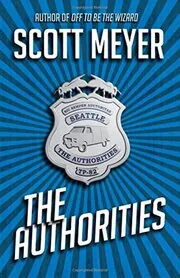
The Authorities
by Scott Meyer
2015
Seattle cop Sinclair Rutherford turns a humiliating case into an unexpected career break when a billionaire recruits him for a strange private crime-solving team. Their first investigation, the murder of a psychologist who treated deeply unsettling patients, comes with no shortage of suspects.
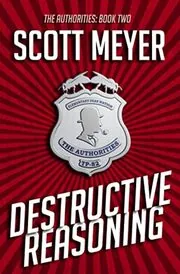
Destructive Reasoning
by Scott Meyer
2022
An actor is murdered inside a locked car, and the killer vows to target every performer currently playing Dr. Watson. Rutherford, Sloan, and the Authorities head to Hollywood, where a bizarre case gets tangled up with ego, publicity, and old secrets.
The Authorities books in chronological order
Series background & context
Scott Meyer’s The Authorities books take a police procedural and tip it just far enough off balance that everything feels slightly absurd, in a good way. The first book, The Authorities, starts with Seattle cop Sinclair Rutherford getting caught up in a humiliatingly public case, only to be recruited by billionaire Vince Capp for a private crime-solving outfit. That outfit, the Authorities, is built to tackle strange, high-profile murders with money, specialists, and a very shaky relationship with normal workplace behavior.
It is a mystery series with a deadpan face and a bent sense of humor.
Rutherford is a good lead because he is not a swaggering action hero, even when other people keep trying to cast him as one. He wants respect, likes nice things, and has a talent for ending up in situations that make him look ridiculous. Around him, Meyer builds a team that includes Detective Sloan, who carries a lot of the actual investigative weight, and Max, whose usefulness comes bundled with secrets and complications. The wider setup leaves room for eccentric experts and odd methods, so a case can swing from regular detective work into something almost comic-bookish without breaking the tone.
Seattle matters here. The city gives the books a cool, dry backdrop that fits the humor, and the team’s sideways attitude keeps even the strangest cases from turning melodramatic. These are flashy premises handled by people who still have to deal with meetings, status games, and professional embarrassment. The result is a procedural that likes crime fiction but is not overly interested in acting tough.
What links the books is not one giant master plot so much as the job itself. The Authorities are supposed to solve crimes, but they are also a rich man’s project, a public-facing machine meant to make spectacular cases look manageable. That means investigations are never just about clues. They are also about image, control, office politics, and the question of who is using whom. In Destructive Reasoning, the team heads to Hollywood after an actor is murdered and the killer threatens everyone currently playing Dr. Watson, which pushes the series into a bigger, glossier arena without changing its basic rhythm.
Expect puzzles, sharp left turns, eccentric methods, and characters who are often more competent than they seem, until they suddenly are not. The books are not grim in the usual crime-fiction sense, even when the murders are ugly. Meyer is more interested in the comedy of institutions, the awkwardness of teamwork, and the way a bizarre case can expose everyone’s blind spots. If you like detective stories but want something stranger, looser, and more openly amused by its own setup, this series is an easy one to try.






Edited by
Software engineer whose passion for tracking book recommendations from podcasts inspired the creation of MRB.
Lead investor at 3one4 Capital whose startup expertise and love for books helped shape MRB and its growth.
Comments
Did we miss something? Have feedback?
Help us improve this page by sharing your thoughts