
The Atlas Books in Order
Part ofOlivie Blake Books in OrderSee The Atlas books in order by Olivie Blake, with quick summaries, series background, and tips on where to start this dark academia trilogy.
Last updated:
As an Amazon Associate, we earn from qualifying purchases (at no extra cost to you).
The Atlas books in publication order
4 books
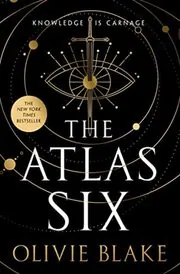
The Atlas Six
by Olivie Blake
2020
Six unusually gifted magicians are invited to compete for five places in the Alexandrian Society, a secret order guarding impossible knowledge. The reward is power and prestige, if they can survive a year of rivalry, seduction, and betrayal.

Sacred Hospitality
by Olivie Blake
2022
This short Atlas story spends extra time with Libby, Nico, Tristan, Reina, Parisa, and Callum before the second novel. It is a small but sharp look at the frayed relationships, bad manners, and dangerous chemistry holding the cohort together.
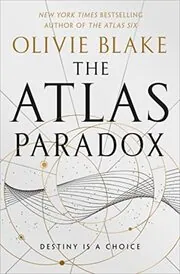
The Atlas Paradox
by Olivie Blake
2022
Five initiates are now inside the Society, but the real choice has only begun. Alliances splinter, hearts break, and Atlas Blakely's larger plan starts to show its world-changing shape.

The Atlas Complex
by Olivie Blake
2024
The surviving Alexandrians return to a bargain that was always built to break them. With old loyalties shattered and outside forces closing in, they have to decide what limitless power is worth, and who gets destroyed for it.
The Atlas books in chronological order
Series background & context
The Atlas books are built around a sharp, simple premise. Every decade, the Alexandrian Society chooses six unusually gifted magicians and offers them access to knowledge, status, and power that most people will never even know exists. Only five are meant to make it through the year. From that point on, the trilogy is less about a school or a quest and more about what happens when six brilliant, deeply complicated people are locked into the same impossible bargain.
The cohort is the real engine of the series. Libby Rhodes and Nico de Varona are powerful physical magicians with a long, messy history. Parisa Kamali is a telepath who knows exactly how dangerous insight can be. Callum Nova is an empath with a talent for pressure and manipulation. Reina Mori understands life at an eerie, intimate level. Tristan Caine sees more of reality than most people can grasp, which makes him both useful and hard to understand. None of them are easy heroes, and that is very much the point.
A lot of the first book lives in tension. The six are brought into the Society's orbit by Atlas Blakely, given access to the archives, and told to prove themselves. They study, circle one another, form attachments, make calculations, and keep asking the same question in different ways: what is this invitation really for? The mood is dark academia, but the bigger hook is the constant push and pull between intellect, attraction, fear, and ambition.
Then the scale widens.
By the time the story moves through The Atlas Paradox and The Atlas Complex, the problem is no longer just who gets chosen. The Society itself starts to come into focus, along with its politics, its hidden agenda, and the cost of the power it protects. Old alliances crack. New pairings form in unexpected places. What looked like a private contest becomes a much larger struggle over ethics, knowledge, and whether world-changing ability can ever stay in safe hands.
That shift is what makes the series feel bigger than a standard competition fantasy. The books like ideas, but they are never only about ideas. They are also about brittle friendships, obsessive attraction, resentment, grief, ego, and the ways smart people justify bad decisions. If you read fantasy mainly for motion, these books can feel unusually talky. If you like books that linger on character psychology and let conversation do a lot of the fighting, that is where they come alive.
The short piece Sacred Hospitality fits neatly beside the main trilogy. It is not essential to follow the plot, but it gives extra time with Libby, Nico, Tristan, Reina, Parisa, and Callum, which is useful in a series where relationships are half the story. Overall, The Atlas is for readers who like secret societies, morally gray ensembles, and fantasy that keeps asking not just who deserves power, but what power does to people once they have it.







Edited by
Software engineer whose passion for tracking book recommendations from podcasts inspired the creation of MRB.
Lead investor at 3one4 Capital whose startup expertise and love for books helped shape MRB and its growth.
Comments
Did we miss something? Have feedback?
Help us improve this page by sharing your thoughts