
T Colin Campbell Books in Order
Explore T Colin Campbell books in order, with concise summaries, where to start, and background on his nutrition research and writing.
Last updated:
As an Amazon Associate, we earn from qualifying purchases (at no extra cost to you).
T Colin Campbell books in publication order
7 books
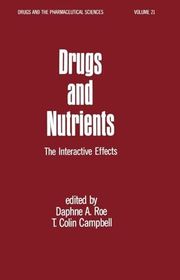
Drugs and Nutrients: The Interactive Effects
by T Colin Campbell
1984
Edited with Daphne A. Roe, this technical reference examines the two-way relationship between nutrition and medications. It covers how food and nutrient intake can affect drug activity, and how drugs may alter nutritional status.
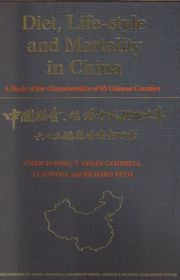
Diet, Life-Style, and Mortality in China: A Study of the Characteristics of 65 Chinese Counties
by T Colin Campbell
1990
This data-rich research monograph presents dietary, lifestyle, biochemical, and mortality information gathered across 65 rural Chinese counties. It documents the methods and findings behind a major international investigation of population differences in diet, health, and disease.
The China Study
by T Colin Campbell
2004
Drawing on laboratory research and the China-Cornell-Oxford Project, Campbell and his son argue for a whole-food, plant-based diet. The book examines their views on nutrition, chronic disease, weight, and the forces that shape public food advice.
Recommended by
3 people James Cameron recommended this book
James Cameron
"The publisher of [this book], probably noticed a big uptick in sales about the year that we decided to send all our friends [a copy]." - James Cameron
James Cameron's recommendation of this book  Ev Williams recommended this book
Ev Williams
On the "books read" section of Ev Williams' GoodReads profile.
Ev Williams's recommendation of this book  Suzy Amis Cameron recommended this book
Suzy Amis Cameron
Suzy Amis Cameron sent this book to all her friends.
Suzy Amis Cameron's recommendation of this book
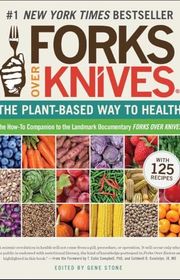
Forks Over Knives: The Plant-Based Way to Health
by T Colin Campbell
2011
A companion guide to the documentary, this book introduces a whole-food, plant-based approach through expert perspectives, personal stories, transition advice, and more than 100 recipes. It is designed for readers considering changes to their everyday eating habits.
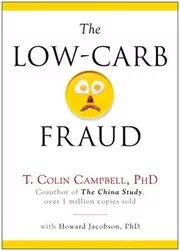
The Low-Carb Fraud
by T Colin Campbell
2013
Campbell and Howard Jacobson challenge low-carbohydrate diets that broadly blame carbs while emphasizing meat and fat. They distinguish whole plant foods from refined carbohydrates and make their case for a different approach to weight and long-term health.
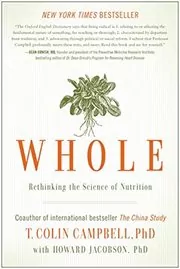
Whole
by T Colin Campbell
2013
Campbell and Howard Jacobson argue that studying isolated nutrients can miss how food works in the body. They challenge reductionist nutrition science and explain why they favor looking at whole foods, dietary patterns, and health as connected systems.
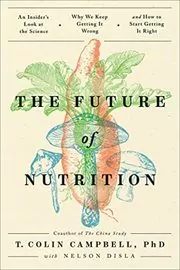
The Future of Nutrition
by T Colin Campbell
2020
Campbell traces how nutrition research, public policy, and commercial interests have shaped modern food advice. He argues that the focus on individual nutrients has created confusion, and calls for a broader view centered on whole foods and public health.
Where to start with T Colin Campbell
For Campbell's core argument: The China Study → Whole
For a critique of popular diet trends: The Low-Carb Fraud → The Future of Nutrition
For the underlying China project data: Diet, Life-Style, and Mortality in China → The China Study
For a practical plant-based introduction: Forks Over Knives: The Plant-Based Way to Health
T Colin Campbell collections, short stories, and related book types
Non-Fiction
Forks Over Knives Books
Standalone T Colin Campbell books
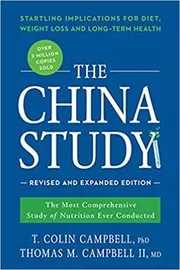
by T Colin Campbell
2004The Most Comprehensive Study of Nutrition Ever Conducted and the Startling Implications for Diet, Weight Loss, and Long-Term Health
Author bio
T. Colin Campbell grew up on a dairy farm outside Leesburg, Virginia, where meat and dairy were simply part of everyday life. That background matters because his later work would question many of the food ideas he had been raised with.
His first goal was veterinary medicine. He earned a degree in pre-veterinary medicine from Pennsylvania State University, spent a year at the University of Georgia's veterinary school, then shifted toward nutrition research. At Cornell University, he completed graduate work in nutrition, biochemistry, and toxicology, and later worked as a research associate at MIT.
Campbell's career took him through Virginia Tech and eventually back to Cornell, where he became a professor of nutritional biochemistry. His work focused on how diet, chemicals, and biological processes can affect long-term health. He later became the Jacob Gould Schurman Professor Emeritus at Cornell.
He spent decades asking big questions about food and disease.
In 1983, Campbell helped lead the China-Cornell-Oxford Project, a collaboration involving researchers from Cornell, the University of Oxford, and the Chinese Academy of Preventive Medicine. The project brought together information on diet, lifestyle, blood measures, and disease mortality in rural Chinese counties. The resulting research was published in the large reference volume Diet, Life-Style, and Mortality in China.
For general readers, the best-known result of that work was The China Study, written with his son, Thomas M. Campbell II. The book combines findings from the China project with Campbell's laboratory research and makes the case for a whole-food, plant-based approach to eating. It also questions the influence of industry, government, and narrow nutrition studies on public advice.
That argument became the through line of his later books.
In Whole, Campbell and coauthor Howard Jacobson take aim at reductionism, the habit of treating food as a collection of separate nutrients rather than looking at the full diet and the body as a connected system. The Low-Carb Fraud challenges diets that treat all carbohydrates alike, while The Future of Nutrition looks at why nutrition advice can seem so confusing despite decades of research.
Campbell has also contributed to broader public conversations about plant-based eating. He appeared in the documentary Forks Over Knives and wrote the foreword for its companion guide. Across his books, he returns to the same plain question: what happens when nutrition is considered as a pattern of whole foods rather than a list of isolated ingredients?
His books are best suited to readers who want a detailed, opinionated look at nutrition science and the debates around it. They mix research history, criticism of modern food culture, and a consistent case for putting plants and minimally processed foods at the center of the plate.








Edited by
Software engineer whose passion for tracking book recommendations from podcasts inspired the creation of MRB.
Lead investor at 3one4 Capital whose startup expertise and love for books helped shape MRB and its growth.
Comments
Did we miss something? Have feedback?
Help us improve this page by sharing your thoughts