
Sword and Circlet Books in Order
Part ofCarole Nelson Douglas Books in OrderBrowse the Sword and Circlet books in order by Carole Nelson Douglas, with summaries, series background, and help finding the broader Irissa and Kendric saga.
Last updated:
As an Amazon Associate, we earn from qualifying purchases (at no extra cost to you).
Sword and Circlet books in publication order
5 books
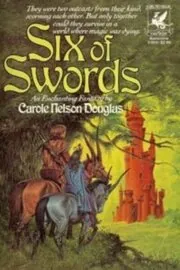
Six of Swords
by Carole Nelson Douglas
1982
Irissa, the last of the Torlocs, and Kendric, a disgraced swordsman, are forced into an alliance in a world where magic is fading. Their survival may be the only hope left for the realms.
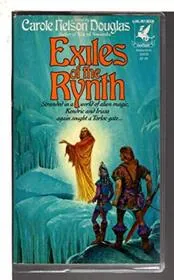
Exiles of the Rynth
by Carole Nelson Douglas
1984
Irissa and Kendric are separated and tested in harsher ways as exile, captivity, and failing gates threaten their world. The sequel deepens the saga's sense of loss, danger, and uneasy partnership.
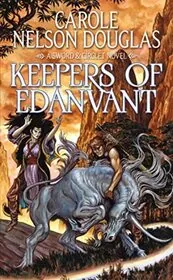
Keepers of Edanvant
by Carole Nelson Douglas
1987
Irissa and Kendric move deeper into the wider fate of their world as Edanvant's old powers and political dangers come into play. Douglas broadens the scope without losing the personal friction between her leads.
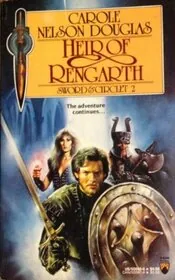
Heir of Rengarth
by Carole Nelson Douglas
1988
Irissa and Kendric are drawn toward the buried power and peril of Rengarth as a dangerous wizard reaches for what was lost. The series grows larger here, but the partnership at its center still matters most.
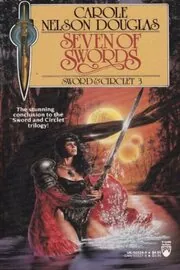
Seven of Swords
by Carole Nelson Douglas
1989
Irissa and Kendric face one more major reckoning as age, legacy, and old powers converge around the Seven of Swords. Douglas closes this arc with high fantasy stakes and hard-earned emotion.
Sword and Circlet books in chronological order
Series background & context
The Sword and Circlet books belong to Douglas's larger Irissa and Kendric fantasy saga, a sequence set in a world where old races, failing magic, and inherited hatreds are pushing history toward crisis. If the opening books establish Irissa the Torloc seeress and Kendric the swordsman as uneasy allies, the later Sword and Circlet volumes show what happens after survival turns into responsibility. Saving yourself is one thing. Holding a damaged world together is another.
Irissa and Kendric remain the emotional core. She comes from a people with deep magical traditions and a long memory of loss. He is bound to the sword tradition and to duties that never stay simple for long. They are not mirror images, and Douglas does not pretend they should be. Much of the series' energy comes from the fact that they have to work across difference, distrust, and the pressure of roles other people keep trying to force back onto them.
The setting keeps widening too. Lands like Edanvant and Rengarth are not just names on a map. They carry political and spiritual weight, old wrongs, and buried power. The later books lean further into large-scale fantasy stakes, rulers, lineages, magical legacies, and the question of what kind of order can replace one that is already cracking apart. Even so, Douglas never loses the more intimate pull of loyalty, love, rivalry, and grief.
There is also room for strangeness and warmth. Douglas's fantasy can be sharp-edged, but it is not humorless, and the saga's memorable companions, including the white telepathic cat Felabba, help keep the books from turning solemn. The tone is serious without becoming stiff. Characters can argue, misjudge each other, and still matter deeply.
What makes this series stand out is the sense of a world in transition. Magic is powerful, but it is not stable. Heroes exist, but not in clean shapes. Irissa and Kendric are forever being pulled between personal feeling and larger duty. That gives the books their staying power. They are epic fantasy, but they are also stories about partnership under pressure, and about what it costs to keep choosing each other while the world keeps changing around you.











Edited by
Software engineer whose passion for tracking book recommendations from podcasts inspired the creation of MRB.
Lead investor at 3one4 Capital whose startup expertise and love for books helped shape MRB and its growth.
Comments
Did we miss something? Have feedback?
Help us improve this page by sharing your thoughts