
Susan Spann Books in Order
Browse Susan Spann books in order, with Shinobi series notes, quick summaries, and clear advice on where to start, whether you want mystery or memoir.
Last updated:
As an Amazon Associate, we earn from qualifying purchases (at no extra cost to you).
Susan Spann books in publication order
9 books
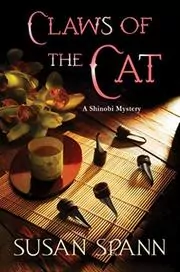
Claws of the Cat
by Susan Spann
2013
In 1564 Kyoto, master ninja Hiro Hattori has three days to prove an entertainer did not kill a samurai, or both she and the Jesuit priest under his protection will die. The case pulls him deep into teahouse secrets and political danger.
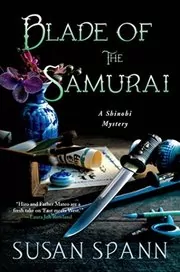
Blade of the Samurai
by Susan Spann
2014
When the shogun's cousin is stabbed inside the palace with a fellow shinobi's dagger, Hiro and Father Mateo are ordered to investigate. The hunt for the killer tests Hiro's loyalty and exposes a wider plot against the ruling clan.
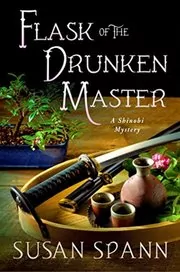
Flask of the Drunken Master
by Susan Spann
2015
A Kyoto brewer faces execution after a rival artisan is found dead outside the brewery, and Hiro owes the accused man a favor. As he and Father Mateo dig deeper, debts, rivalries, and citywide unrest turn the case deadly.
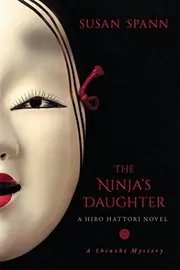
The Ninja's Daughter
by Susan Spann
2016
The murder of an actor's daughter on Kyoto's riverbank draws Hiro into a case the authorities would rather ignore. A secret hunt through theater guilds, missing masks, and police corruption makes this one painfully personal.
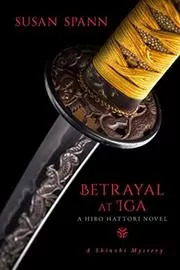
Betrayal at Iga
by Susan Spann
2017
Seeking refuge in Iga, Hiro and Father Mateo land in peace talks between rival ninja clans just as an ambassador is murdered. With suspicion falling on Hiro's own people, he must choose between clan loyalty and the truth.
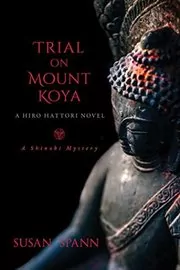
Trial on Mount Koya
by Susan Spann
2018
Carrying a secret message to Mount Koya, Hiro and Father Mateo are trapped in a snowbound temple when priests start dying one by one. The closed-circle mystery mixes a sacred setting, eerie rituals, and mounting fear.
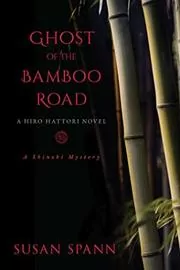
Ghost of the Bamboo Road
by Susan Spann
2019
On the road to Edo, Hiro and Father Mateo stop in a village haunted by rumors of a vengeful ghost. When an innkeeper's wife is murdered and Ana is blamed, they must decide whether the threat is human, supernatural, or both.
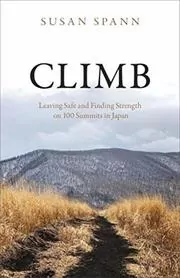
Climb
by Susan Spann
2020
In this memoir, Susan Spann sets out to climb one hundred famous mountains in Japan after years of playing it safe. A cancer diagnosis turns the challenge into a harder journey about fear, recovery, and finding a bigger life.

Fires of Edo
by Susan Spann
2022
In fire-prone Edo, a corpse in the ruins of a bookshop points Hiro and Father Mateo toward arson, murder, and old ties to Hiro's past. The case puts innocent lives, a new guild, and Hiro's clan at risk.
Where to start with Susan Spann
If you want the Shinobi series from the beginning: Claws of the Cat → Blade of the Samurai → Flask of the Drunken Master
If you want the most personal Hiro Hattori arc: The Ninja's Daughter → Betrayal at Iga → Trial on Mount Koya
If you want winter atmosphere and ghostly tension: Ghost of the Bamboo Road → Fires of Edo
If you want Susan Spann's nonfiction side: Climb
Susan Spann sub-series and character series
Susan Spann collections, short stories, and related book types
Non-Fiction
Author bio
Susan Spann grew up in Santa Monica, California, and started out as the kind of reader who would happily bounce from mysteries to nonfiction to anything else within reach. At Tufts University she studied Asian Studies, focusing on China and Japan, and later earned a law degree from New England School of Law. History, language, and careful research were there from the beginning.
Japan stayed with her.
Instead of heading straight into a writing life, Spann took a practical path and built a legal career in California. She worked as a transactional attorney in publishing and business law, and for a time she also taught law and business law. She has studied Mandarin and Japanese, and that mix of legal precision and long-running curiosity about East Asian history ended up shaping both the subjects she chose and the way she builds a story.
The writing dream never really went away. Spann has said she wanted to be a writer long before she believed it was a realistic job, and she spent years learning in private. After attending the Maui Writers' Conference in 2004, she got serious about publication, wrote several unpublished historical novels, and kept going instead of circling forever around one early manuscript.
Then, in 2011, the hook arrived. While getting ready for work, she had the thought that most ninjas commit murders, but one of them might solve them instead. That idea became Hiro Hattori, the Iga shinobi at the center of her fiction, and it gave Spann a form that could hold all the things she cared about at once, mystery structure, Japanese history, political tension, and characters under pressure.
That idea turned into Claws of the Cat, then Blade of the Samurai and Flask of the Drunken Master. The series pairs Hiro with Father Mateo, the Portuguese Jesuit priest he is sworn to protect, and drops them into 16th century Japan at a moment of instability and change. Her debut got attention as a Library Journal mystery debut of the month and a Silver Falchion finalist, but the bigger point is what readers found there: a smart puzzle, a fresh setting, and an odd-couple partnership that keeps pulling the books forward.
She writes very well about duty.
Later novels such as The Ninja's Daughter, Betrayal at Iga, Trial on Mount Koya, Ghost of the Bamboo Road, and Fires of Edo widen the map without losing the core. Kyoto streets, theater guilds, mountain temples, snowy villages, ninja strongholds, and fire-prone Edo all become part of the pressure cooker. Again and again, Spann returns to the same hard questions, what people owe family, rulers, faith, and themselves, and what it costs to tell the truth in a world built on rank and secrecy.
Her nonfiction memoir Climb shows another side of the same writer. After a cancer diagnosis, she set herself the goal of climbing one hundred famous mountains in Japan in a single year, turning a travel dream into a much tougher reckoning with fear. The book is part travel narrative, part recovery story, and part account of what happens when someone who has spent years playing it safe decides to live differently.
In recent years, Japan has remained central to her work in more direct ways too. Author bios from that period place her living in Tokyo while writing, traveling, and working on Climb. That helps explain why her books feel interested not just in the big historical picture, but in food, roads, weather, terrain, and the daily habits that make a place real.
Alongside the books, she has continued her work in publishing and business law. Her bios also mention a marine aquarium full of seahorses and rare corals, and even that detail feels on brand, patient, exacting, and a little unusual. Susan Spann writes about people navigating rules, danger, and change. She seems to enjoy doing some version of that in real life too.










Edited by
Software engineer whose passion for tracking book recommendations from podcasts inspired the creation of MRB.
Lead investor at 3one4 Capital whose startup expertise and love for books helped shape MRB and its growth.
Comments
Did we miss something? Have feedback?
Help us improve this page by sharing your thoughts