
Sue Townsend Books in Order
Explore Sue Townsend books in order, from Adrian Mole to standalones, with quick summaries and simple reading order tips for new and returning readers.
Last updated:
As an Amazon Associate, we earn from qualifying purchases (at no extra cost to you).
Sue Townsend books in publication order
24 books

The Secret Diary of Adrian Mole Aged Thirteen and Three Quarters: The Play
by Sue Townsend
1982
Adapted from the first Adrian Mole novel, this stage script turns his diary into scenes and songs, following a spotty teenager as he grapples with first love, bullying, divorce and artistic ambition while trying to make sense of the adults around him.
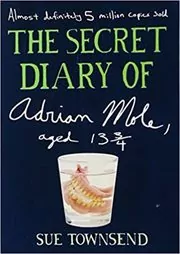
The Secret Diary of Adrian Mole, Aged 13 3/4
by Sue Townsend
1982
Adrian Mole, aged thirteen and three quarters, records a year of spots, school troubles and hopeless love for Pandora while his parents' marriage unravels in 1980s Leicester, turning small domestic disasters into sharply funny diary entries.

The Great Celestial Cow
by Sue Townsend
1984
This play follows Sita, who leaves India with her children to join her husband in Leicester, forced to sell her beloved cow but clinging to her milking bucket and her identity as she faces racism, family expectations and the shock of English city life.
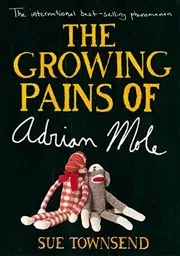
The Growing Pains of Adrian Mole
by Sue Townsend
1984
Now sixteen, Adrian lurches between exams, family upheaval and his tempestuous relationship with Pandora. His diary records worries about nuclear war, literary greatness and his baby sister Rosie with the same overblown seriousness, capturing the mix of drama and boredom in mid-teen life.

The Adrian Mole Diaries
by Sue Townsend
1986
This omnibus volume brings together The Secret Diary of Adrian Mole, Aged 13 3/4 and The Growing Pains of Adrian Mole, following Adrian from his first tortured teenage scribblings through school, first love and family meltdown in one continuous, very funny run of diaries.
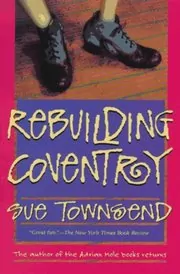
Rebuilding Coventry
by Sue Townsend
1988
Coventry Dakin, a bored Midlands housewife, kills her bullying neighbour while trying to stop him strangling his wife, then flees to London. Living rough among street people and eccentrics, she is forced to confront her own illusions in a biting satire of 1980s Britain.
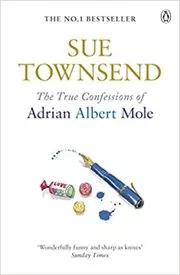
The True Confessions of Adrian Albert Mole
by Sue Townsend
1989
This volume gathers Adrian's later teenage jottings, mixing diary entries, letters, radio scripts and school memories as he leaves home, starts work and keeps pining for Pandora, revealing how unreliable and unintentionally comic his earnest self-portrait really is.

Ten Tiny Fingers, Ten Tiny Toes
by Sue Townsend
1990
In a near-future Britain where only privileged classes are allowed to have children, one illegal baby and one state-approved but imperfect newborn expose the cruelty behind a numbered class system. The play blends dark satire with questions about who is deemed worthy to live.
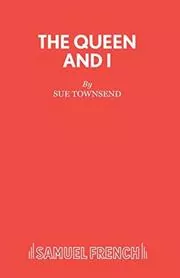
The Queen and I
by Sue Townsend
1992
When a republican party wins a general election and abolishes the monarchy, the Royal Family is evicted from Buckingham Palace and rehoused on a bleak Midlands council estate. Townsend turns their struggle with benefits forms, cramped kitchens and suspicious neighbours into pointed, humane political comedy.
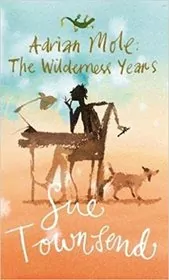
The Wilderness Years
by Sue Townsend
1993
Adrian's diaries in his early twenties trace a restless period of bedsits, dead-end jobs and doomed love affairs. Convinced he is a serious writer, he bounces between Oxford and London while friends move ahead, capturing the aimless, hopeful drift of post-student life.
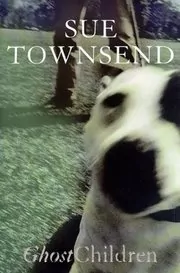
Ghost Children
by Sue Townsend
1997
A middle-aged man discovers a bag of aborted fetuses dumped in a ditch, jolting him back to the abortion that ended his relationship with Angela years before. Their uneasy reunion, and encounters with a damaged young couple, explore grief, guilt and the longing to parent.
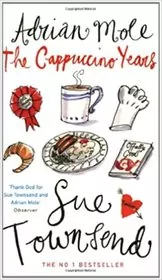
The Cappuccino Years
by Sue Townsend
1999
Adrian, now thirty, works as head chef in a fashionable Soho restaurant as the 1997 election approaches. While Pandora runs for Parliament and his family members drift in and out of chaos, he attempts to juggle fatherhood, debt and sudden media attention with his usual misplaced dignity.
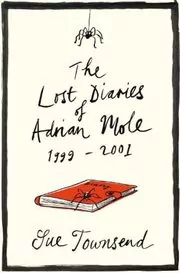
The Lost Diaries of Adrian Mole, 1999-2001
by Sue Townsend
2001
These recovered diaries find Adrian at the turn of the millennium, a single father of two boys, living back in the Midlands and ricocheting between temporary jobs, disastrous romances and family entanglements as small domestic dramas brush against early War on Terror headlines.
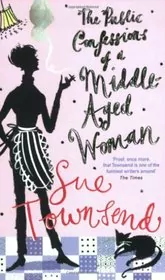
The Public Confessions of a Middle-aged Woman
by Sue Townsend
2001
Collected from a long-running magazine column, these short pieces follow Susan Townsend through everyday middle-aged life, from holidays and supermarkets to writer's block and health scares, with a wry eye for social absurdities and the small things that quietly matter.
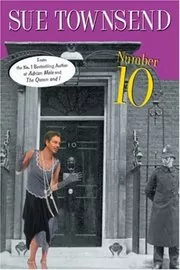
Number 10
by Sue Townsend
2003
Prime Minister Edward Clare, panicking that he has lost touch with real voters, sneaks out of Downing Street in disguise with his bodyguard Jack Sprat. Their secret tour of Britain becomes a comic road trip through disillusioned towns, baffled officials and awkward homecomings.
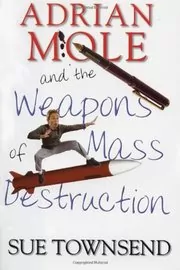
Adrian Mole and the Weapons of Mass Destruction
by Sue Townsend
2004
Adrian is in his early thirties, deep in debt, dithering between two women and trying to be a good father when his son joins the army. As the Iraq War looms, his muddled politics and personal crises collide in painfully funny diary entries.
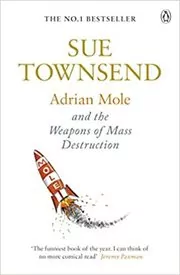
The Weapons of Mass Destruction
by Sue Townsend
2004
Adrian Mole faces mounting debts, an awkward engagement and a son serving in Iraq. Convinced that proof of Saddam Hussein's weapons could secure a travel refund, he writes to Tony Blair while misunderstanding the crises closer to home.

The Queen in Hell Close
by Sue Townsend
2005
Short and sharp, this book returns to the world of The Queen and I, following the former Queen as she and her family adjust to life in Hell Close, a scruffy council street where broken appliances, nosy neighbours and tight budgets replace palace routines.
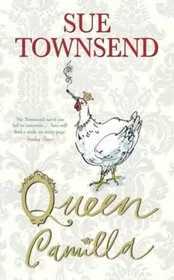
Queen Camilla
by Sue Townsend
2006
Set more than a decade after the monarchy is abolished, Queen Elizabeth, Charles and Camilla are still exiled on a private, fenced-off estate ruled by a petty tycoon. Political tides turn, and Townsend uses the chaos to lampoon celebrity culture, populism and royal mythmaking.
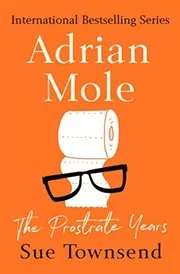
The Prostrate Years
by Sue Townsend
2009
Now in late middle age, Adrian juggles a failing marriage, money worries and a frightening prostate diagnosis while trying to stay upbeat for his children. His diary charts hospital appointments, family rows and small joys with the same anxious, skewed wit as ever.
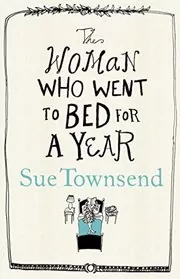
The Woman Who Went to Bed for a Year
by Sue Townsend
2012
On the day her gifted twins leave for university, exhausted mother Eva climbs into bed and refuses to get out. As her husband, children and assorted strangers circle the house, her quiet protest exposes years of neglect, secrets and muddled loyalties.

True Confessions of Margaret Hilda Roberts Aged 14 ¼
by Sue Townsend
2013
Written as the secret diary of a fiercely ambitious grocer's daughter in 1930s Grantham, this novella imagines teenage Margaret Hilda Roberts before she becomes Margaret Thatcher, skewering ideas about class, thrift and destiny through her priggish, oddly endearing voice.

Adrian Mole: The Collected Poems
by Sue Townsend
2017
Presented as Adrian's own verse, this slim collection gathers poems from across his life, from earnest teenage pieces to late musings on politics, masculinity and dwindling desire, offering a sideways, self-important echo of the events in the main diaries.
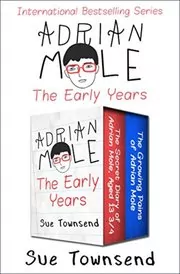
Adrian Mole
by Sue Townsend
Recommended by
1 person Shah Rukh Khan recommended this book
Shah Rukh Khan
Shah Rukh Khan mentioned these books in an interview.
Shah Rukh Khan's recommendation of this book
Where to start with Sue Townsend
If you want to start with Adrian Mole: The Secret Diary of Adrian Mole, Aged 13 3/4 → The Growing Pains of Adrian Mole → The True Confessions of Adrian Albert Mole.
If you want Adrian as an adult: Adrian Mole: The Wilderness Years → Adrian Mole: The Cappuccino Years → The Lost Diaries of Adrian Mole, 1999-2001 → Adrian Mole and the Weapons of Mass Destruction → Adrian Mole: The Prostrate Years.
If you enjoy sharp political satire: The Queen and I → Queen Camilla → Number 10.
If you prefer standalone domestic comedy: The Woman Who Went to Bed for a Year.
If you like reflective nonfiction and essays: The Public Confessions of a Middle-aged Woman.
Sue Townsend sub-series and character series
Sue Townsend collections, short stories, and related book types
Chapbooks
Plays
Collections
Non-Fiction Books
Standalone Sue Townsend books
Author bio
Sue Townsend was an English novelist, playwright and columnist whose funny, clear-eyed stories turned everyday British life into something worth writing down. Born in Leicester in 1946, she went on to create Adrian Mole, one of fiction's most recognisable diarists.
She grew up in a working-class family in the city. Her father worked first in a factory that made jet engines, then as a postman, and her mother had jobs in a canteen and on the buses. Townsend did not learn to read until she was eight, when a bout of mumps left her stuck at home and her mother brought her Richmal Crompton's Just William books. She later said that William Brown's stubborn, literal way of seeing the world fed straight into Adrian's voice.
She always said that once books arrived in the house, she never really came back out of them.
School never suited her as well as the library. After failing the 11-plus she went to a secondary modern, then left at fourteen and took whatever work was going, from packing frozen food to serving petrol and working as a receptionist. She chose jobs that allowed her to keep a book beside the till, and read as much as she could between customers.
In 1964 she married Keith Townsend, a sheet-metal worker, and by her early twenties she was a mother of three. When the marriage ended in 1971 she became a single parent on a very low income. Later she wrote about scouring the streets for bottles to return for a few pennies, and boiling up a tin of peas and a stock cube as an entire meal for herself and the children.
Those years of scraping by sit just under the jokes in her fiction.
All the while she was writing in secret. In the late 1970s she met her second husband, Colin Broadway, who encouraged her to join a writers' group at Leicester's Phoenix Theatre. She was shy at first, then produced a short play, Womberang, set in a gynaecology waiting room; it won a major television playwrights' award and led to more stage work, including pieces such as Groping for Words and The Great Celestial Cow.
Adrian Mole began as a radio idea, first heard in a New Year broadcast about a boy originally called Nigel. Reworked for the page as The Secret Diary of Adrian Mole, Aged 13 3/4 in 1982, it became a publishing phenomenon. Sequels including The Growing Pains of Adrian Mole, Adrian Mole: The Wilderness Years, Adrian Mole: The Cappuccino Years, The Lost Diaries of Adrian Mole, 1999-2001, Adrian Mole and the Weapons of Mass Destruction and Adrian Mole: The Prostrate Years follow him from besotted teenager to harassed, middle-aged father and would-be writer, charting changing British politics along the way.
Alongside the Mole books she wrote sharp stand-alone novels and essays that dug into politics, class and family life. Rebuilding Coventry follows a housewife on the run after an impulsive act of violence. The Queen and I and its later companion Queen Camilla imagine the Royal Family evicted from the palace and rehoused on an estate. Ghost Children and Number 10 take on abortion, power and the welfare state, while The Woman Who Went to Bed for a Year looks at what happens when a worn-out mother simply refuses to get up. Her columns, later collected in The Public Confessions of a Middle-aged Woman, showed the same mix of humour and quiet anger.
In later life Townsend's health was often precarious. She had tuberculosis and peritonitis when she was young, a heart attack in her thirties and developed diabetes in the 1980s; the diabetes eventually left her registered blind, and severe arthritis meant she used a wheelchair. She kept writing, often by dictating to her son, and wrote movingly about hospitals, social services and the gaps in the systems meant to protect people like the characters she loved. Townsend received major awards and honorary degrees, and a theatre in Leicester now bears her name. She died in the city on 10 April 2014, with one last Adrian Mole book unfinished and her work still widely read for its blend of sharp comedy and deep empathy.


Edited by
Software engineer whose passion for tracking book recommendations from podcasts inspired the creation of MRB.
Lead investor at 3one4 Capital whose startup expertise and love for books helped shape MRB and its growth.
Comments
Did we miss something? Have feedback?
Help us improve this page by sharing your thoughts