
Straw Men Books in Order
Part ofMichael Marshall Smith Books in OrderSee the Straw Men books by Michael Marshall Smith in order, with quick summaries, series background, and help deciding where to start this conspiracy thriller trilogy.
Last updated:
As an Amazon Associate, we earn from qualifying purchases (at no extra cost to you).
Straw Men books in publication order
3 books
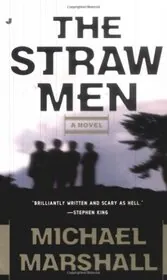
The Straw Men
by Michael Marshall Smith
2002
Ward Hopkins returns home after his parents die in a supposed accident and finds clues that make no sense. His search crosses paths with broken ex-detective John Zandt and a hidden network of killers.
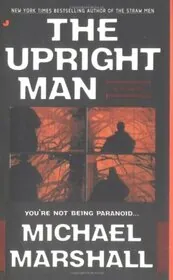
The Upright Man / The Lonely Dead
by Michael Marshall Smith
2004
John Zandt is pulled back into the hunt when a fresh abduction echoes the crime that destroyed his life. Meanwhile Ward Hopkins keeps digging into the shadow world behind the Straw Men, and the pattern grows darker.
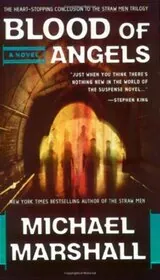
Blood of Angels
by Michael Marshall Smith
2005
The trilogy's final novel widens the conspiracy as old losses, false identities, and buried plans come to a head. Ward Hopkins and John Zandt are forced toward answers that have been waiting since the beginning.
Straw Men books in chronological order
Series background & context
On the surface, the Straw Men books are conspiracy thrillers. In practice they read like thrillers that keep brushing up against horror. The series starts with private grief and missing-person questions, then gradually opens out into something colder and much larger.
The first book introduces Ward Hopkins, a man pulled back to his small hometown after the sudden death of his parents. What looks like an accident quickly starts to feel wrong. Ward is not a trained investigator or a hard-boiled detective. He is just smart enough, stubborn enough, and hurt enough to keep asking questions after most people would have stopped. That matters, because one of the strengths of these books is that the fear grows out of very ordinary human shock.
Running alongside Ward's story is John Zandt, a former detective whose life was wrecked by the abduction and murder of his daughter. Zandt is one of the series' defining figures. He is damaged, tired, and not especially interested in being heroic, but he keeps going because he knows what happens when people like him walk away. When the books work best, they get a lot of mileage out of the contrast between Ward's confusion and Zandt's hard-earned dread.
These are not cozy books.
What links the trilogy is the sense that random violence is not random at all. Smith builds a hidden structure behind seemingly isolated crimes, with shadow networks, false identities, and killers who may be connected to something organized and patient. The setting helps. These novels move through small towns, highways, motel rooms, police stations, and anonymous American spaces that feel familiar enough to be real, which makes the conspiracy feel nastier. The terror does not come from gothic castles or ancient ruins. It comes from the idea that the system may already be in the room with you.
Across the three books, the scope widens, but the emotional center stays personal. Ward is trying to understand what was done to his family and why. Zandt is still carrying the weight of what happened to his daughter. The larger the trilogy becomes, the more those personal wounds matter, because they keep the books grounded when the ideas turn bigger and stranger.
Read them in order.
The pleasure of the Straw Men trilogy is in that steady expansion, from individual loss to a full-scale web of violence and manipulation. If you like thrillers that mix police work, conspiracy, damaged heroes, and a real undercurrent of dread, this is what the series keeps delivering.











Edited by
Software engineer whose passion for tracking book recommendations from podcasts inspired the creation of MRB.
Lead investor at 3one4 Capital whose startup expertise and love for books helped shape MRB and its growth.
Comments
Did we miss something? Have feedback?
Help us improve this page by sharing your thoughts