
Stephen E Ambrose Books in Order
See all Stephen E Ambrose books in order, with summaries, series overviews, and tips on where to start his World War II and American history works.
Last updated:
As an Amazon Associate, we earn from qualifying purchases (at no extra cost to you).
Stephen E Ambrose books in publication order
36 books
Halleck
by Stephen E Ambrose
1962
A scholarly biography of Civil War general Henry Wager Halleck that looks at his career as soldier, administrator, and military theorist, and explores how his ideas and missteps shaped Union strategy in the conflict's early years.
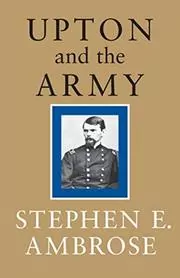
Upton and the Army
by Stephen E Ambrose
1964
This study of Emory Upton follows a driven young officer from the Civil War battlefields into the postwar army, showing how his reforms, writings, and frustrations helped push the United States toward a more professional military establishment.
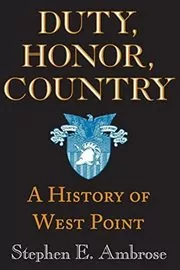
Duty, Honor, Country
by Stephen E Ambrose
1966
Ambrose traces the history of West Point and the U.S. Military Academy's graduates, following famous and little known cadets from the early republic through modern wars to show how the institution molds character, leadership, and a particular view of service.

Eisenhower and Berlin, 1945
by Stephen E Ambrose
1967
This study zeroes in on the race for Berlin at the end of World War II, explaining why Eisenhower chose not to drive directly on the city and how that decision affected both the final military operations and the postwar map of Europe.
Institutions in Modern America
by Stephen E Ambrose
1967
In this short interpretive work, Ambrose surveys the rise of powerful institutions in modern American life, from government agencies and corporations to the military, and considers how they changed politics, work, and everyday experience in the twentieth century.
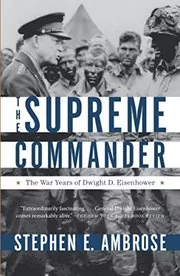
The Supreme Commander
by Stephen E Ambrose
1970
Focusing on World War II in Europe, this book studies Eisenhower as Allied Supreme Commander, examining how he balanced clashing allies, limited resources, and enormous pressure while planning and executing the campaigns that led from North Africa to Germany.
Rise to Globalism
by Stephen E Ambrose
1971
A narrative history of United States foreign policy from the late 1930s onward, this book charts how the country moved from isolation to global power, covering wars, diplomacy, and shifting administrations in a clear, chronological survey.
The Military and American Society
by Stephen E Ambrose
1972
Drawing on essays and case studies, Ambrose explores the often complicated relationship between the U.S. armed forces and the society they serve, from conscription and civil military tensions to the impact of war on politics, culture, and daily life.
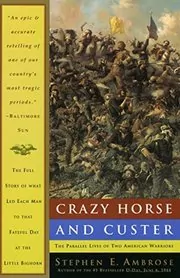
Crazy Horse and Custer
by Stephen E Ambrose
1975
A dual biography that follows Lakota leader Crazy Horse and U.S. cavalry officer George Armstrong Custer from youth to their meeting at the Little Bighorn, placing both men within the larger story of expansion, resistance, and tragedy on the Great Plains.
Ike's Spies
by Stephen E Ambrose
1981
Ambrose looks inside the shadow world around Eisenhower, tracing how intelligence officers, code breakers, and covert operations supported Allied strategy in World War II and helped shape the decisions of a commander who depended heavily on good information.
Eisenhower, Volume #1
by Stephen E Ambrose
1983
Opening Ambrose's multivolume biography, this volume follows Eisenhower from small town Kansas through West Point, early army service, and his rapid rise during World War II, ending with his emergence as a global figure and presidential candidate.
Milton S. Eisenhower
by Stephen E Ambrose
1983
This biography of Dwight Eisenhower's younger brother, Milton, follows his career as an educator, college president, and adviser to several presidents, showing how a quiet administrator influenced policy on issues ranging from war relocation to higher education.
Eisenhower, Volume #2
by Stephen E Ambrose
1984
This concluding volume covers Eisenhower's two terms as president and his later years, examining Cold War crises, civil rights struggles, domestic policy, and the quieter, reflective life he built after leaving the Oval Office.
Pegasus Bridge
by Stephen E Ambrose
1984
An account of the British airborne assault on two key bridges in Normandy in the first hours of D-Day, this book follows the glider troops who landed in the dark, seized their objectives, and helped secure the flank for the larger invasion force.

Nixon Volume #1
by Stephen E Ambrose
1987
Volume one of the Nixon biography traces Richard Nixon's life from a hard pressed childhood and wartime service to his breakthrough on the national stage, covering his early anti communist crusades, vice presidency, and narrow loss to John F. Kennedy.

Nixon Volume #2
by Stephen E Ambrose
1987
The second volume follows Nixon after his early defeats, through years in political exile, and into his dramatic return to win the presidency, focusing on the 1968 campaign, Vietnam, domestic unrest, and bold moves in Cold War diplomacy.
Eisenhower: Soldier and President
by Stephen E Ambrose
1990
A one volume life of Dwight D. Eisenhower that moves from his Kansas boyhood through World War II command to the White House, offering an accessible portrait of the general who became president and the choices that defined his career.
Recommended by
1 person Jamie Dimon recommended this book
Jamie Dimon
On Jamie Dimon's list of favorite books.
Jamie Dimon's recommendation of this book
Nixon Volume #3
by Stephen E Ambrose
1991
The final book covers the Watergate scandal and its roots, Nixon's resignation, and his long effort to rebuild a public role as an elder statesman, offering a detailed, often intimate account of his last decades.
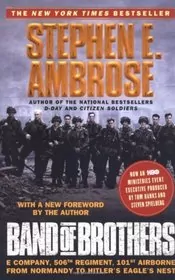
Band of Brothers
by Stephen E Ambrose
1992
Here Ambrose tells the story of Easy Company of the 506th Parachute Infantry Regiment, from training in Georgia through D-Day, the Ardennes, and into Germany, following a single group of soldiers as they endure combat, loss, and unexpected moments of camaraderie.
D-Day
by Stephen E Ambrose
1994
This large scale history of June 6, 1944 weaves together official records and first hand accounts to recreate the planning, landings, and brutal fighting on the Normandy beaches that opened the way for the liberation of Western Europe.
Eisenhower: A Centenary Assessment
by Stephen E Ambrose
1995
Published around the hundredth anniversary of Eisenhower's birth, this collection of essays, many by Ambrose and fellow historians, reassesses Ike as general and president and considers how later generations have judged his leadership.
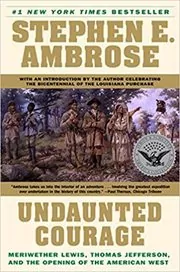
Undaunted Courage
by Stephen E Ambrose
1996
A narrative of the Lewis and Clark expedition, this book follows Meriwether Lewis from Thomas Jefferson's study to the Pacific and back, blending politics, wilderness travel, and encounters with Native nations into a sweeping adventure story.
Recommended by
1 person- Jamie Dimon recommended this book
Jamie Dimon
On Jamie Dimon's list of favorite books.
Jamie Dimon's recommendation of this book
American Heritage
by Stephen E Ambrose
1997
Written to accompany an illustrated history volume, this book offers a broad overview of pivotal events, leaders, and battles in American history, pairing narrative chapters with photographs, maps, and sidebars that help place names and dates in a larger story.
Americans at War
by Stephen E Ambrose
1997
Collected profiles and essays highlight how American men and women experienced combat and military service from the Revolution to recent conflicts, emphasizing vivid personal stories rather than abstract strategy or high level policy debates.
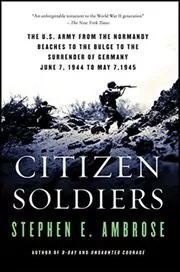
Citizen Soldiers
by Stephen E Ambrose
1997
A companion to D-Day, this book follows American and Allied troops from the breakout of Normandy through the push across France, the Battle of the Bulge, and the final drive into Germany, focusing on the daily grind of frontline soldiers.
Lewis and Clark
by Stephen E Ambrose
1998
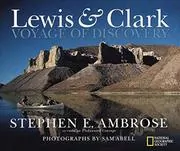
An accessible history of the Lewis and Clark expedition that combines narrative, maps, and illustrations, this volume introduces key people, places, and decisions on the journey and serves as a concise companion to Ambrose's longer treatment of the subject.
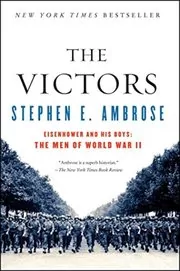
The Victors
by Stephen E Ambrose
1998
Drawing on material from earlier works, Ambrose condenses the story of the European war from D-Day to Germany's surrender, offering a fast moving account of campaigns, commanders, and ordinary soldiers in the last year of World War II in Europe.
Victory in Europe, May 1945
by Stephen E Ambrose
1998
Focused on the final weeks of World War II in Europe, this book describes the collapse of Nazi Germany, the last fighting, and the celebrations and reckonings that followed victory, using photographs and firsthand stories to capture the mood of the moment.
Comrades
by Stephen E Ambrose
1999
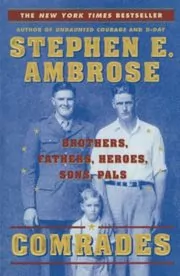
In a series of linked essays, Ambrose writes about friendship, from famous pairs in history to his own father, brothers, and colleagues, reflecting on what loyalty, trust, and shared experience have meant in both war and peacetime.
Witness to America
by Stephen E Ambrose
1999
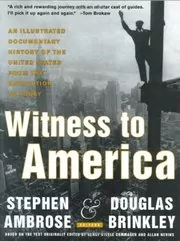
This anthology gathers speeches, letters, and other primary documents from across United States history, with introductions and commentary by Ambrose and his collaborators, giving readers a way to hear major events in the voices of the people who lived them.
Nothing Like It In the World
by Stephen E Ambrose
2000
A narrative history of the building of the first transcontinental railroad, this book follows financiers, engineers, surveyors, and laborers as they push tracks across mountains and plains, transforming the economy and environment of the American West.
Recommended by
1 person Trung Phan recommended this book
Trung Phan
"About the Railroads industry." - Trung Phan
Trung Phan's recommendation of this book
The Good Fight
by Stephen E Ambrose
2001
Written for younger readers, this overview of World War II explains how the conflict began, why the United States became involved, and how the fighting unfolded on multiple fronts, combining clear narrative with photographs and sidebars.
The Wild Blue
by Stephen E Ambrose
2001
Ambrose focuses on a single B-24 bomber group in World War II, following young airmen from training through dangerous missions over Europe, and paying special attention to the leadership and flying of future senator George McGovern.
The Mississippi and the Making of a Nation
by Stephen E Ambrose
2002
Using the Mississippi River as a through line, Ambrose and his coauthor trace how the river shaped exploration, trade, war, and culture, pairing a flowing narrative with rich illustrations and maps that show the river's central place in American life.
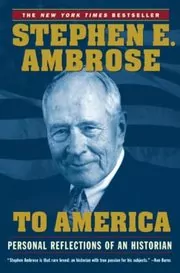
To America
by Stephen E Ambrose
2002
A reflective journey through American history and geography, this book blends travel writing, memoir, and narrative history as Ambrose revisits key places, revises earlier views, and considers what has and has not changed across the country's past.
This Vast Land
by Stephen E Ambrose
2003
Presented as the journal of a young member of the Lewis and Clark expedition, this novel for younger readers brings the journey west to life through daily hardships, discoveries, and the uneasy meetings between explorers and Native peoples.
Where to start with Stephen E Ambrose
If you want World War II combat narratives: Band of Brothers → D-Day → Citizen Soldiers → The Victors.
If you are interested in exploration and the frontier: Undaunted Courage → Lewis and Clark → This Vast Land.
If you want a deep dive into Eisenhower: Eisenhower: Soldier and President → Eisenhower, Volume #1 → Eisenhower, Volume #2.
If you prefer modern political drama: Nixon Volume #1 → Nixon Volume #2 → Nixon Volume #3.
If you like sweeping American history: Rise to Globalism → Nothing Like It in the World → To America.
Stephen E Ambrose sub-series and character series
Eisenhower Center Studies on War and Peace books in order
Explore this series
Eisenhower: A Centenary Assessment
by Stephen E Ambrose
1995Eisenhower Center Studies on War and Peace, Book 1
Eisenhower Center Studies on War and Peace books in chronological order
Eisenhower: A Centenary Assessment
by Stephen E Ambrose
1995Eisenhower Center Studies on War and Peace, Book 1
Norton Essays in American History books in order
Explore this seriesNorton Essays in American History books in chronological order
Stephen E Ambrose collections, short stories, and related book types
Non-Fiction




by Stephen E Ambrose
1996Meriwether Lewis, Thomas Jefferson, and the Opening of the American West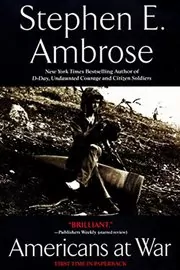

by Stephen E Ambrose
1999An Illustrated Documentary History of the United States from the Revolution to Today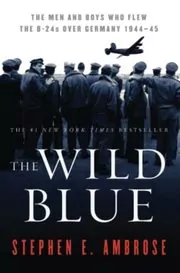

The Mississippi and the Making of a Nation
by Stephen E Ambrose
2002From the Louisiana Purchase to Today
Standalone Stephen E Ambrose books
by Stephen E Ambrose
1992E Company, 506th Regiment, 101st Airborne from Normandy to Hitler's Eagle's Nest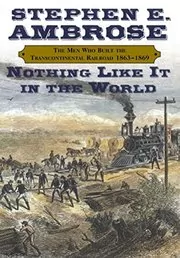
by Stephen E Ambrose
2000The Men Who Built the Transcontinental Railroad 1863-1869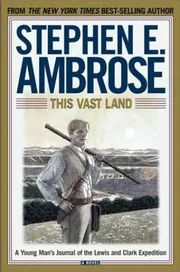
Author bio
Stephen E. Ambrose grew up far from the battlefields he later wrote about, in the small town of Lovington, Illinois, and then in Whitewater, Wisconsin, where his father practiced medicine and told stories about serving as a Navy doctor in World War II.
In school he was more interested in sports than scholarship, and he played football at the University of Wisconsin. He started out intending to go into medicine, but a vivid lecture on American history by his mentor William B. Hesseltine changed his plans for good.
Ambrose switched his major to history and never looked back.
He earned his bachelor's degree at Wisconsin in the late 1950s, completed a master's in history at Louisiana State University, and returned to Wisconsin for his doctorate, all while serving in Army and Navy ROTC programs.
Teaching came first. Ambrose held posts at several colleges before settling at the University of New Orleans, where he spent many years in the classroom. There he helped train generations of students and founded the Eisenhower Center, an oral history project focused on World War II veterans and other witnesses to modern war.
His early books grew out of that academic work. Ambrose wrote detailed biographies of Union generals like Henry Halleck and Emory Upton, studies of West Point and the U.S. Army, and then turned to the lives of presidents, most notably Dwight D. Eisenhower and Richard Nixon. Multi volume biographies on both men established him as a major voice in political and military history.
World War II eventually became the center of his work. In books such as Band of Brothers, D-Day, Citizen Soldiers, and The Victors, Ambrose drew heavily on interviews, letters, and diaries to tell the story of young soldiers moving from training camps to Normandy, the Battle of the Bulge, and the final push into Germany.
He reached beyond the war, too. Undaunted Courage followed the Lewis and Clark expedition across the continent, Nothing Like It in the World traced the building of the first transcontinental railroad, and To America pulled together a lifetime of travel, research, and reflection into a personal tour of the country's past.
Ambrose wrote in plain, direct prose and wanted his books to be read by people who had never taken a history seminar. He often centered ordinary soldiers and overlooked figures, using their stories to connect policy decisions in Washington with what happened in foxholes, on ships, and in small towns.
Late in his career he faced serious criticism over unacknowledged borrowings and factual errors in several books.
He died in 2002 in Bay St. Louis, Mississippi, after a long struggle with illness. By then he had written or edited dozens of books, helped inspire television projects about the war, and left behind shelves of narratives that continue to shape how many readers picture the American past.










Edited by
Software engineer whose passion for tracking book recommendations from podcasts inspired the creation of MRB.
Lead investor at 3one4 Capital whose startup expertise and love for books helped shape MRB and its growth.
Comments
Did we miss something? Have feedback?
Help us improve this page by sharing your thoughts