
Stephanie Storey Books in Order
Explore Stephanie Storey's books in order, with short summaries, reading order help, background on her Renaissance novels, and where to start first.
Last updated:
As an Amazon Associate, we earn from qualifying purchases (at no extra cost to you).
Stephanie Storey books in publication order
2 books
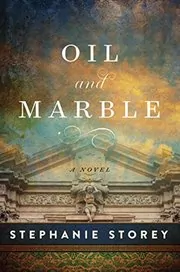
Oil and Marble
by Stephanie Storey
2016
In early 1500s Florence, Michelangelo struggles to carve David while Leonardo da Vinci chases inspiration, invention, and the portrait that will become the Mona Lisa. Their rivalry turns art, ego, and ambition into a tense historical drama.
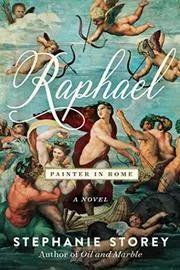
Raphael, Painter in Rome
by Stephanie Storey
2020
Called to Rome by Pope Julius II, Raphael tries to outpaint Michelangelo as the Sistine Chapel ceiling rises overhead. Ambition, loneliness, and Vatican politics shape his fight to become the greatest artist of his age.
Where to start with Stephanie Storey
If you want the clearest starting point: Oil and Marble → Raphael, Painter in Rome
If you want Renaissance Florence and the Leonardo-Michelangelo rivalry: Oil and Marble
If you want Raphael, Rome, and Vatican intrigue: Raphael, Painter in Rome
Standalone Stephanie Storey books
Author bio
Stephanie Storey grew up in Hot Springs, Arkansas, and she has said she loved art long before she had a professional plan for it. While other kids put up teen-magazine posters, she has joked that she also had Renoir and Raphael on the wall. That mix of ordinary pop culture and serious art says a lot about her work now: smart, researched, but never trying too hard to sound lofty.
At Vanderbilt University, where she earned a degree in fine arts, that early interest turned into something deeper. She has said Vanderbilt made her fall in love with art history, and a semester in Pisa let her study art and Italian in the country that would later shape her novels. Seeing Florence and Rome up close, especially Michelangelo's work, started an obsession that would follow her for decades.
That part stuck.
Storey later attended a PhD program in art history, then changed course and earned an MFA in creative writing from Emerson College. She has said she wrote fiction every day from the age of seven, but for a long time her working life moved through television instead of publishing. In Los Angeles, she built a career as a producer, working on national shows such as The Writers' Room, The Arsenio Hall Show, and The Alec Baldwin Show.
That wasn't a detour so much as training.
Television taught her how to research quickly, shape a story, ask better questions, and keep moving when deadlines are real. Those skills matter in her novels, which take big historical figures off the pedestal and put them back into messy human life. She is drawn to artists who are ambitious, difficult, insecure, funny, stubborn, and a little exhausting, which is to say, alive.
The leap from art obsession to published fiction came slowly. Storey has described years of reading about Michelangelo and the Italian Renaissance, and at one point, while walking through Florence with her husband Mike Gandolfi, she pitched the idea that David and the Mona Lisa were born in the same city, in the same years, under the pressure of rivalry between Michelangelo and Leonardo. She first imagined the project as a movie, then realized she wanted the fuller control of a novel.
That became Oil and Marble. Set in early sixteenth-century Florence, the book follows Michelangelo and Leonardo da Vinci as they circle one another through work, envy, missed chances, and the making of David and the Mona Lisa. Readers who click with it usually like the workshop detail, the tense back-and-forth between two giant egos, and the way Storey makes famous art feel handmade again. The novel became a Los Angeles Times bestseller, was translated into several languages, and was later optioned for film.
Her second novel, Raphael, Painter in Rome, shifts the spotlight to Raphael during the years when Pope Julius II had both Raphael and Michelangelo working in Rome. The book came out in April 2020, timed with the 500th anniversary of Raphael's death. It keeps Storey's interest in rivalry and process, but adds a new emotional current: perfectionism, longing, Vatican politics, and the pressure of trying to become the greatest artist in the room when Michelangelo is standing right there.
Across both novels, a few themes keep returning. She writes about creation as labor, not magic. She likes cities with heat in them, places where art, money, religion, vanity, and power are all colliding at once. Florence and Rome are not just scenery in her books. They behave like living systems that push people toward brilliance and bad decisions in equal measure.
When she isn't writing, Storey has continued to work in media and to travel widely. She has studied art in Italy, written about making a pilgrimage to see every Michelangelo on public display in Europe, and often talks about going in search of the next story with her husband. It fits. Her books come from the kind of curiosity that does not sit still for long.





Edited by
Software engineer whose passion for tracking book recommendations from podcasts inspired the creation of MRB.
Lead investor at 3one4 Capital whose startup expertise and love for books helped shape MRB and its growth.
Comments
Did we miss something? Have feedback?
Help us improve this page by sharing your thoughts