
Simon Winchester Books in Order
This page gathers Simon Winchester's books in order, with short summaries, series background, and guidance on where to start reading his nonfiction.
Last updated:
As an Amazon Associate, we earn from qualifying purchases (at no extra cost to you).
Simon Winchester books in publication order
38 books
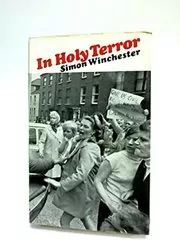
In Holy Terror
by Simon Winchester
1975
Based on years reporting from Belfast and Derry, this early book pieces together the daily reality of the Northern Ireland Troubles, from street riots and bombings to quieter conversations in pubs, trying to explain how a small place slipped into prolonged conflict.
American Heartbeat
by Simon Winchester
1976
In this portrait of the United States heartland in the mid 1970s, Winchester travels through small towns and cities between the coasts, listening to farmers, shopkeepers and factory workers talk about faith, work and American identity.
Their Noble Lordships: Class and Power in Modern Britain
by Simon Winchester
1981
Here Winchester investigates Britain's hereditary peers, visiting country houses and the House of Lords to examine how aristocratic families gained and kept their power and to question what role, if any, the old nobility should have in a modern democracy.
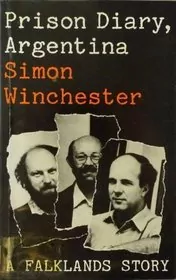
Prison Diary, Argentina
by Simon Winchester
1984
This memoir recounts the months Winchester spent jailed in southern Argentina during the Falklands War after being accused of spying, describing cramped cells, interrogations and small acts of kindness while he tried to make sense of the conflict that put him there.
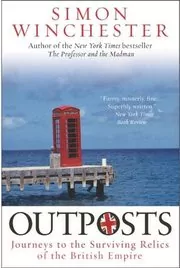
Outposts: Journeys to the Surviving Relics of the British Empire
by Simon Winchester
1985
Winchester circles the globe to visit the last inhabited fragments of the British Empire, from windswept South Atlantic islands to Caribbean finance hubs and the crowded streets of Hong Kong, asking what empire left behind and why some people still cherish the connection.
The Sun Never Sets: travels to the Remaining Outposts of the British Empire
by Simon Winchester
1985
Published for American readers, this edition covers the same journeys to Britain's remaining colonies, recounting Winchester's difficult travel to tiny islands and distant garrisons and his conversations with residents who live in the long shadow of empire.
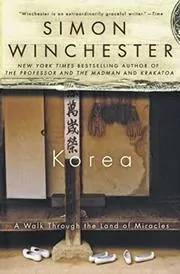
Korea: A Walk Through the Land of Miracles
by Simon Winchester
1988
Set in the late 1980s, this travelogue follows Winchester on a long walk from Jeju Island to the Demilitarized Zone, meeting farmers, monks, students and soldiers as he tries to understand South Korea's rapid change and its unresolved history.
The Rise and Fall of Travel
by Simon Winchester
1989
Drawing on his years as a foreign correspondent and traveller, Winchester reflects on how twentieth century tourism, jet travel and mass package holidays transformed the experience of journeying, and on what is lost when exploration becomes routine.
Pacific Nightmare : How Japan Starts World War III
by Simon Winchester
1991
Winchester's only full length novel imagines a near future crisis in which unrest in China, Japanese intervention and American miscalculation spiral into military confrontation, turning the crowded Pacific Rim into the setting for a sobering future history.
Pacific Rising: The Emergence of a New World Culture
by Simon Winchester
1991
In this nonfiction survey of the Pacific Rim, Winchester visits islands, ports and capitals around the ocean to argue that economic power and cultural influence are shifting away from the Atlantic world toward a new, diverse Pacific centred order.
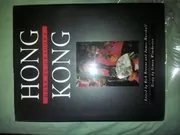
Hong Kong: Here Be Dragons
by Simon Winchester
1992
Written after a stint as a correspondent there, this book blends history, reportage and street level observation to paint a portrait of Hong Kong, from its steep hills and harbour to the people and institutions caught between Britain and China.
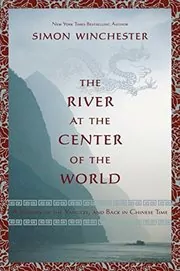
The River at the Center of the World: A Journey Up the Yangtze, and Back in Chinese Time
by Simon Winchester
1996
Travelling from Shanghai to the high Tibetan plateau by boat, train and on foot, Winchester uses the Yangtze River as a spine for meditations on Chinese history, politics and daily life, moving backward in time as he journeys upstream.
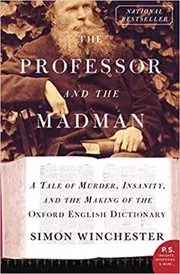
The Professor and the Madman
by Simon Winchester
1998
Winchester recounts how Oxford editor James Murray and imprisoned American surgeon William Chester Minor worked together to build the Oxford English Dictionary, weaving a true story of language, obsession and unlikely friendship in Victorian Britain.
Recommended by
1 person Fareed Zakaria recommended this book
Fareed Zakaria
"An unbelievable tale, one that reminds us of the extraordinary range, depth and beauty of the English language." - Fareed Zakaria
Fareed Zakaria's recommendation of this book
The Surgeon of Crowthorne
by Simon Winchester
1998
In this British telling of the Professor and the Madman story, Winchester focuses on Broadmoor inmate William Chester Minor, the crime that put him there and his extraordinary collaboration with editor James Murray on the Oxford English Dictionary.
The Fracture Zone: My Return to the Balkans
by Simon Winchester
1999
Returning to the Balkans two decades after an early road trip, Winchester travels from Vienna to Istanbul through war scarred landscapes, meeting soldiers, refugees and ordinary villagers and using geology as a metaphor for the political fault lines of the region.
The Map That Changed the World
by Simon Winchester
2001
This narrative biography follows canal engineer William Smith as he pieces together the rock layers of Britain, creates the first national geological map and pays a heavy personal price before finally being recognised as a founder of modern geology.
Recommended by
1 person Turia Pitt recommended this book
Turia Pitt
"My personal favorite book." - Turia Pitt
Turia Pitt's recommendation of this book
Krakatoa: The Day the World Exploded: August 27, 1883
by Simon Winchester
2003
Winchester reconstructs the 1883 eruption of Krakatoa, the tsunamis that followed and the global shock waves that rang through science, trade, climate and communications, using the disaster to show how interconnected the late nineteenth century world already was.
The Meaning Of Everything
by Simon Winchester
2003
A companion to The Professor and the Madman, this book tells the full story of the Oxford English Dictionary, from Victorian word collecting schemes to the corrugated iron Scriptorium where James Murray and his team wrestled millions of quotation slips into a monumental work.
Simon Winchester's Calcutta
by Simon Winchester
2004
This portrait of Kolkata mixes Winchester's own essays with other writers' pieces to explore the city's colonial past, crowded streets, religious life and constant reinvention, offering a layered view of one of India's most complex urban centres.
A Crack in the Edge of the World: America and the Great California Earthquake of 1906
by Simon Winchester
2005
Combining reportage, history and geology, Winchester revisits the 1906 San Francisco earthquake, explains the workings of the San Andreas fault and shows how that brief minute of shaking reshaped a city, a state and the science of plate tectonics.
Bomb, Book and Compass: Joseph Needham and the Great Secrets of China
by Simon Winchester
2008
Covering the same remarkable figure for a different audience, this book follows Joseph Needham through laboratories, remote Chinese towns and academic disputes as he uncovers how discoveries from paper to gunpowder emerged in China and travelled out into the wider world.
The Man Who Loved China: The Fantastic Story of the Eccentric Scientist Who Unlocked the Mysteries of the Middle Kingdom
by Simon Winchester
2008
Winchester recounts the life of eccentric Cambridge scientist Joseph Needham, whose journeys through wartime China and lifelong scholarship produced the multi volume Science and Civilisation in China and transformed Western views of Chinese invention and science.
Atlantic: Great Sea Battles, Heroic Discoveries, Titanic Storms, and a Vast Ocean of a Million Stories
by Simon Winchester
2009
Described as a biography of the Atlantic Ocean, this book traces the sea's geological birth, its role in exploration, trade, slavery and war, and its place in art and myth, while warning how climate change and pollution are already remaking its waters.
The Best American Travel Writing 2009
by Simon Winchester
2009
As guest editor of this annual anthology, Winchester selects and introduces standout travel essays from across magazines and newspapers, offering a mix of far flung journeys and close to home trips that show how good writers make sense of place.
The Alice Behind Wonderland
by Simon Winchester
2011
Taking Charles Dodgson's unsettling 1858 photograph of six year old Alice Liddell as his starting point, Winchester explores early photography, Victorian ideas of childhood and the tangled personal story that lay behind the creation of Alice's Adventures in Wonderland.
Skulls: An Exploration of Alan Dudley's Curious Collection
by Simon Winchester
2012
Centred on collector Alan Dudley's astounding hoard of animal skulls, this illustrated book uses individual specimens to explain anatomy, evolution and the cultural meanings of skulls, from prehistoric trophies to phrenology, modern art and forensic science.
The Man With The Electrified Brain: Story of a Man with an Electrified Brain
by Simon Winchester
2013
In this short memoir, Winchester describes the terrifying nine day episodes of mental collapse he suffered as a young man, the desperate search for a diagnosis and his eventual treatment with electroconvulsive therapy, reflecting on memory, illness and the thin line between sanity and breakdown.
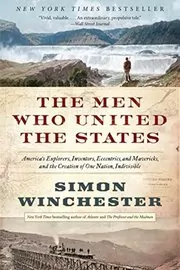
The Men Who United the States: America's Explorers, Inventors, Eccentrics, and Mavericks, and the Creation of One Nation, Indivisible
by Simon Winchester
2013
Organised around the classic elements of wood, earth, water, fire and metal, this book follows explorers, surveyors, inventors and builders whose roads, telegraphs, canals, railways and networks helped knit the United States into a single, if still fragile, union.
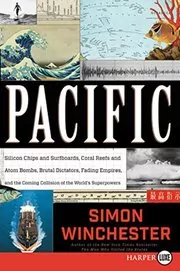
Pacific: Silicon Chips and Surfboards, Coral Reefs and Atom Bombs, Brutal Dictators, Fading Empires, and the Coming Collision of the World's Superpowers
by Simon Winchester
2015
In this wide ranging portrait of the Pacific Ocean, Winchester moves from island reefs and surfing beaches to nuclear test sites and container ports, arguing that this vast basin now sits at the centre of global power, innovation and environmental risk.
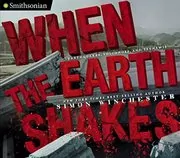
When the Earth Shakes: Earthquakes, Volcanoes, and Tsunamis
by Simon Winchester
2015
Using clear explanations and striking photographs, Winchester introduces young readers to earthquakes, volcanoes and tsunamis, blending earth science with stories of events like Krakatoa and San Francisco 1906 and exploring how communities prepare for and respond to major shocks.
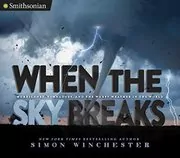
When the Sky Breaks: Hurricanes, Tornadoes, and the Worst Weather in the World
by Simon Winchester
2017
Written for middle grade readers, this book explains how hurricanes, typhoons and tornadoes form, how scientists try to predict them and what climate change may mean for future storms, using vivid case studies and Winchester's own storm watching experiences.
The Perfectionists: How Precision Engineers Created the Modern World
by Simon Winchester
2018
Winchester tells the story of precision, from early steam engines and screw cutting lathes to jet engines, GPS and gravitational wave detectors, showing how ever tighter tolerances made the modern world possible and asking what is lost when we insist on perfection.
The End of the River
by Simon Winchester
2020
Focusing on the Mississippi, Winchester explains how engineers have tried to hold the great river in place, why climate change and heavier floods threaten that control and what might happen to New Orleans, shipping and farms if the river forces a new course to the sea.
Land: How the Hunger for Ownership Shaped the Modern World
by Simon Winchester
2021
From his own purchase of a small farm to ancient boundary stones, colonial seizures and modern land grabs, Winchester traces how people have claimed, measured and fought over land, and how ownership has shaped power, conflict and ideas of home.
Knowing What We Know
by Simon Winchester
2023
This sweeping history follows how humans have created, stored and shared knowledge, from oral storytellers and ancient libraries to printing presses, mass media, digital networks and artificial intelligence, asking how our relationship to information is changing in the twenty first century.
The Breath of the Gods
by Simon Winchester
2025
Winchester ranges across history, science and culture to tell the story of wind, from trade routes, sailing ships and deadly storms to turbines and the push for renewable energy, showing how moving air has shaped human lives and will matter even more in a warming world.
Pacific
by Simon Winchester
Winchester explores the Pacific Ocean's influence on modern history through journeys around its shores and islands. Nuclear testing, technological development, environmental upheaval, and shifting political power connect personal travel experiences with the region's growing global significance.
Recommended by
1 person Patrick Collison recommended this book
Patrick Collison
Patrick Collison labeled this book "substantially above average."
Patrick Collison's recommendation of this book
The Perfectionists
by Simon Winchester
Tracing precision engineering from the Industrial Revolution onward, Winchester examines how increasingly exact measurements made modern machinery possible. Steam engines, mass-produced cars, jet aircraft, and scientific instruments illustrate the ingenuity, demands, and consequences of technical perfection.
Recommended by
1 person Trung Phan recommended this book
Trung Phan
"About the Machining industry." - Trung Phan
Trung Phan's recommendation of this book
Where to start with Simon Winchester
If you want a gripping historical narrative: The Professor and the Madman → The Meaning Of Everything → Knowing What We Know
If you love earth science and natural disasters: Krakatoa: The Day the World Exploded: August 27, 1883 → A Crack in the Edge of the World: America and the Great California Earthquake of 1906 → When the Earth Shakes: Earthquakes, Volcanoes, and Tsunamis
If big picture ideas and technology appeal: The Map That Changed the World → The Perfectionists: How Precision Engineers Created the Modern World → Land: How the Hunger for Ownership Shaped the Modern World
If you prefer travel and place based writing: The River at the Center of the World: A Journey Up the Yangtze, and Back in Chinese Time → Outposts: Journeys to the Surviving Relics of the British Empire → Pacific: Silicon Chips and Surfboards, Coral Reefs and Atom Bombs, Brutal Dictators, Fading Empires, and the Coming Collision of the World's Superpowers
For younger readers and budding science fans: When the Earth Shakes: Earthquakes, Volcanoes, and Tsunamis → When the Sky Breaks: Hurricanes, Tornadoes, and the Worst Weather in the World
Simon Winchester collections, short stories, and related book types
Non-Fiction Books


The River at the Center of the World: A Journey Up the Yangtze, and Back in Chinese Time
by Simon Winchester
1996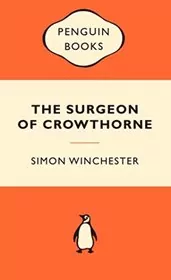
A Crack in the Edge of the World: America and the Great California Earthquake of 1906
by Simon Winchester
2005

When the Sky Breaks: Hurricanes, Tornadoes, and the Worst Weather in the World
by Simon Winchester
2017



Standalone Simon Winchester books
by Simon Winchester
Publication date unknownSilicon Chips and Surfboards, Coral Reefs and Atom Bombs, Brutal Dictators, Fading Empires, and the Coming Collision of the World's Superpowers
by Simon Winchester
Publication date unknownHow Precision Engineers Created the Modern World
Author bio
Simon Winchester was born in London in 1944 and raised in Dorset, where boarding schools, chapel bells and experiments in the school lab filled much of his early life. After a year spent hitchhiking around North America, he studied geology at St Catherine's College, Oxford.
Degree in hand, he went to work as a field geologist for a mining company in East Africa, tramping through the Ruwenzori foothills in search of copper. On one long trip he picked up a mountaineering book and realised he wanted to write stories, not assay rocks.
He wrote to its author, the journalist Jan Morris, and was bluntly advised to leave geology at once and join a newspaper. Winchester followed that advice, joined a British daily, and by 1969 was reporting from Newcastle and then from Northern Ireland at the height of the Troubles.
Those years put him close to some of the late twentieth century's most charged moments, including Bloody Sunday and other flashpoints in Ulster. Later postings took him to Calcutta and then Washington, where he covered the collapse of the Nixon presidency and the first stirrings of the Carter years. As chief foreign feature writer he ranged across the world, and in 1982 he was arrested and held for three months in Argentina while covering the Falklands conflict, an ordeal he later wrote about in Prison Diary, Argentina.
In the mid 1980s he left staff journalism, moved to Hong Kong and began writing books full time. Early titles such as In Holy Terror, American Heartbeat and Outposts grew out of his reporting, blending travel, politics and close attention to place.
His breakthrough came with The Professor and the Madman, the intertwined story of Oxford lexicographer James Murray and asylum inmate William Chester Minor and their work on the Oxford English Dictionary. He followed it with The Map That Changed the World, about geologist William Smith and the first geological map of Britain, Krakatoa, on the 1883 volcanic eruption, and later A Crack in the Edge of the World and Atlantic, which carry his fascination with geology and oceans onto a larger stage.
Alongside earth science he has written about Chinese science and culture in The Man Who Loved China and Bomb, Book and Compass, celebrated precision engineering in The Perfectionists, examined land ownership and dispossession in Land and explored how knowledge is created and passed on in Knowing What We Know. For younger readers he has turned natural disasters into clear, vivid science writing in When the Earth Shakes and When the Sky Breaks.
Winchester threads archival research, on the ground reporting and a geologist's feel for deep time into stories that move at the pace of a good yarn. His books are packed with odd corners of history, carefully drawn characters and a steady curiosity about how big systems affect ordinary lives.
Now a naturalised American as well as a British citizen, he was sworn in aboard a historic warship in Boston on 4 July 2011. He holds an OBE for services to journalism and literature, has been made an honorary fellow of his old Oxford college and has received several honorary degrees. He lives in Berkshire County, Massachusetts, where he helps run a small local newspaper and writes in a study lined with maps, with frequent trips to New York and back to Britain when a new subject tugs at his sleeve.







Edited by
Software engineer whose passion for tracking book recommendations from podcasts inspired the creation of MRB.
Lead investor at 3one4 Capital whose startup expertise and love for books helped shape MRB and its growth.
Comments
Did we miss something? Have feedback?
Help us improve this page by sharing your thoughts