
Simon Mawer Books in Order
Explore Simon Mawer books in order, with quick summaries, series notes, and where to start, from Marian Sutro to The Glass Room and beyond.
Last updated:
As an Amazon Associate, we earn from qualifying purchases (at no extra cost to you).
Simon Mawer books in publication order
14 books

Chimera
by Simon Mawer
1989
At an archaeological dig in central Italy, David Hewison finds the past refusing to stay buried. Wartime memories, family tensions, and his own divided identity drive this tense story toward a disturbing reckoning.

A Place In Italy
by Simon Mawer
1992
In this memoir, Mawer and his wife move to a tiny village in the Lazio hills and learn Italy from the inside out. It's funny, observant, and full of the beauty and chaos of everyday village life.

The Bitter Cross
by Simon Mawer
1992
An aging Knight of St John lies broken in Rome, telling a young novice what heroism really cost. Gerard Paulet's memories turn faith, war, love, and survival into a hard-edged historical reckoning.

A Jealous God
by Simon Mawer
1993
Helen Harding's stalled marriage is shaken when her estranged stepbrother returns and old desires reawaken. As she probes the mystery of her father's death in Jerusalem, family secrets begin to turn dangerous.

Mendel's Dwarf
by Simon Mawer
1997
Geneticist Benedict Lambert, himself a dwarf and a descendant of Gregor Mendel, is obsessed with the gene behind his condition. Love, ambition, and science collide as his research turns painfully personal.
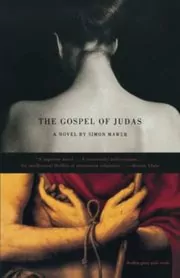
The Gospel of Judas
by Simon Mawer
2000
A newly found scroll claims to be Judas Iscariot's true account of Jesus's life. Father Leo Newman must judge its authenticity while old love, betrayal, and family turmoil shake his faith.
The Fall
by Simon Mawer
2003
When climber Jamie dies on an easy Welsh route, his estranged friend Rob is left with grief and questions. The answers lie in a tangled past of obsession, rivalry, wartime desire, and dangerous ambition.

Gregor Mendel
by Simon Mawer
2006
This clear, engaging biography follows Gregor Mendel from monastery garden experiments to posthumous fame. Mawer explains the man, the pea studies, and the long scientific story that grew from his work.

Swimming to Ithaca
by Simon Mawer
2007
After his mother's deathbed confession, Thomas Denham starts pulling at the threads of her past. Letters and memories lead him back to colonial Cyprus, where love, betrayal, and political violence shaped everything.

The Glass Room
by Simon Mawer
2009
Viktor and Liesel Landauer build a striking modern house in 1930s Czechoslovakia and pour their hopes into it. War, desire, and displacement shatter their lives as the house passes through one regime after another.

The Girl Who Fell From the Sky / Trapeze
by Simon Mawer
2012
Nineteen-year-old Marian Sutro is recruited by the SOE, trained for clandestine work, and dropped into occupied France. Her courier role hides a deeper mission in Paris, where love, betrayal, and the war's widening stakes close in.

Tightrope
by Simon Mawer
2015
Back in Britain after Ravensbrück, Marian Sutro tries to piece together an ordinary life in postwar London. Then Cold War intrigue, nuclear secrets, and old loyalties pull her back toward danger.

Prague Spring
by Simon Mawer
2018
In the summer of 1968, two Oxford students wander into Czechoslovakia just as reform gives way to invasion. Their lives cross with a British diplomat and a Czech student as hope turns to danger.
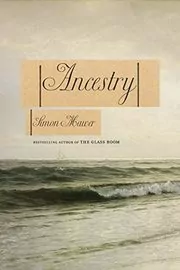
Ancestry
by Simon Mawer
2022
Using scraps from registers, censuses, and family lore, Mawer imagines the lives behind the names. This nineteenth-century saga links scavengers, seamstresses, soldiers, and lovers through hardship, chance, and blood ties.
Where to start with Simon Mawer
If you want the signature historical novel: The Glass Room
If you want spy fiction first: The Girl Who Fell From the Sky / Trapeze → Tightrope
If you like science in your fiction: Mendel's Dwarf → Gregor Mendel
If you want politics and youthful idealism: Prague Spring
If you want a broad family saga: Ancestry
Simon Mawer sub-series and character series
Simon Mawer collections, short stories, and related book types
Non-Fiction
Standalone Simon Mawer books
Author bio
Simon Mawer was born in England in 1948 and grew up in motion. His father served in the RAF, so childhood meant repeated moves, with important stretches in Cyprus and Malta as well as England. That shifting sense of home, and the pull of the Mediterranean, stayed with him for the rest of his life.
It shows.
He was educated at Millfield and then studied zoology at Brasenose College, Oxford. Science mattered to him, and so did language, but he ended up making his living for many years as a biology teacher, first in several posts around Britain and the Mediterranean and then, for decades, in Rome.
Writing came slowly. In Malta he began working seriously, drawn in by the island's history and by the Knights of St John, and he kept going after moving to Italy. His first novel, Chimera, appeared in 1989 and won the McKitterick Prize, a late start by publishing standards, but a strong one.
Early books such as The Bitter Cross and the memoir A Place in Italy already showed the things he returned to again and again: history pressing on the present, divided loyalties, and places that seem almost alive on the page. He was very good on borderlands, literal and emotional. People in his novels are often between countries, between languages, or between versions of themselves.
Then came Mendel's Dwarf, one of his best-known books, which folds genetics, family history, desire, and moral trouble into the voice of Benedict Lambert, a brilliant scientist living with achondroplasia. Readers who love Mawer often point to the way he can make big ideas feel intimate. The Gospel of Judas does something similar with religion and doubt, turning a disputed ancient text into a story about faith, betrayal, and private weakness.
He liked putting pressure on certainty.
Many readers first meet him through The Glass Room, his 2009 novel inspired by modernist architecture and the upheavals of central Europe. It follows a house and the people drawn to it across decades of political violence, desire, exile, and return, and it was shortlisted for the Booker Prize. Later books such as The Girl Who Fell From the Sky, published in the US as Trapeze, and its sequel Tightrope, show another side of him, historical espionage with a close psychological focus.
He kept returning to Europe in moments of strain. Prague Spring drops young travelers and diplomats into Czechoslovakia in 1968, while Ancestry looks further back, imagining ordinary nineteenth-century lives from the scraps left in registers and family records. Even when the canvas is large, Mawer usually keeps his eye on the private cost, love affairs, family tensions, guilty memories, compromised choices.
For much of his adult life he lived in Italy, taught biology at the British international school in Rome, and wrote around the edges of school life, family life, and ordinary routine. In later years he and his wife Connie divided their time between Italy and Hastings. He died on 12 February 2025, aged 76, leaving behind work that is thoughtful, restless, and unusually good at showing how history gets inside people.












Edited by
Software engineer whose passion for tracking book recommendations from podcasts inspired the creation of MRB.
Lead investor at 3one4 Capital whose startup expertise and love for books helped shape MRB and its growth.
Comments
Did we miss something? Have feedback?
Help us improve this page by sharing your thoughts