
Ship Breaker Books in Order
Part ofPaolo Bacigalupi Books in OrderSee the Ship Breaker books by Paolo Bacigalupi in order, with short summaries, series background, and a quick guide to where to start reading.
Last updated:
As an Amazon Associate, we earn from qualifying purchases (at no extra cost to you).
Ship Breaker books in publication order
3 books
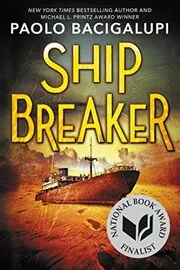
Ship Breaker
by Paolo Bacigalupi
2010
On the ruined Gulf Coast, teenage scavenger Nailer strips old tankers for copper just to survive. After a hurricane, he finds a wrecked clipper ship and one living passenger, a discovery that could either save him or get him killed.
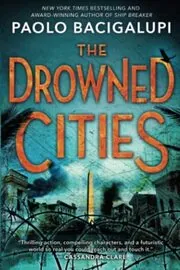
The Drowned Cities
by Paolo Bacigalupi
2012
In a drowned, war-torn future America, Mahlia and Mouse struggle to stay alive until they cross paths with Tool, a bioengineered killer. When Mouse is swept into the fighting, Mahlia and Tool head into the chaos to bring him back.
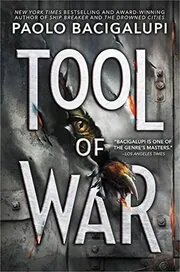
Tool of War
by Paolo Bacigalupi
2017
Tool, a half-man, half-beast augment, has broken from his makers and now leads a band of human soldiers. As enemies close in, he prepares to turn his rage on the system that bred him for obedience and war.
Ship Breaker books in chronological order
Series background & context
The Ship Breaker books are a true series, but they do not stay in one place or with one lead for long. Each novel opens a different corner of the same wrecked future, so the trilogy keeps getting larger and harsher as it goes.
It starts on the Gulf Coast with Ship Breaker. Nailer is a teenage scavenger who crawls through dead oil tankers pulling out copper and anything else worth selling, always one bad slip away from death. When a hurricane throws a rich girl's clipper ship onto shore, he suddenly has a choice between a quick score and a dangerous kind of mercy.
From there the series widens. The Drowned Cities shifts inland to a fractured former United States where militias use child soldiers and whole towns survive by staying small and unnoticed. Mahlia and Mouse are trying to do exactly that until they cross paths with Tool, a bioengineered war beast whose presence turns local danger into something much bigger.
Then Tool takes center stage in Tool of War. The trilogy stops treating him as a rumor or a weapon and lets him become the emotional core of the story. He is an augment, bred to obey and kill, yet he keeps trying to step outside the purpose written into his body. That struggle gives the last book its real charge, because the question is no longer just who survives, but whether anyone made for violence can choose another life.
Climate change shapes everything here, but Bacigalupi never leaves it as background wallpaper. Rising seas have drowned old coastlines. Storms are brutal. Fossil fuel wealth is gone, and the people left behind strip the bones of the old world or fight over whatever still works. The setting also mixes ruined ships, parasail clippers, makeshift medicine, and genetic engineering, so the books feel adventurous even when they are at their bleakest.
These are young adult novels, but they are not softened or simple. The tone is fast, tense, and often brutal, with strong survival stakes and a real sense that class power decides who gets safety and who gets used up. What keeps the series readable is that Bacigalupi gives even the most battered characters stubborn will, practical intelligence, and moments of loyalty that matter.
If you want one clean story arc, read them in publication order: Ship Breaker, The Drowned Cities, then Tool of War. The books are linked by the world, by recurring characters like Tool, and by a shared question about what people become when systems collapse and the future is built from salvage.







Edited by
Software engineer whose passion for tracking book recommendations from podcasts inspired the creation of MRB.
Lead investor at 3one4 Capital whose startup expertise and love for books helped shape MRB and its growth.
Comments
Did we miss something? Have feedback?
Help us improve this page by sharing your thoughts